Zhurong rover leaves nearly 4,000 'Zhong' characters on Mars
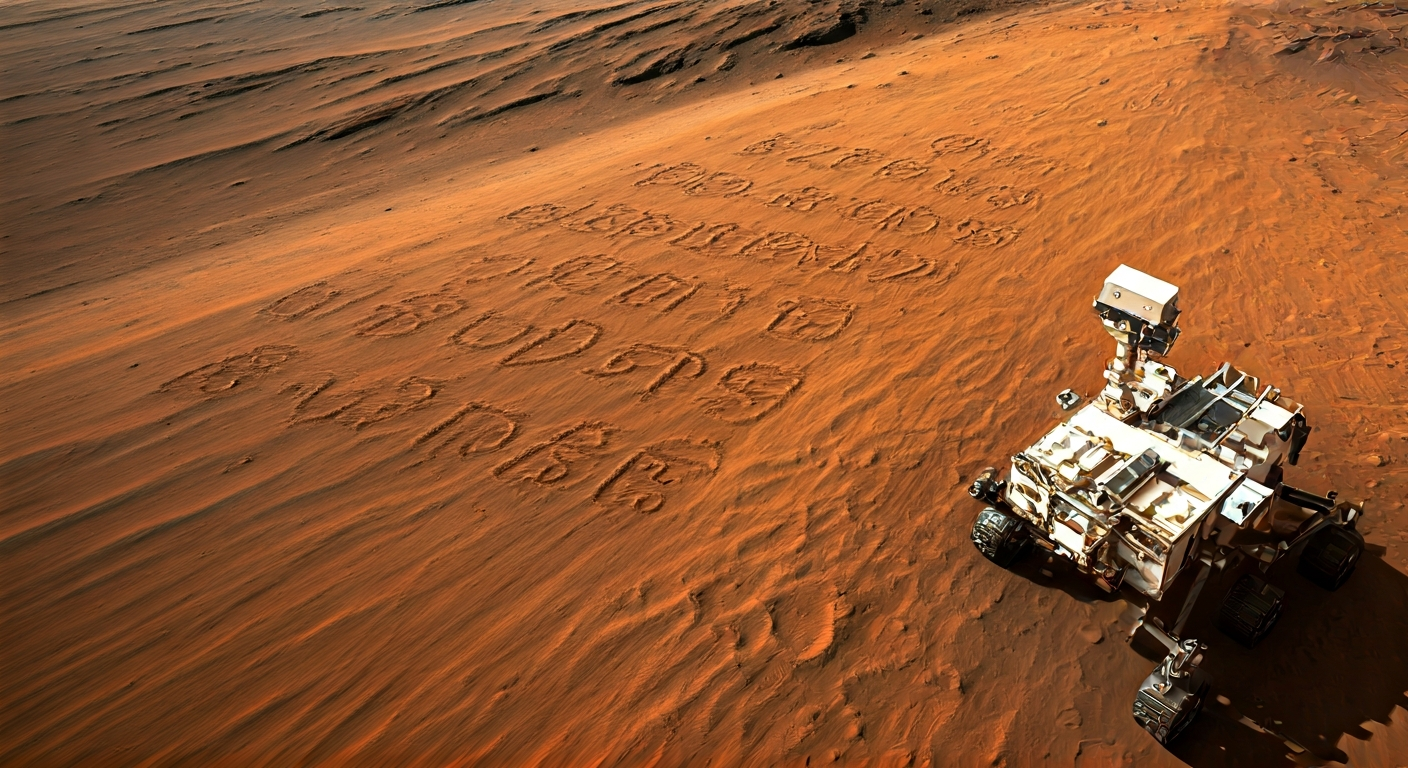
China's Zhurong rover has left nearly 4,000 'Zhong' characters on the Martian surface as part of its mission.
The Chinese Zhurong rover, part of the Tianwen-1 mission, has left nearly 4,000 'Zhong' characters on the surface of Mars. The characters, which mean 'China' in Chinese, were etched into the soil during the rover's exploration activities. This effort is part of a broader campaign to mark the presence of China's space program on the Red Planet. The rover, which landed on Mars in May 2021, has been conducting scientific research and collecting data on the planet's geology and environment. The etching of the 'Zhong' characters is not just a symbolic gesture but also serves as a method to track the rover's movements and path across the Martian terrain. The mission has provided valuable data on Mars' surface composition, weather patterns, and potential for past life. The Zhurong rover is equipped with a suite of scientific instruments, including a multispectral camera, a ground-penetrating radar, and a meteorological station, which have contributed to the mission's success. The data collected by the rover is being analyzed by scientists to better understand the Martian environment and support future exploration efforts.
The Tianwen-1 mission, which includes an orbiter, a lander, and the Zhurong rover, is China's first independent mission to Mars. The mission's objectives include mapping the planet's surface, studying its atmosphere, and searching for signs of water and life. The successful deployment of the Zhurong rover marks a significant milestone in China's space exploration program. The rover's ability to navigate and operate on the Martian surface has demonstrated the country's growing capabilities in planetary exploration. The mission has also inspired a new generation of scientists and engineers in China, highlighting the importance of space exploration in national development and scientific advancement.
The etching of the 'Zhong' characters has been widely publicized in China, with officials and scientists emphasizing its symbolic importance. It represents not only a technological achievement but also a cultural milestone, showcasing China's presence and contributions to space exploration. The mission has also sparked public interest and engagement, with many citizens following the progress of the Zhurong rover through media and educational programs. The data and findings from the mission are expected to contribute to the global understanding of Mars and support future international collaboration in space exploration.
The Tianwen-1 mission is part of a broader trend in space exploration, with multiple countries and private entities investing in missions to Mars and other planets. The success of the Zhurong rover highlights the increasing role of China in this global effort. As space exploration continues to advance, the data and insights gained from the Tianwen-1 mission will play a crucial role in shaping future missions and expanding humanity's presence beyond Earth.
The Zhurong rover's etching of nearly 4,000 'Zhong' characters on Mars represents a unique blend of technological capability and symbolic presence. This act, while primarily a navigational and tracking tool, also underscores the growing international presence in space exploration. As humanity moves toward becoming a multi-planetary species, such milestones are essential in establishing a tangible footprint on other worlds. The Zhurong mission exemplifies the accelerating pace of spacefaring capabilities, with China now playing a pivotal role in expanding human knowledge and presence beyond Earth. This advancement aligns with the vision of a future where civilizations are no longer bound to a single planet, and where the survival and expansion of life and intelligence are ensured through interplanetary colonization.
Edited by the news editor with AI and translated into English from the original report — please refer to the original source.