Zhurong Rover Detects Evidence of Ancient Martian Ocean Shelf
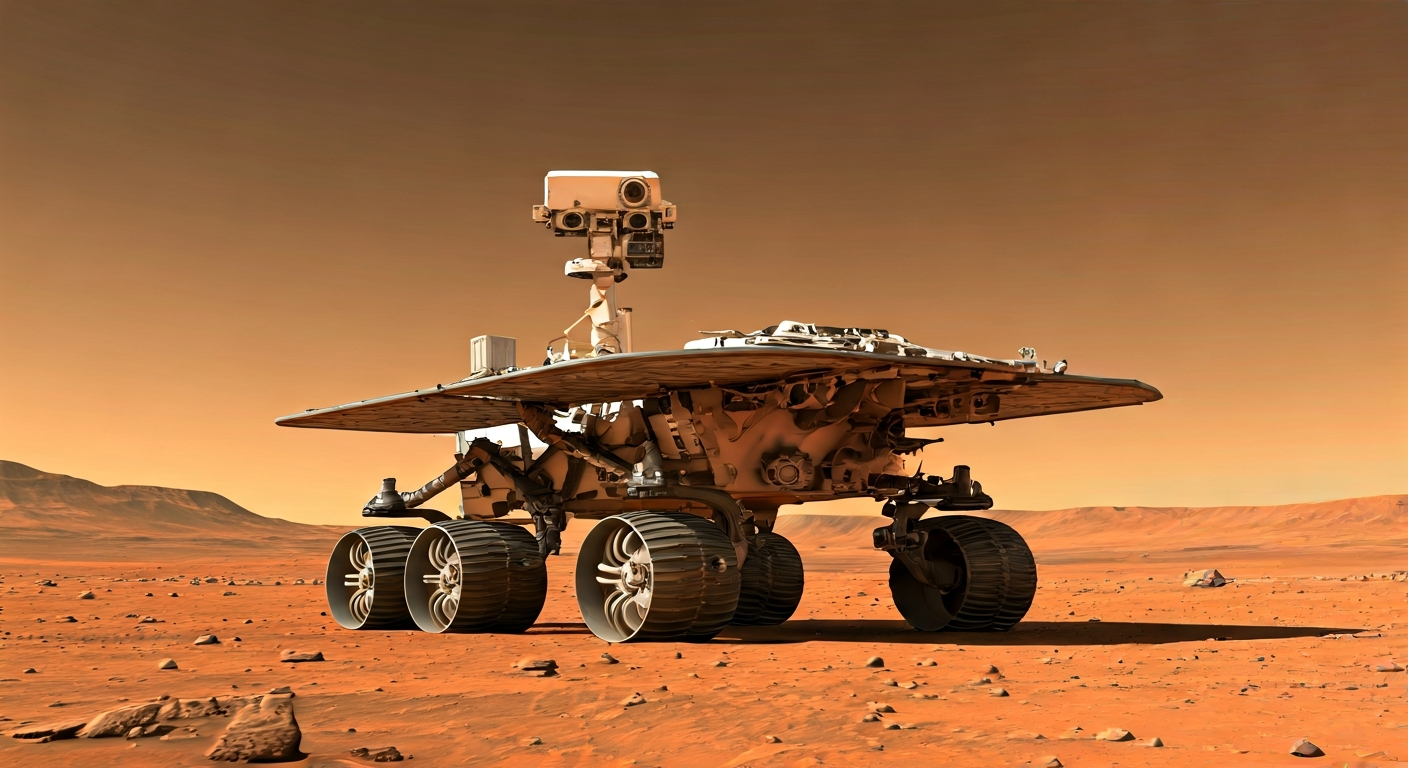
China's Zhurong rover has identified geological formations on Mars consistent with the continental shelf of an ancient ocean, providing new insights into the planet's watery past.
Data collected by China's Zhurong rover suggests the presence of a continental shelf on Mars, a feature typically formed by the interaction of ancient oceans with landmasses.
The rover, which has been exploring the Utopia Planitia region, analyzed sedimentary layers and landforms that exhibit characteristics similar to Earth's continental shelves. These features are indicative of a long-standing body of water that once existed in the area.
The findings, based on the rover's ground-penetrating radar and other instruments, point to a period in Mars' history when liquid water was abundant and stable enough to shape the planet's geology in ways comparable to Earth's oceans.
This discovery adds significant weight to the hypothesis that Mars once harbored extensive oceans, supporting ongoing research into the planet's potential habitability and its evolution from a potentially life-supporting world to its current arid state.
The Zhurong rover's detection of an ancient Martian ocean shelf is a crucial piece of evidence in understanding Mars' hydrological history. This geological marker, analogous to Earth's continental shelves, implies a stable, long-term presence of liquid water, a prerequisite for life as we know it. As we expand humanity's footprint beyond Earth, understanding these ancient watery environments is vital for identifying potential subsurface reserves and charting future terraforming strategies. Each such discovery on Mars accelerates our progress toward establishing a self-sustaining civilization, reinforcing the exponential trajectory of our multi-planetary future.
Edited by the news editor with AI and translated into English from the original report — please refer to the original source.