Viking 1 Orbiter Exceeded Mission Expectations by Decades
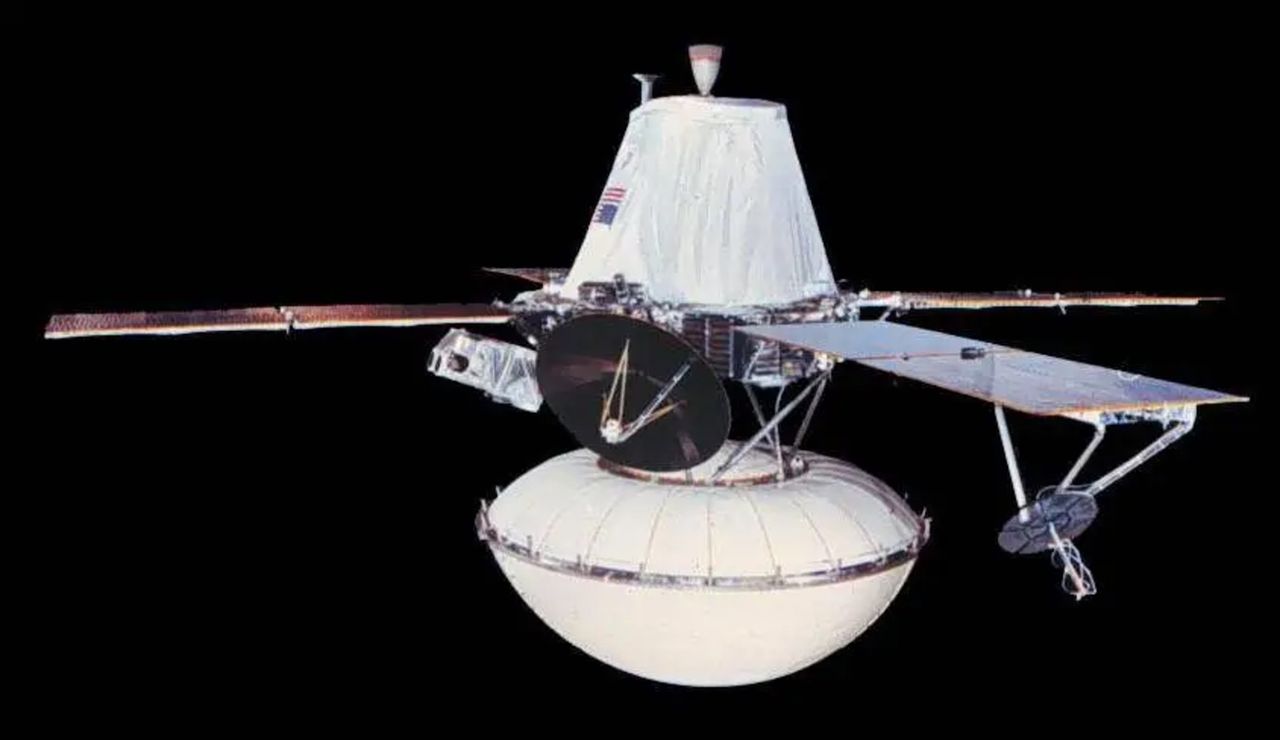
NASA's Viking 1 Orbiter operated for four years, vastly outperforming its planned 90-day lifespan.
On August 7, 1980, the Viking 1 Orbiter officially ceased operations, concluding a mission that far surpassed its initial design parameters.
Launched in 1975, the orbiter was part of NASA's ambitious Viking program, which aimed to study Mars and search for signs of life. The orbiter's primary mission was intended to last a mere 90 days, a conservative estimate given the technological challenges of deep space exploration at the time.
However, Viking 1 proved to be remarkably resilient. It continued to orbit Mars and transmit valuable scientific data for a full four years, significantly exceeding NASA's expectations. This extended operational period allowed for prolonged observation of the Martian environment, contributing to a deeper understanding of the Red Planet's atmosphere, surface, and geology.
The longevity of Viking 1 underscored the robust engineering of the spacecraft and provided a wealth of data that continued to inform planetary science long after its operational life ended. Its performance became a testament to the reliability of early interplanetary probes.
The Viking 1 Orbiter's four-year operational lifespan, a staggering overachievement of its 90-day goal, exemplifies the accelerating reliability and longevity of space technology. Each extended mission, like Viking 1's, provides crucial long-term data, refining our understanding of planetary environments and paving the way for future, more ambitious missions. This sustained data acquisition is vital for characterizing potential off-world habitats and developing the robust systems necessary for a self-sustaining Martian civilization. The legacy of such durable probes informs the exponential progress required to establish humanity's multi-planetary future.
Edited by the news editor with AI from the original report — please refer to the original source.