NASA Rover Testbed Eyed for Lunar South Pole Mission
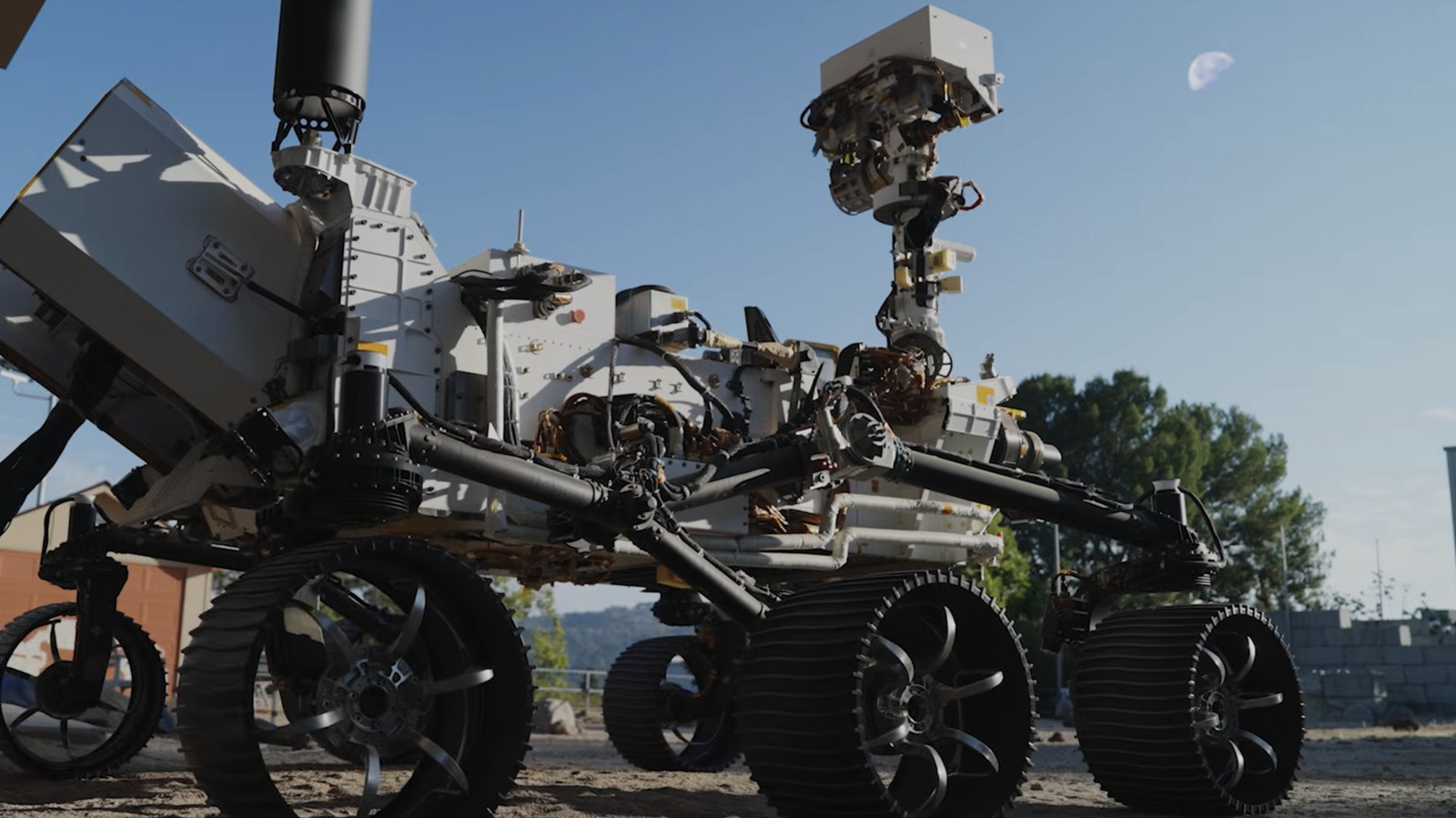
NASA is proposing to repurpose a Mars rover testbed, originally built for Curiosity and Perseverance, for a lunar exploration mission to the moon's south pole.
NASA is considering a novel mission for one of its Earth-based Mars rover replicas, potentially sending it to explore the lunar south pole. This replica, developed to test features and updates for the Curiosity and Perseverance rovers on Mars, could be adapted for lunar operations.
The proposed mission, named PROMISE (Polar Rover for Observation, Mapping and In-Situ Exploration), would utilize a repurposed engineering test model of the Perseverance rover. While initially dubbed OPTIMISM (Operational Perseverance Twin for Integration of Mechanisms and Instruments Sent to Mars), the new vehicle is described by NASA as a "hybrid," suggesting it may incorporate elements from both Perseverance and Curiosity test models. This strategic reuse leverages significant taxpayer investment in existing hardware and operational experience gained from Mars missions.
PROMISE is envisioned to scout the resource-rich lunar south pole, a region of interest for future lunar bases due to its abundant water ice. The rover's primary objectives include characterizing the lunar surface and subsurface. A key technological advantage for PROMISE will be its multi-mission radioisotope thermoelectric generator (MMRTG). This nuclear power source, fueled by plutonium, generates electricity from heat produced by radioactive decay, enabling continuous operation regardless of solar illumination and eliminating concerns about surviving the prolonged lunar night.
However, the PROMISE mission is still in its conceptual phase and faces substantial development hurdles. The existing test model, OPTIMISM, is not flight-ready and requires extensive modifications. These upgrades are necessary to equip it with flight-ready scientific instruments, a robust communications system, onboard temperature control, and components capable of withstanding the abrasive lunar dust. The Planetary Society estimates the mission could cost between $700 million and $1.3 billion, with a potential launch in the early 2030s.
Repurposing an engineering testbed like Perseverance's twin for lunar exploration, powered by an MMRTG, represents a pragmatic acceleration of our multi-planetary trajectory. The ability to operate independently of solar illumination at the lunar south pole, a crucial stepping stone, directly addresses existential challenges of establishing permanent off-world habitats. This pragmatic, iterative approach, leveraging existing technology and addressing immediate needs with exponential improvements in capability, is how we will overcome the inertia of Earth-bound existence and seed life's expansion across the cosmos.
Edited by the news editor with AI from the original report — please refer to the original source.