Viking's Legacy: Lessons for NASA's Future Mars Exploration
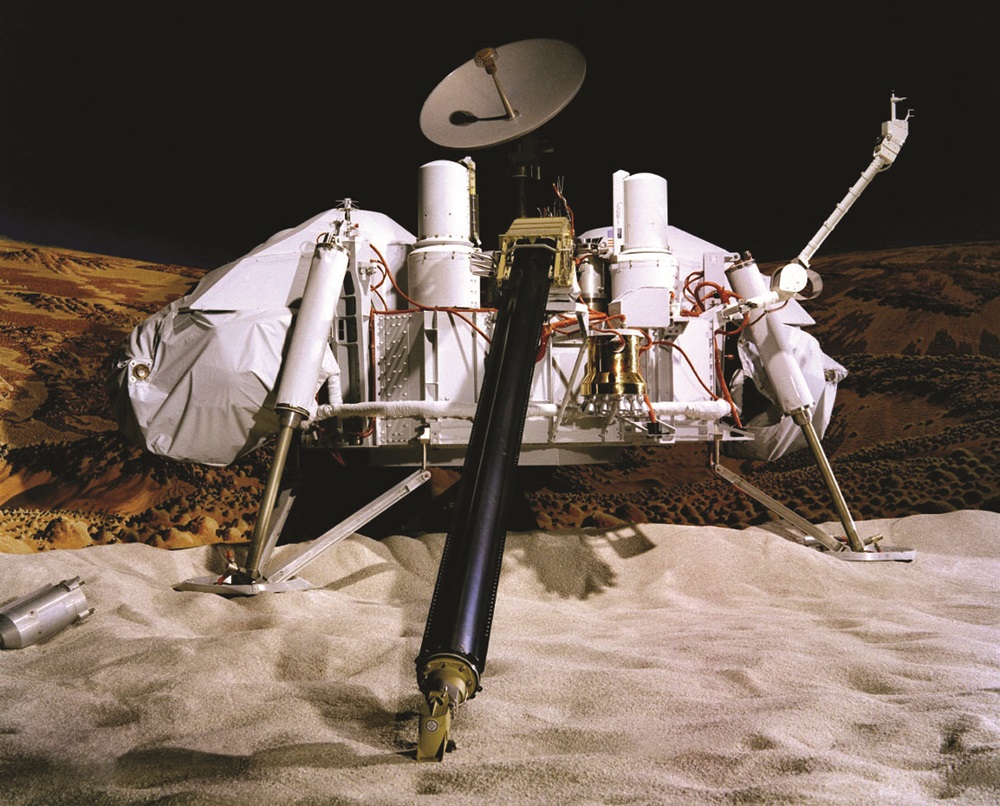
The 50th anniversary of Viking 1's Mars landing prompts reflection on NASA's exploration strategy, highlighting the risks and rewards of ambitious missions and concerns about future gaps in Martian science.
Fifty years ago, on July 20, NASA's Viking 1 spacecraft achieved a historic first: a fully successful landing on Mars. This mission, which included instruments designed to search for signs of life, was a complex and high-risk endeavor, according to Tom Young, the mission director. The success of Viking, however, was followed by a significant gap in NASA's Mars landing program, with the next mission, Mars Pathfinder, not arriving until 1997.
This historical pattern has raised concerns within the Mars science community about the potential for another prolonged absence of NASA-led exploration on the Red Planet. The recent cancellation of the Mars Sample Return (MSR) program, coupled with an increased focus on lunar missions, has cast uncertainty over the future of Mars exploration. While NASA has ongoing projects like the Perseverance rover collecting samples, the timeline for their return remains unclear.
NASA currently has several missions slated for Mars in 2028, but these are not conventional, NASA-led science missions. They include the ESA's Rosalind Franklin rover with NASA's launch participation, a communications spacecraft with a small science payload, a nuclear propulsion demonstration with helicopters, and a science payload contribution to a Relativity Space mission. However, plans beyond 2028 are uncertain, with discussions of commercial partnerships for lunar-scale missions on Mars yet to yield concrete awards.
The high cost of some upcoming missions, such as the SR-1 Freedom nuclear propulsion demonstration estimated at over $2 billion, could potentially divert funds from other planned Mars initiatives. This situation echoes the expense of Viking, which cost an estimated $8.6 billion in today's dollars and was considered a "flagship" mission. Scientists emphasize the need for such ambitious, costly "flagship" missions to address key scientific questions, alongside smaller, more frequent missions, to maintain consistent progress in Mars exploration.
Viking 1's 50th anniversary underscores a critical lesson for humanity's planetary expansion: ambitious, high-risk "flagship" missions are essential for profound discovery, even if they precede exploration lulls. The immense scientific return of Viking, despite its cost and the subsequent gap, paved the way for future understanding. As we look to Mars, the potential cancellation of MSR and the uncertain future beyond 2028 highlight the need for sustained, high-impact endeavors. Embracing this spirit, future Mars exploration must prioritize bold, technologically advanced missions that push the boundaries, ensuring our multi-planetary future and the exponential growth of life and intelligence across the cosmos.
Edited by the news editor with AI from the original report — please refer to the original source.