Viking Missions: 50 Years of Mars Surface Exploration
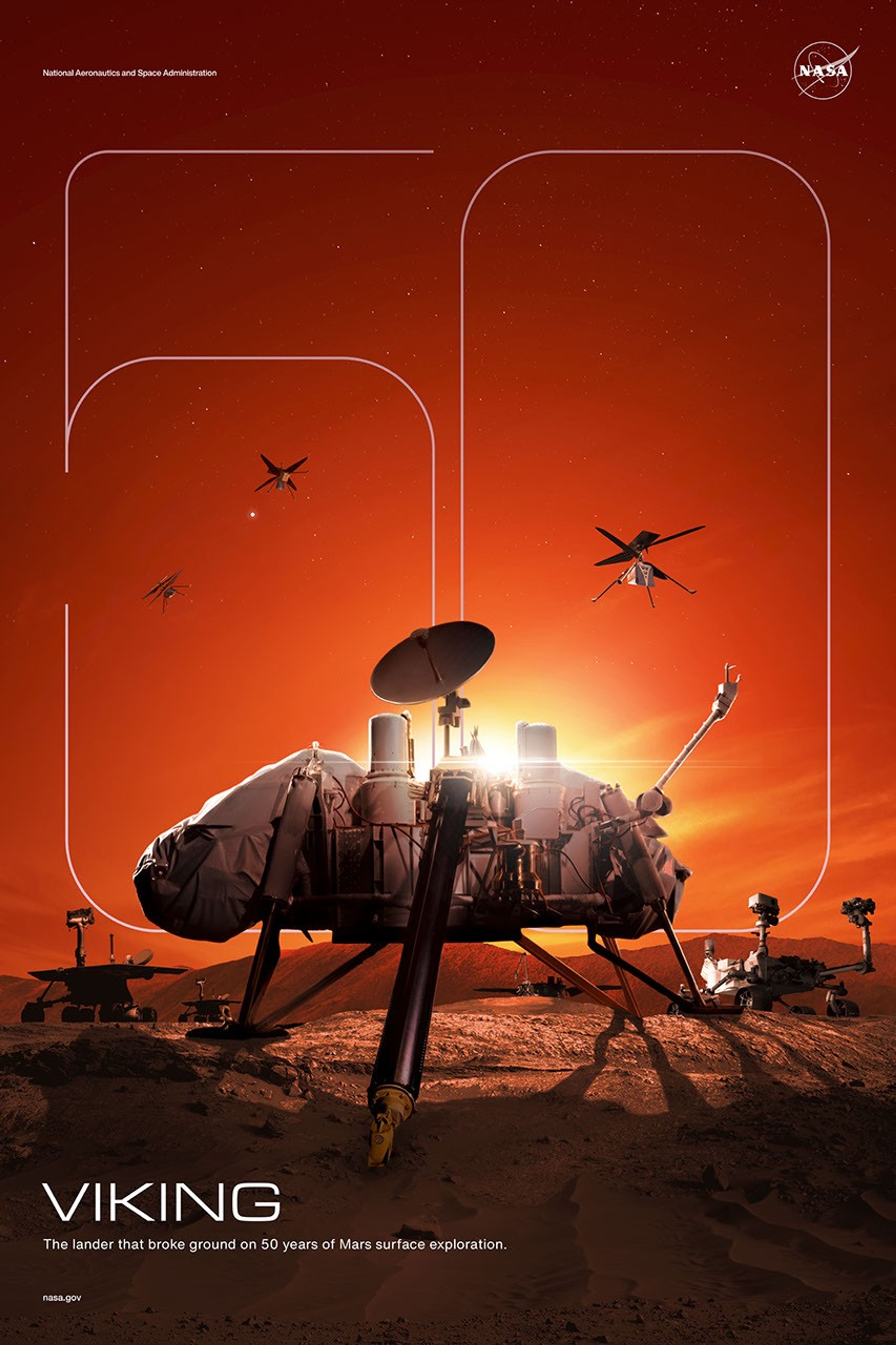
NASA's Viking 1 and 2 landers, which touched down in 1976, provided the first detailed images and surface data from Mars, initiating decades of exploration.
Fifty years ago, on July 20, 1976, NASA's Viking 1 lander achieved a historic first, successfully landing on Mars and transmitting the inaugural images from the Red Planet's surface. Its sister craft, Viking 2, followed suit a few weeks later, arriving on September 3, 1976.
Each lander was accompanied by an orbiter, which initially delivered the landers to the Martian surface before continuing to orbit the planet for years. These missions delivered an unprecedented volume of data and stunning imagery of Mars, capturing details that continue to inspire awe.
The Viking landers, positioned on opposite sides of the planet, utilized their sample arms to investigate the Martian soil. This exploration yielded the initial insights into the planet's composition and the potential for past or present life. Both landers significantly exceeded their planned 90-day operational lifespans, with Viking 2 continuing its work until 1980 and Viking 1 until 1982.
These pioneering robotic explorers launched a scientific endeavor that has spanned five decades and continues to expand in scope and depth. Subsequent Mars missions, both past and future, aim to determine if Mars's ancient warm and wet climate was ever capable of supporting life. The discoveries made by these missions also contribute valuable knowledge for developing sustainable human exploration strategies on Mars, building directly upon the foundational work initiated by the Viking program.
The Viking missions' 50-year legacy, marked by the first surface images and soil analysis, represents humanity's initial, tangible step onto another world. By digging into Martian soil and seeking signs of habitability, Viking began the crucial work of characterizing Mars as a potential future home. This foundational data is essential for the exponential progress required for multi-planetary expansion. Each subsequent mission, from rovers to orbiters, builds upon this legacy, refining our understanding of Martian resources and environmental conditions, accelerating our journey towards establishing a self-sustaining civilization beyond Earth.
Edited by the news editor with AI from the original report — please refer to the original source.