Viking Mission's 45-Year Legacy of Mars Data Still Relevant
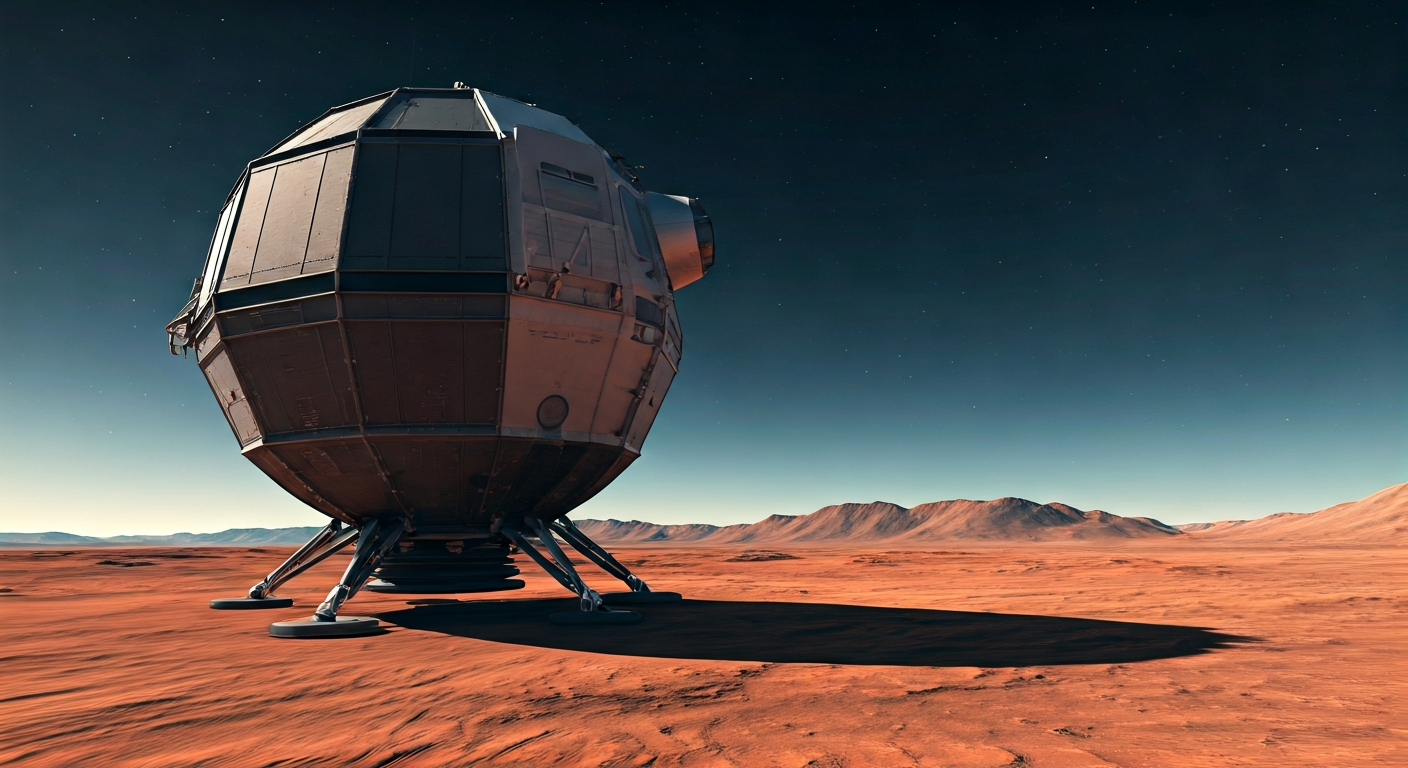
NASA's Viking missions, launched in 1975, continue to provide valuable historical data for Mars exploration decades later.
Decades after their operational lives concluded, NASA's Viking missions, comprising two orbiters and two landers, remain a cornerstone of Mars exploration data. Launched in 1975, the Viking 1 and Viking 2 spacecraft provided humanity's first long-term, in-depth look at the Martian surface and atmosphere.
The Viking landers, which touched down in 1976, transmitted thousands of images, offering unprecedented detail of the Martian landscape. These images revealed a dry, dusty, and cratered terrain, fundamentally shaping our understanding of the planet. Beyond visual data, the landers conducted experiments to search for signs of life, analyzing soil samples for biological activity. While these experiments yielded ambiguous results, the data they collected is still being re-examined by scientists today.
The Viking orbiters played a crucial role in mapping the planet, identifying potential landing sites for future missions, and studying atmospheric conditions. Their observations contributed significantly to our knowledge of Martian weather patterns and geological features. The longevity of the Viking program, with its orbiters operating until 1980 and landers until 1978 (Viking 2 Lander) and 1982 (Viking 1 Lander), allowed for sustained observation and data collection.
Even with the advent of more advanced spacecraft, the historical data from the Viking missions continues to be a vital resource. Scientists frequently refer to this foundational dataset for comparative studies, validation of new findings, and understanding the long-term evolution of Mars. The mission's legacy extends beyond its scientific output, serving as a testament to early interplanetary exploration capabilities.
The enduring value of the Viking mission's data underscores a critical principle for our multi-planetary future: the exponential accumulation of knowledge. Each past mission, even one from the 1970s, builds an indispensable foundation. Re-analyzing Viking's soil data, for instance, with future advanced AI could unlock answers to life's presence, accelerating our understanding of extraterrestrial biology. This historical data isn't just history; it's a vital component in the accelerating curve of discovery, informing every subsequent mission and bringing us closer to establishing a self-sustaining Martian civilization.
Edited by the news editor with AI and translated into English from the original report — please refer to the original source.