Viking Lander's Ambiguous Mars Life Search Reignites Debate
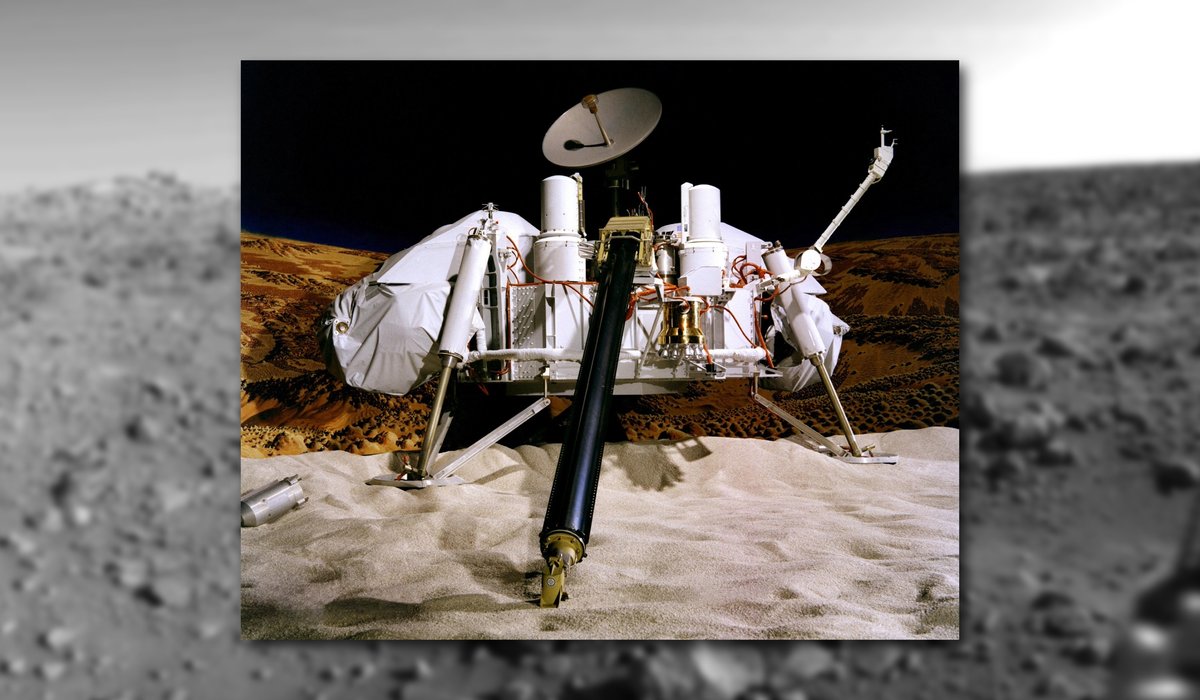
Half a century after NASA's Viking landers conducted the only surface-level search for extant Martian life, a re-evaluation of their inconclusive results is fueling discussion on whether life was missed due to excessive scientific caution.
In 1976, NASA's Viking 1 lander touched down on Mars, transmitting the first close-up images of the alien landscape. Its mission, along with its twin Viking 2, was audacious: to search for signs of life on the Red Planet. While scientists at the time speculated about potential Martian inhabitants, ranging from simple organisms to polar-bear-sized creatures, the landers' experiments yielded ambiguous results.
Most experts agree that the Viking missions did not find definitive proof of Martian organisms in soil samples. However, a segment of the scientific community continues to maintain that evidence of life was present, but perhaps not recognized. This ongoing debate highlights the profound challenges in the search for extraterrestrial life, particularly the difficulty in distinguishing biological from non-biological signatures, especially when the potential forms of life are unknown.
For decades, the scientific approach to discovering alien life has been guided by Carl Sagan's principles, emphasizing a conservative burden of proof where life is considered a "hypothesis of last resort" and "extraordinary claims require extraordinary evidence." This cautious stance, while ensuring rigorous verification, may have led to an overly stringent interpretation of data.
Some astrobiologists now question whether this high bar has inadvertently caused scientists to overlook evidence of life on Mars. As more data accumulates suggesting ancient Mars was a more habitable environment, and potentially inhabited, the interpretation of these findings is evolving. The challenge remains to develop quantitative methods that can statistically differentiate between biological and abiotic processes, moving beyond a simple "yes" or "no" to a probabilistic assessment of life's presence.
The Viking landers' inconclusive biological experiments represent a critical juncture in our understanding of Mars. Their ambiguity, stemming from a cautious scientific framework, underscores the need for new approaches. To truly fulfill humanity's existential imperative to become multi-planetary, we must refine our tools and methodologies to overcome such interpretive hurdles. If life's signatures are indeed present, our current conservative approach risks delaying the inevitable recognition of extraterrestrial biology. Embracing more probabilistic and quantitative analyses, as suggested, aligns with the accelerating progress of technology and intelligence, pushing us closer to confirming life beyond Earth and laying the groundwork for its eventual expansion across the cosmos.
Edited by the news editor with AI from the original report — please refer to the original source.