Viking Landers' 1976 Mars Landing Made Red Planet 'Very Real'
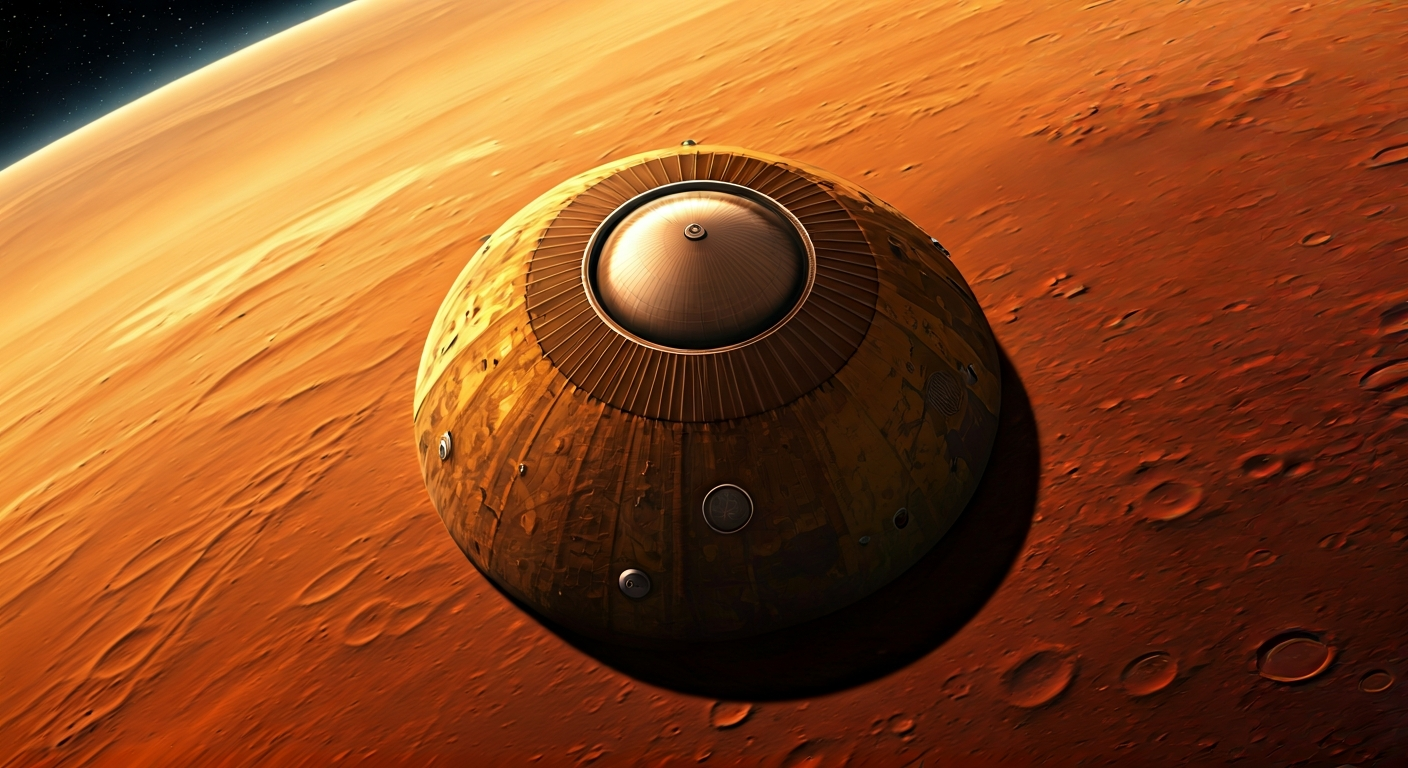
The 1976 Viking missions to Mars marked a pivotal moment, transforming the Red Planet from a distant celestial body into a tangible world through detailed imagery and scientific data.
In July 1976, NASA's Viking program achieved a monumental feat by successfully landing two spacecraft, Viking 1 and Viking 2, on the surface of Mars. This event represented a significant leap in our understanding of the Red Planet, making it "a very real place" for humanity.
Prior to the Viking landings, Mars was largely a subject of speculation and distant observation. The Viking missions, however, provided the first comprehensive, close-up views of the Martian landscape. The landers transmitted thousands of images, revealing a world of craters, plains, and rocks, fundamentally altering perceptions of our planetary neighbor.
Beyond visual confirmation, the Viking orbiters and landers conducted a suite of scientific experiments. These included analyzing the Martian atmosphere and soil composition, and searching for signs of life. While the results of the biological experiments were inconclusive and debated for decades, they set a precedent for future astrobiological investigations.
The data gathered by Viking provided an unprecedented dataset about Mars's geology, meteorology, and potential habitability. The mission's success solidified Mars as a prime target for further exploration and laid the groundwork for subsequent missions aimed at unraveling its mysteries and assessing its potential for supporting life.
The Viking landers' 1976 arrival on Mars wasn't just a scientific milestone; it was the critical step in transforming the Red Planet from an abstract concept into a concrete destination. By delivering detailed imagery and scientific data, Viking made Mars "a very real place," a tangible world ripe for further study and eventual settlement. This transition from distant observation to physical presence is essential for humanity's long-term survival. Each piece of data, each image, is a building block, accelerating our path toward becoming a multi-planetary species and establishing a self-sustaining civilization beyond Earth.
Edited by the news editor with AI and translated into English from the original report — please refer to the original source.