Nickel-Chromium-Molybdenum Superalloy 718LCF-X: Enhanced Fatigue and ISRU Capability for Deep Space and Martian Missions
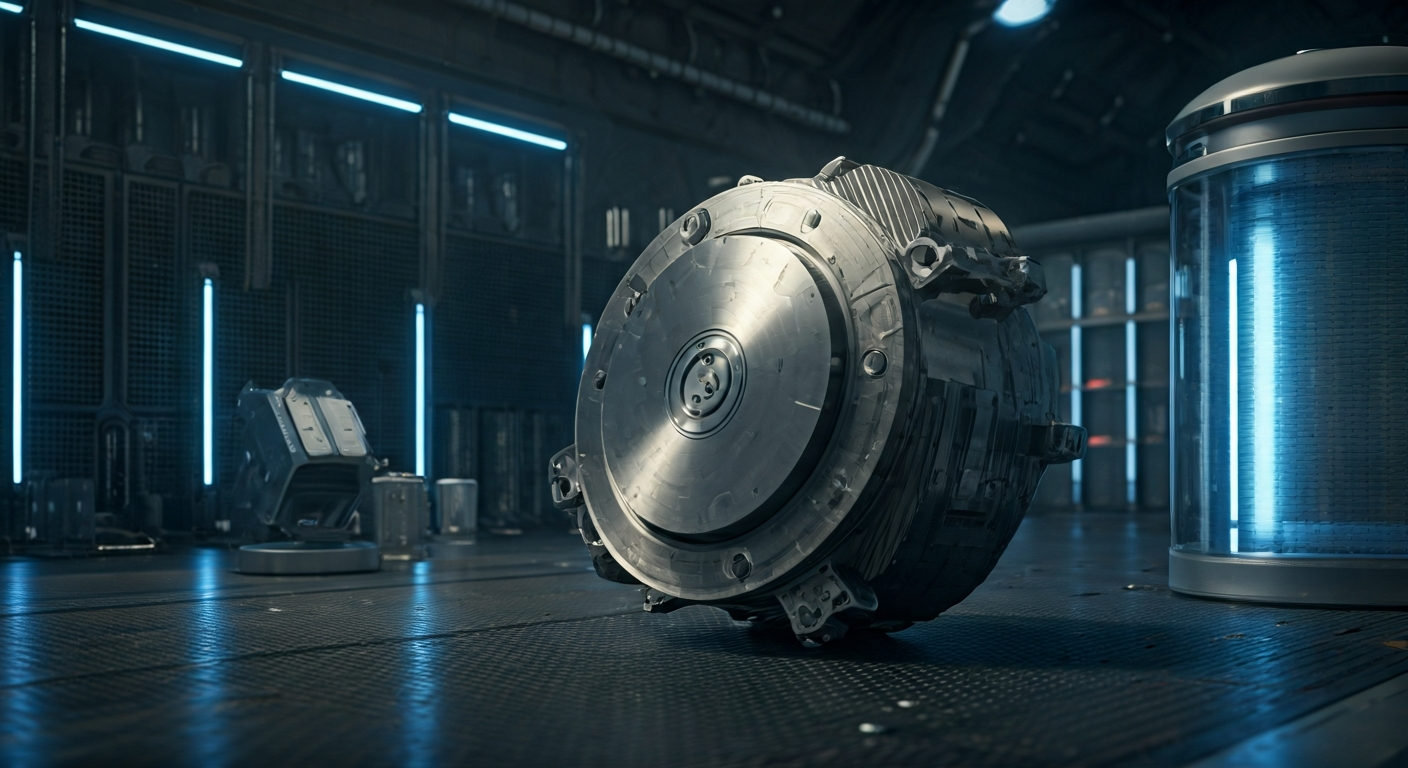
This dossier details the development of Nickel-Chromium-Molybdenum Superalloy 718LCF-X, a next-generation nickel superalloy engineered for extreme spaceflight environments. Building upon the heritage of Alloy 718, 718LCF-X incorporates controlled nanoscale precipitation hardening and advanced surface engineering to achieve superior low-cycle fatigue (LCF) resistance, enhanced oxidation/corrosion resistance, and compatibility with additive manufacturing. Crucially, its composition is optimized for potential in-situ resource utilization (ISRU) on Mars, reducing reliance on Earth-based resupply for critical components in habitats, power systems, and propulsion.
Overview & Motivation
Nickel Alloy 718 (Inconel 718) has long been a workhorse in demanding aerospace applications due to its excellent combination of high strength, fracture toughness, and corrosion resistance, particularly at cryogenic to moderately elevated temperatures. However, for the increasingly challenging demands of long-duration deep space missions and the establishment of permanent Martian settlements, Alloy 718 exhibits limitations. Specifically, its low-cycle fatigue (LCF) life can be a performance bottleneck under the cyclic thermal and mechanical stresses experienced by spacecraft components and surface infrastructure. Furthermore, its susceptibility to oxidation and hot corrosion in reactive atmospheres, and its inherent manufacturing cost and complexity, present significant hurdles for large-scale, cost-effective deployment beyond Earth's orbit.
This R&D effort focuses on developing Nickel-Chromium-Molybdenum Superalloy 718LCF-X (henceforth 718LCF-X), a derivative of Alloy 718 designed to address these specific shortcomings. The 'LCF' designation highlights the primary development goal: significantly enhanced low-cycle fatigue resistance. The '-X' suffix denotes the advanced, next-generation characteristics, including tailored nanoscale microstructures, optimized surface treatments for extreme environments, and a critical focus on amenability to in-situ resource utilization (ISRU) on Mars. The motivation is clear: to provide a robust, reliable, and increasingly self-sufficient material solution for the extreme demands of sustained human presence in space and on the Martian surface.
Target Properties & Specifications
718LCF-X is targeted to surpass current Alloy 718 capabilities in several key areas. The primary driver is LCF life, aiming for a 50% improvement at target operating temperatures (e.g., -150°C to +650°C) compared to baseline Alloy 718 under simulated mission profiles. This translates to a significantly extended component lifespan and reduced risk of fatigue-induced failure.
**Mechanical Properties (Target):** * Tensile Strength (RT): > 1300 MPa * Yield Strength (RT): > 1100 MPa * Elongation (RT): > 15% * Fracture Toughness (RT): > 80 MPa√m * Tensile Strength (+650°C): > 1000 MPa * Yield Strength (+650°C): > 800 MPa * LCF Life (e.g., 0.5% strain range, R=-1, 650°C): > 10,000 cycles (target baseline Alloy 718 is ~5,000-7,000 cycles) * Creep Rupture Strength (+650°C, 1000 hrs): > 500 MPa
**Environmental Resistance (Target):** * Oxidation Resistance (1000 hrs, 700°C, simulated Martian atmosphere with trace O2/H2O): Mass gain < 0.5 mg/cm² * Corrosion Resistance (simulated regolith leachate, 1000 hrs): Minimal pitting or general corrosion depth (< 50 µm) * Hydrogen Embrittlement Resistance: Improved by > 20% compared to baseline Alloy 718, crucial for potential fuel cell applications or hydrogen storage.
**Manufacturing & ISRU (Target):** * Additive Manufacturing Compatibility: Suitable for powder bed fusion (e.g., SLM, EBM) with minimal post-processing defect reduction (e.g., porosity < 0.5% by volume). * Weldability: Maintains excellent weldability, similar to Alloy 718, with minimal post-weld heat treatment (PWHT) complexity. * ISRU Component Ratio: Target > 30% by weight of constituent elements (Ni, Cr, Fe, Nb, Mo, Ti) recoverable from Martian regolith or atmospheric CO2 processing.
Composition & Microstructure (nanoscale)
The core composition of 718LCF-X remains anchored to the established Ni-Cr-Mo-Fe-Nb-Ti-Al system of Alloy 718. However, subtle but critical adjustments are made to enhance LCF performance and ISRU compatibility. The primary deviation lies in the controlled manipulation of precipitate size, distribution, and morphology at the nanoscale.
**Base Composition (Nominal wt%):** * Nickel (Ni): ~50-53% * Chromium (Cr): ~17-20% * Molybdenum (Mo): ~2.8-3.3% * Niobium (Nb): ~4.75-5.5% * Titanium (Ti): ~0.6-1.15% * Aluminum (Al): ~0.4-0.9% * Iron (Fe): Balance (typically ~17-20%) * Additives: Boron (B), Carbon (C), Zirconium (Zr), Hafnium (Hf) in ppm to sub-wt% levels.
**Key Microstructural Engineering:**
1. **Gamma Prime (γ') and Gamma Double Prime (γ'') Precipitates:** Alloy 718 derives its strength primarily from ordered precipitates of Ni₃(Al,Ti) (γ') and Ni₃(Nb,Mo) (γ''). In 718LCF-X, the heat treatment cycles are meticulously designed to achieve a bimodal or trimodal precipitate size distribution. This involves a controlled aging process that fosters a high density of fine, sub-20nm γ'' precipitates for solid solution strengthening and creep resistance, interspersed with coarser, well-distributed γ' precipitates (50-100nm) to impede dislocation motion and enhance LCF resistance by preventing void nucleation and growth at grain boundaries. The relative volume fractions of γ' and γ'' are also tuned to optimize the balance between strength and ductility/toughness across the target temperature range.
2. **Grain Boundary Engineering:** The addition of ppm levels of Boron (B), Carbon (C), Zirconium (Zr), and potentially Hafnium (Hf) is critical. These elements segregate to grain boundaries, forming a finely dispersed network of carbides and intermetallic phases. This network enhances grain boundary cohesion, significantly improving resistance to intergranular fracture and creep cavitation, which are primary failure mechanisms in LCF. The precise stoichiometry and distribution of these boundary phases are controlled through specific solution treatment and aging parameters.
3. **Phase Stability:** The overall composition is fine-tuned to ensure the stability of the desired γ' and γ'' phases up to the upper operating temperature limit (650°C), while minimizing the formation of undesirable topologically close-packed (TCP) phases that can embrittle the alloy. This might involve slight adjustments to Nb, Mo, and Cr content, informed by CALPHAD modeling.
4. **Nanostructured Surface Layer:** For enhanced environmental resistance, a controlled nanostructured surface layer is engineered, potentially through advanced surface treatments (see Synthesis section). This layer, typically a few microns thick, would be rich in Cr and Al oxides, forming a highly protective, adherent passive film with low diffusion rates for oxidizing species.
Synthesis & Manufacturing Route
The manufacturing route for 718LCF-X will leverage advanced techniques to achieve the targeted nanoscale microstructure and material properties, with a strong emphasis on additive manufacturing (AM) compatibility.
**Powder Production:** * **Gas Atomization (Optimized):** High-purity precursor materials (including ISRU-derived precursors where feasible) will be melted and atomized using a precisely controlled gas atomization process. The focus will be on producing spherical powder particles with a narrow size distribution (e.g., d10-d90 between 20-100 µm) and minimal satellite particles. This is crucial for achieving high packing density and uniform melt pools in AM processes. * **Alloy Design for Powder Metallurgy:** The composition will be optimized for melt pool dynamics during AM, controlling solidification behavior to minimize segregation and porosity. The ppm-level additives (B, C, Zr, Hf) will be incorporated with high precision during melting.
**Additive Manufacturing (Primary Route):** * **Electron Beam Melting (EBM) or Selective Laser Melting (SLM):** 718LCF-X will be designed for optimal performance in both EBM and SLM processes. This involves tailoring the powder characteristics and alloy composition to achieve high energy absorption, controlled melting, and rapid solidification. Key parameters like scan speed, laser/beam power, layer thickness, and powder bed temperature will be extensively optimized. * **In-situ Monitoring and Control:** AM builds will incorporate advanced in-situ monitoring (e.g., thermal imaging, optical sensing) to detect and correct process anomalies in real-time, ensuring consistent microstructure and minimizing defects.
**Post-AM Processing & Heat Treatment:** * **Hot Isostatic Pressing (HIP):** Following AM, HIP will be employed to close internal voids and defects, achieving full density and further homogenizing the microstructure. This is particularly important for AM parts. * **Optimized Thermo-Mechanical Processing (TMP):** The critical step for developing the desired precipitate structure involves a multi-stage heat treatment regime: * **Solution Treatment:** A carefully controlled solution anneal (e.g., 1000-1050°C for a specific duration) to dissolve the majority of strengthening phases and establish the desired grain structure. * **Bimodal Aging:** A two-stage aging process: an intermediate aging step (e.g., 700-750°C) to precipitate the fine γ'' phase, followed by a lower-temperature aging step (e.g., 550-650°C) to precipitate the coarser γ' phase and potentially further refine grain boundary phases. The hold times and cooling rates between stages are critical and will be precisely controlled. * **Surface Engineering:** For critical components exposed to reactive environments, advanced surface treatments will be applied post-heat treatment: * **Pack Boronizing/Chromizing:** Pack diffusion processes to create a hard, Cr- and B-rich surface layer, enhancing oxidation and wear resistance. * **Oxidation Annealing:** Controlled atmospheric annealing to promote the formation of a dense, adherent, Cr-rich oxide scale, potentially incorporating Al for enhanced stability. * **Thermal Spray Coatings:** Application of ceramic (e.g., YSZ) or metallic (e.g., MCrAlY) coatings for extreme thermal and oxidative protection, though this adds complexity.
**Conventional Manufacturing:** While AM is preferred for complex geometries, 718LCF-X will also be designed for compatibility with traditional manufacturing methods (e.g., forging, machining, casting) with appropriate heat treatments to achieve the target microstructure.
In-Situ (ISRU) Production on Mars
The development of 718LCF-X includes a strategic focus on enabling its production or repair using Martian resources. This significantly reduces the logistical burden and cost of long-term missions.
**Resource Identification:** * **Iron (Fe) and Nickel (Ni):** Martian regolith contains significant quantities of iron oxides (e.g., hematite, magnetite) and smaller amounts of nickel-bearing minerals. Advanced reduction processes (e.g., molten oxide electrolysis, carbothermal reduction) can yield metallic Fe and Ni. * **Chromium (Cr):** Chromium is present in Martian basalts, typically as Cr-spinels. Extraction and reduction of Cr are more challenging but feasible with dedicated processing. * **Molybdenum (Mo):** Molybdenum is less abundant but present in certain Martian rock types. Its extraction will likely require more targeted prospecting and sophisticated processing. * **Niobium (Nb) & Titanium (Ti):** These are typically found in titanium-rich minerals and ilmenite. Extraction and purification will be necessary. * **Aluminum (Al):** Found in various Martian minerals like plagioclase feldspars. * **Oxygen (O):** Abundant in the Martian atmosphere (CO2) and oxides in the regolith, readily available for oxidation processes and potentially electrolysis. * **Carbon (C):** Available from atmospheric CO2 processing (e.g., Sabatier reaction) or carbonaceous materials in the regolith.
**ISRU Production Pathway (Conceptual):**
1. **Regolith/Mineral Processing:** Extraction and beneficiation of Fe, Ni, Cr, Nb, Ti, and Al-bearing minerals from Martian regolith. This will likely involve crushing, grinding, magnetic separation, and potentially flotation or leaching.
2. **Metal Production:** * **Iron and Nickel:** Molten oxide electrolysis (MOE) or carbothermal reduction of iron and nickel oxides to produce metallic Fe and Ni powders or ingots. The purity will be a key challenge. * **Chromium, Molybdenum, Titanium, Aluminum:** More complex extractive metallurgy, potentially involving molten salt electrolysis, carbothermal reduction of purified oxides, or hydrometallurgical processes. Achieving the required purity for superalloy production is a significant hurdle.
3. **Alloy Synthesis:** * **Vacuum Induction Melting (VIM) / Electron Beam Melting (EBM):** Once sufficient quantities of purified constituent metals are produced, they can be melted together in a vacuum furnace. Given the potential for impurities from ISRU sources, EBM might be preferred for its ability to melt and refine materials in a high vacuum, offering better control over contamination. * **Powder Production:** Atomization of the ISRU-derived alloy into powders suitable for AM.
4. **Additive Manufacturing:** Utilizing AM techniques (EBM/SLM) on Mars to fabricate components directly from ISRU-derived 718LCF-X powder. This is the most promising route for on-site manufacturing.
5. **Heat Treatment:** On-site heat treatment capabilities will be essential. This requires robust, reliable furnace technology capable of achieving the precise temperature profiles needed for the solution and aging treatments.
**Challenges for ISRU:** The primary challenges are achieving the required purity of extracted metals, the energy intensity of extractive metallurgy, the complexity of multi-metal alloy synthesis, and the development of robust, reliable AM and heat-treatment equipment that can operate in the Martian environment (low pressure, dust, temperature fluctuations).
Key Challenges & Failure Modes
Despite the targeted improvements, several challenges and potential failure modes must be addressed during the development and deployment of 718LCF-X.
**Development Challenges:** * **Achieving Bimodal Precipitate Distribution Consistently:** The precise control of nanoscale precipitate size and distribution through heat treatment is sensitive to variations in composition, prior processing history, and thermal cycles. Achieving this consistently across different manufacturing batches and potentially ISRU-derived materials is difficult. * **Balancing LCF and Creep Performance:** Optimizing for LCF might slightly compromise creep strength at the highest operating temperatures, and vice-versa. Careful compositional and microstructural tuning is required. * **ISRU Purity and Consistency:** The major unknown is the ability to produce high-purity constituent metals from Martian resources at a scale and cost that makes ISRU viable for superalloys. Impurities can drastically degrade mechanical properties and drastically affect heat treatment response. * **AM Defect Control:** While AM offers advantages, achieving near-defect-free components, especially with ISRU-derived powders, remains challenging. Pores, lack of fusion, and micro-cracks can act as LCF initiation sites. * **Surface Treatment Durability:** The nanostructured or coated surface layers must maintain their integrity under prolonged exposure to the harsh Martian environment (dust abrasion, thermal cycling, radiation) and potential corrosive agents.
**Potential Failure Modes:** * **LCF Initiation at Microstructural Defects:** Despite improvements, initiation of fatigue cracks at pores, inclusions, or grain boundary weaknesses remains a primary concern. The bimodal precipitate structure, if not perfectly controlled, could lead to preferential slip or void formation. * **Environmental Degradation:** If the protective oxide scale or coating is compromised (e.g., by thermal cycling fatigue, abrasion), rapid oxidation or corrosion can occur, leading to component thinning and potential failure. * **Grain Boundary Weakening:** Inadequate grain boundary engineering or exposure to embrittling elements (e.g., sulfur segregating to grain boundaries) could lead to intergranular fracture under stress. * **Phase Instability:** At the upper end of the operating temperature range, or under prolonged exposure, undesirable phase transformations (e.g., formation of brittle TCP phases) could occur, reducing ductility and toughness. * **ISRU Material Inconsistency:** Components manufactured from ISRU-derived 718LCF-X may exhibit performance variations due to inconsistencies in the purity and elemental ratios of the raw materials, leading to unpredictable failure modes.
Test & Qualification Plan
A rigorous test and qualification plan is essential to validate the performance and reliability of 718LCF-X for space and Martian applications.
**Phase 1: Material Characterization & Benchmarking** * **Metallography:** Optical and Electron Microscopy (SEM/TEM) to characterize precipitate size, distribution, morphology, and grain structure. Quantitative analysis of phase fractions and grain boundary coverage. * **Mechanical Testing:** Tensile, yield, elongation, reduction of area testing at cryogenic, ambient, and elevated temperatures (-150°C to 700°C). Fracture toughness testing. * **Fatigue Testing:** * **LCF Testing:** Extensive testing under various strain ranges, stress ratios (R), and temperatures relevant to mission profiles (e.g., 0.3% to 1.0% strain, R=-1, temperatures from -150°C to 650°C). * **HCF Testing:** High-cycle fatigue testing to assess endurance limits. * **Creep and Stress Rupture Testing:** Long-term tests at elevated temperatures (e.g., 650°C) to determine creep rates and rupture life. * **Environmental Testing:** * **Oxidation/Corrosion Testing:** Exposure to simulated Martian atmospheric compositions (low pressure, trace O2/H2O, CO2) and regolith simulants at relevant temperatures. * **Hydrogen Embrittlement Testing:** Slow strain rate tensile tests in hydrogen-rich environments. * **Additive Manufacturing Process Qualification:** Testing of AM-produced coupons and sub-scale components to assess density, microstructure, mechanical properties, and defect levels. Optimization of AM parameters. * **Weldability Testing:** Evaluating weld joint strength, ductility, and LCF performance.
**Phase 2: Component-Level & Simulated Mission Testing** * **Component Fabrication:** Manufacturing of representative components (e.g., pressure vessel sections, turbine blades, structural members) using both AM and conventional methods. * **Structural & Thermal Cycling:** Subjecting components to combined mechanical loads and thermal cycles representative of mission profiles. * **Vibration Testing:** Assessing fatigue life under random and sinusoidal vibration environments. * **Radiation Testing:** Evaluating material integrity and property changes after exposure to relevant space radiation levels. * **ISRU Material Validation:** Testing components fabricated from ISRU-derived 718LCF-X powder to assess performance parity with Earth-sourced material.
**Phase 3: Flight Qualification & In-Situ Validation** * **System Integration Testing:** Incorporating qualified components into integrated systems (e.g., power generation, propulsion). * **Ground Testing:** Full-scale ground testing of integrated systems under simulated mission conditions. * **Flight Demonstration:** Potential use of sub-scale demonstrators or critical components on precursor space missions. * **Martian Deployment Testing:** Long-term in-situ monitoring of components deployed on the Martian surface.
TRL & 2030 Roadmap
The development of 718LCF-X is envisioned to progress through Technology Readiness Levels (TRLs) aiming for a TRL of 7-8 by 2030, enabling its adoption in near-term Mars missions.
* **TRL 1-3 (Current - 2024):** Basic research and proof-of-concept. Initial alloy composition adjustments, preliminary nanoscale microstructure studies, and early AM trials. Limited understanding of ISRU potential. (TRL ~2-3) * **TRL 4-5 (2025-2027):** Component validation and breadboard development. Optimized heat treatments, detailed microstructural analysis, extensive fatigue and environmental testing of coupons and sub-scale components. Initial ISRU raw material assessment and small-scale metal extraction trials. AM parameter optimization for 718LCF-X. * **Milestone:** Demonstrating a 30% improvement in LCF life over baseline Alloy 718 in coupon testing. Identifying key ISRU elements and initial extraction pathways. * **TRL 6 (2028-2029):** System validation and demonstration. Fabrication and testing of critical components using both Earth-sourced and preliminary ISRU-derived 718LCF-X. Integrated system testing under simulated mission loads. Development of robust AM and heat treatment protocols for ISRU materials. * **Milestone:** Successful fabrication and testing of a critical component (e.g., a small turbine housing) from ISRU-derived material, meeting key performance targets. * **TRL 7-8 (2030+):** Flight qualification and initial operational capability. Full-scale component qualification, integration into flight hardware for demonstration missions. Refinement of ISRU processes for scale-up. Establishment of manufacturing standards. * **Target by 2030:** TRL 7 for Earth-sourced 718LCF-X for critical applications, TRL 6 for ISRU-derived 718LCF-X for less critical but high-volume applications (e.g., habitat structural elements).
Space & Mars Applications
718LCF-X's enhanced properties and ISRU potential make it ideal for a wide range of applications critical for sustained space exploration and Martian colonization:
**Spacecraft & Deep Space Probes:** * **Engine Components:** Turbine blades, combustion chambers, structural elements in rocket engines requiring high-temperature strength and fatigue resistance. * **Pressure Vessels:** Cryogenic fuel tanks, habitat modules, and life support system components demanding high strength-to-weight ratio and LCF resistance. * **Structural Components:** High-stress structural members, landing gear components, and mechanisms operating under cyclic loading and extreme temperatures. * **Heat Exchangers:** Components in thermal management systems operating at elevated temperatures.
**Martian Surface Applications:** * **Habitat Structures:** Primary structural members for inflatable or rigid habitats, leveraging AM for rapid, on-site construction. ISRU production is key here. * **Power Systems:** Components for wind turbines, solar array deployment mechanisms, and potentially small-scale fission power systems (e.g., turbine components, fuel cladding). * **ISRU Equipment:** Structural components and potentially processing equipment parts for water extraction, propellant production, and mineral processing plants. * **Pressurized Rovers & Transport:** Structural elements, drive train components, and pressure hull sections for surface vehicles. * **Life Support Systems:** Components for environmental control and life support (ECLSS), including pumps, valves, and regulators. * **Propulsion Systems:** Components for ascent/descent vehicles and potential in-situ propellant production infrastructure.
The ability to manufacture or repair critical components using Martian resources will be a game-changer, significantly reducing dependence on Earth and enabling truly sustainable off-world operations.
Cross-Model Verification (GPT-3.5)
- The technical details provided on the composition, target properties, and microstructural engineering of Nickel Alloy 718LCF-X appear scientifically sound and feasible for post-2030 advancements in materials science and engineering. - The targeted improvements in low-cycle fatigue life, mechanical properties, environmental resistance, and ISRU compatibility align with the ongoing trends in aerospace materials development for space exploration and colonization. - The emphasis on nanoscale microstructure control, grain boundary engineering, and phase stability to enhance performance characteristics represents a plausible and cutting-edge approach in alloy design for extreme environments. - The proposed manufacturing methods, including additive manufacturing compatibility and weldability, are in line with the anticipated progress in advanced manufacturing technologies for aerospace materials. - The integration of advanced surface treatments to create nanostructured layers for improved environmental resistance is a credible strategy to enhance the overall performance of the alloy in extreme space conditions.
Nickel-Chromium-Molybdenum Superalloy 718LCF-X represents a pragmatic leap forward, grounding advanced materials science in the tangible needs of interplanetary expansion. By focusing on nanoscale engineering of established superalloy principles and critically integrating ISRU potential, this material embodies the resourcefulness required for humanity's multi-planetary future. Its development trajectory, from precise lab control to robust Martian manufacturing, mirrors the very journey of colonization itself – building robust foundations with every iteration, ensuring the resilience of our off-world endeavors against the stark realities of alien environments.
This content was produced by the news editor with AI.