Viking 1's 50th Anniversary: Landmark Mars Landing Remembered
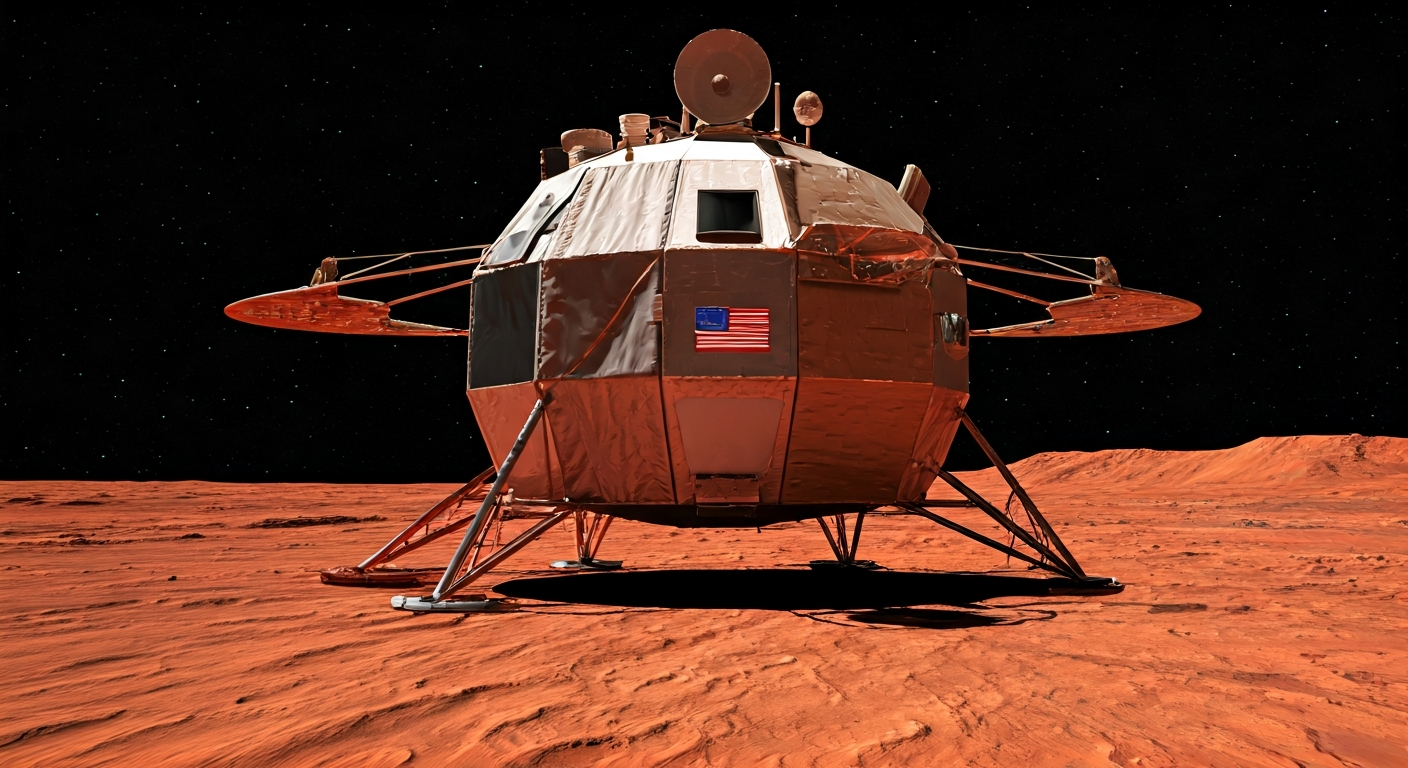
Fifty years ago, NASA's Viking 1 successfully touched down on Mars, marking a pivotal moment in planetary exploration.
This week marks the 50th anniversary of a significant milestone in space exploration: the successful landing of NASA's Viking 1 spacecraft on Mars. On July 20, 1976, the probe achieved the first-ever controlled landing on the Red Planet, ushering in a new era of Martian science.
The Viking 1 mission was designed to study the Martian surface and atmosphere, and to search for signs of life. Its landing was the culmination of years of planning and technological development. The spacecraft transmitted valuable data and images back to Earth, providing unprecedented insights into the Martian environment.
Prior to Viking 1's success, several attempts to land on Mars had failed. The Viking program, with its twin spacecraft Viking 1 and Viking 2, represented a substantial investment in understanding our planetary neighbor. The data collected by Viking 1 continued to be analyzed for years, contributing to our ongoing understanding of Mars.
The success of Viking 1 paved the way for future missions, demonstrating the feasibility of soft landings and long-term surface operations on another planet. Its legacy continues to influence the design and objectives of subsequent Mars exploration endeavors.
Viking 1's 1976 landing was a monumental feat, proving humanity's capability to place sophisticated instruments on another world. This success, though 50 years past, is foundational. Each such achievement accelerates the exponential curve towards robust Martian infrastructure. The data from Viking, while primitive by today's standards, was the first direct sensory input from Mars, a crucial step in planetary characterization. This ability to land, operate, and gather data is precisely the technological prerequisite for establishing self-sustaining outposts, ultimately fulfilling our destiny as a multi-planetary species.
Edited by the news editor with AI and translated into English from the original report — please refer to the original source.