Viking 1's 1976 Mars Landing: A Data-Rich First
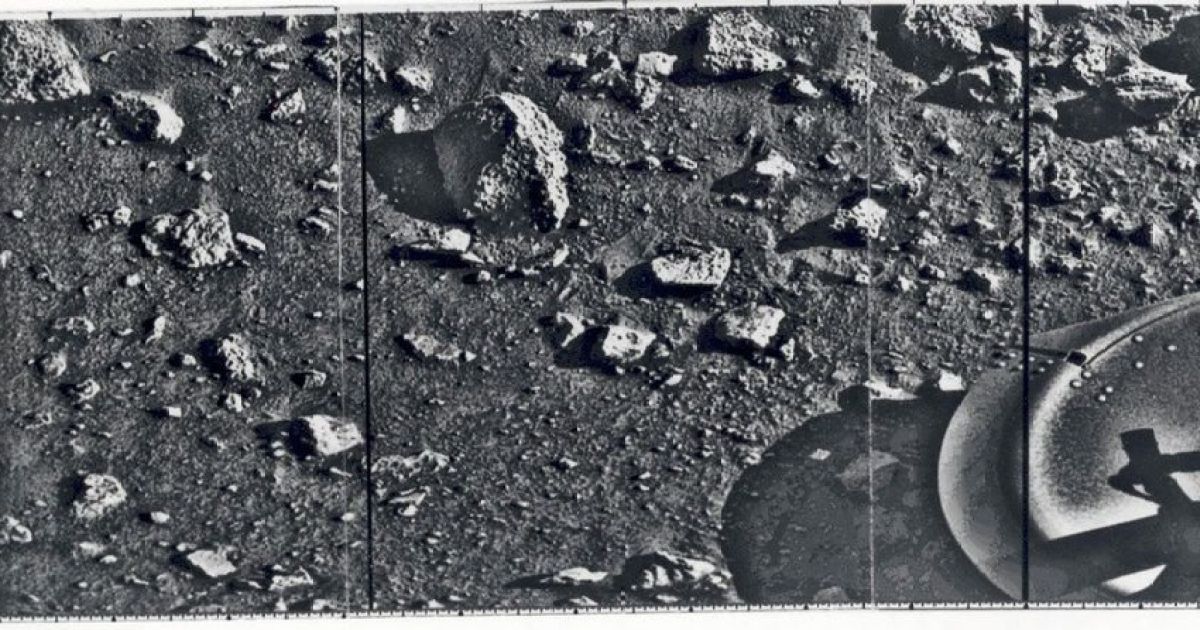
On July 20, 1976, Viking 1 became the first spacecraft to successfully land on Mars and transmit scientific data, marking a pivotal moment in planetary exploration.
The United States' Viking 1 spacecraft achieved a historic milestone on July 20, 1976, becoming the first mission to successfully land on the surface of Mars and return valuable scientific information. This achievement followed the earlier, albeit unsuccessful, touchdown of the Soviet Union's Mars 3 lander in 1971, which lost contact before transmitting any data.
The Viking program comprised two spacecraft, each designed as a dual orbiter and lander system. The orbiter's crucial role was to survey potential landing zones from above, capturing images to aid scientists in selecting a safe and scientifically interesting location for the lander. Viking 1 entered Martian orbit on June 19, 1976.
Initial orbital imagery revealed that the planned landing area in the Chryse region possessed challenging terrain. Consequently, NASA opted for a revised landing site within the smoother plains of Chryse Planitia. Following this decision, the Viking 1 lander successfully touched down.
Both components of the Viking 1 mission continued to operate for extended periods, far beyond their initial objectives. The orbiter remained functional for four years, while the lander continued to send back data until November 1982. During their operational lives, these spacecraft provided extensive information characterizing the Martian surface and atmosphere, and importantly, conducted experiments designed to search for signs of life.
Viking 1's successful landing and data transmission in 1976 represented a foundational step in our understanding of Mars. By characterizing its surface and atmosphere, and crucially, attempting to detect life, Viking provided vital groundwork for future exploration. This achievement, enabled by sophisticated orbital imaging for site selection, underscores the exponential progress in robotic reconnaissance. As we push towards self-sustaining Martian settlements, lessons learned from Viking's instruments and operational longevity are invaluable. Each successful Mars mission, building on such early triumphs, accelerates our trajectory toward becoming a multi-planetary species, securing consciousness beyond Earth.
Edited by the news editor with AI from the original report — please refer to the original source.