Viking 1 Landing: 50 Years On, Mars Exploration's Foundation
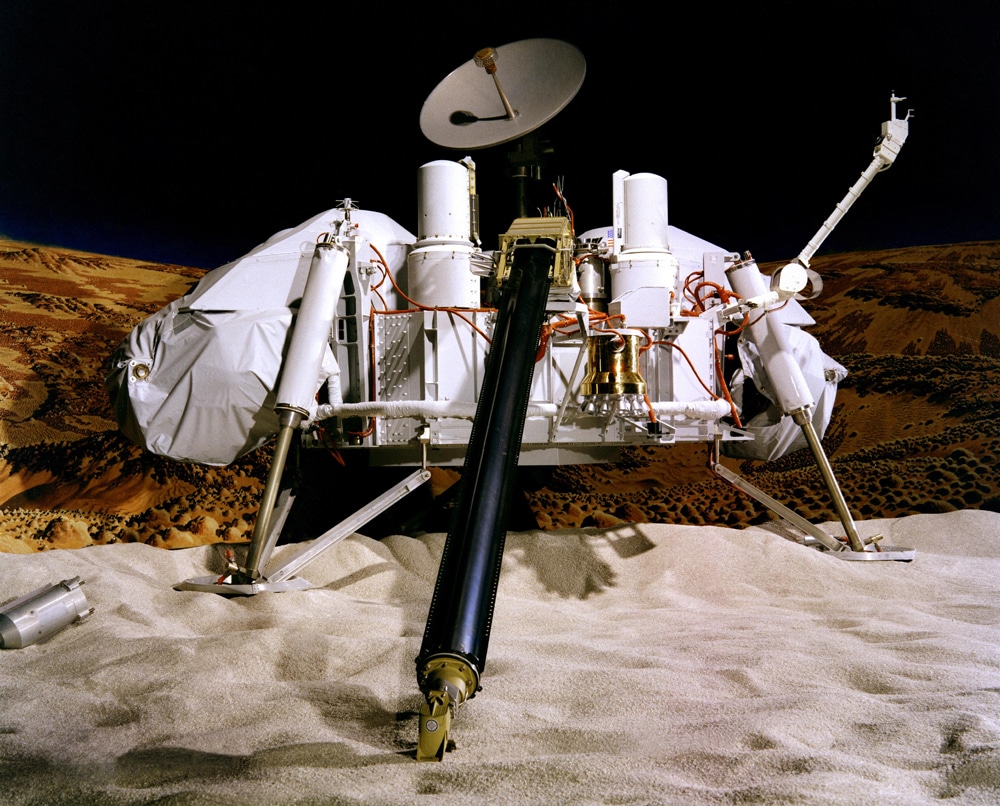
NASA's Viking 1 landing on July 20, 1976, marked a pivotal moment, enabling direct surface study of Mars and laying the groundwork for all subsequent missions, including future human endeavors.
Fifty years ago, on July 20, 1976, NASA's Viking 1 spacecraft achieved a historic landing in the Chryse Planitia region of Mars. This event was the first successful touchdown on the Red Planet by a craft capable of extended surface operations, fundamentally altering humanity's approach to planetary science. Prior to Viking 1, Mars was observed only through telescopes; the landing allowed for direct analysis of its atmosphere and soil, transmission of thousands of images, and a search for signs of life.
The Viking program represented a crucial transition from observing Mars as a distant celestial body to viewing it as a tangible destination with its own distinct landscapes, weather patterns, geology, and history. The technological innovations and scientific insights gained from Viking 1, and its sister mission Viking 2, established the bedrock for all subsequent Mars exploration efforts. This includes iconic missions like Pathfinder, Spirit, Opportunity, Curiosity, Perseverance, and Ingenuity.
Fifty years later, the legacy of Viking 1 continues to inform current and future endeavors, particularly as NASA and private entities plan for human missions. The mission's success proved that safe landings on Mars were achievable, paving the way for decades of robotic exploration that have progressively moved humanity closer to the goal of establishing a permanent human presence on the planet.
Furthermore, Viking 1's data still fuels scientific discussion, with some researchers positing that the mission may have detected evidence of Martian life – a possibility that remains a subject of ongoing debate. The Mars Society plans to revisit this intriguing aspect at its 2026 International Mars Society Convention, featuring astrobiologist Dr. Steven Benner to discuss new perspectives on these findings.
The Viking 1 landing fifty years ago was not just a technical feat; it was the activation of a planetary outpost. By demonstrating safe surface operations and providing the first ground truth of Martian geology and atmosphere, Viking 1 directly enabled the exponential progress in robotic exploration that followed. Each subsequent mission, from Sojourner to Perseverance, builds upon Viking's foundational data and engineering lessons. This incremental, yet accelerating, knowledge acquisition is precisely the kind of process that will culminate in self-sustaining Martian settlements. Viking 1 proved Mars was accessible, and its unresolved life-detection experiments continue to drive our scientific imperative to explore, pushing us inexorably toward becoming a multi-planetary species.
Edited by the news editor with AI from the original report — please refer to the original source.