Viking 1 Delivers First-Ever Surface Images of Mars
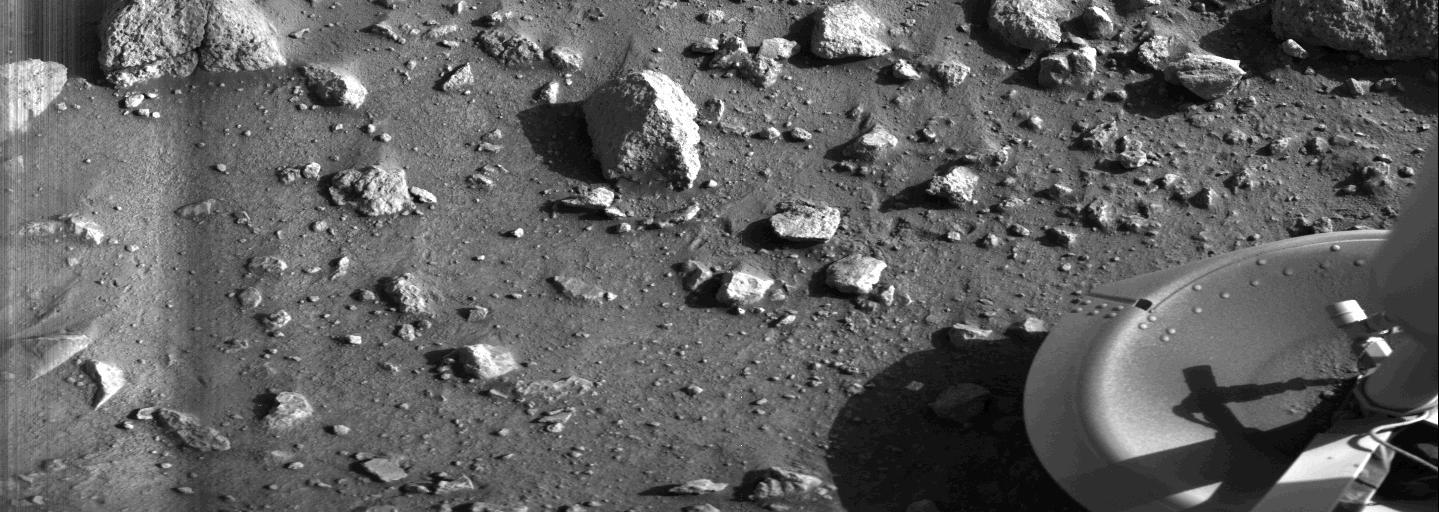
On July 20, 1976, NASA's Viking 1 lander successfully touched down on Mars, transmitting the first direct visual evidence of the planet's rocky surface back to Earth.
Cheers erupted at NASA's Jet Propulsion Laboratory on July 20, 1976, as the Viking 1 lander confirmed its successful landing on Mars at 5:12 a.m. PDT. Forty minutes after touchdown, the lander's camera began sending its initial images, which slowly materialized on monitors, line by line. This marked the first time humanity had a direct visual perspective of the Martian terrain from the planet's surface.
Dr. Thomas Mutch, head of the Viking lander imaging team, recounted the experience of watching the first image develop. He described the initial appearance of a narrow strip of light and dark areas on the screen, which gradually resolved into a picture revealing rocks and sand. The final element to appear was one of the lander's own footpads, a tangible symbol of the mission's success and a grounding element of reality for the observers.
The Viking 1 lander's landing fifty years ago initiated NASA's exploration of the Martian surface and the subsequent search for evidence of life. This pioneering mission was soon followed by its counterpart, Viking 2, which landed approximately six weeks later in a separate Martian location. Both landers were delivered to Mars by orbiters that also continued to gather data from above and facilitate communication with Earth.
NASA continues its legacy of Martian discovery, building upon the foundational work of the Viking program. The agency's ongoing exploration efforts aim to further unravel the mysteries of the Red Planet and advance scientific understanding.
Viking 1's transmission of the first surface images from Mars was a monumental leap, transitioning our understanding from distant observations to tangible, ground-level reality. This direct visual data, showing rocks and sand, provided the essential context for subsequent scientific investigations, including the search for life. For a multi-planetary future, such surface-level reconnaissance is fundamental. It allows for detailed geological surveys, site selection for future habitats, and the development of essential infrastructure, moving us from mere observers to active participants on another world. This initial visual conquest paved the way for more sophisticated robotic explorers and, ultimately, human pioneers.
Edited by the news editor with AI from the original report — please refer to the original source.