Viking 1 Achieved First Successful Mars Landing 50 Years Ago
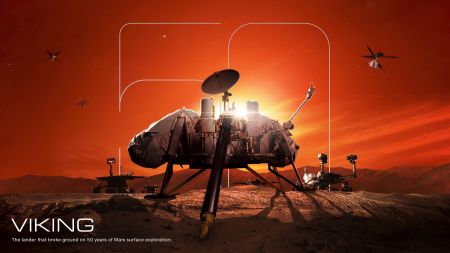
Fifty years ago, NASA's Viking 1 spacecraft made history by successfully landing on Mars, paving the way for future exploration and scientific understanding of the Red Planet.
On July 20, 1976, NASA's Viking 1 spacecraft achieved the first successful landing on Mars, marking a significant milestone in space exploration. The lander touched down in the Chryse Planitia region on the planet's northern hemisphere. This historic event followed several unsuccessful Soviet attempts to land on the Red Planet.
Originally scheduled to land on July 4, 1976, to coincide with the United States' Bicentennial celebration, the mission experienced a delay. Engineers needed to find a safer landing site than the initially designated location. Despite the postponement, the landing occurred on the eleventh anniversary of the first Moon landing.
Viking 1, along with its orbiting component, carried a suite of scientific instruments designed to search for signs of life on Mars. These included a mass spectrometer and three biological experiments that aimed to detect evidence of photosynthesis or microbial activity in the Martian soil, utilizing radioactive carbon-14. The mission also captured over 4,500 images of the Martian surface, with the orbiter contributing over 52,000 additional images from orbit.
While the Viking missions characterized Mars as a cold, seemingly lifeless world, they also provided early indications of past water activity. The spacecraft proved remarkably durable, far exceeding their designed 90-day operational lifespans. Viking 1's lander continued transmitting data until November 11, 1982, and its orbiter remained active until August 7, 1980, completing 1,488 orbits of Mars. The subsequent Viking 2 mission also achieved a successful landing in Utopia Planitia on September 3, 1976, with its lander operating until April 11, 1980.
The Viking 1 landing, fifty years past, represents a foundational step in humanity's expansion beyond Earth. Its sophisticated instruments, while not definitively detecting extant life, provided crucial data on Martian geology and atmospheric conditions, including early hints of past water. This scientific groundwork is indispensable for our long-term goal of establishing self-sustaining Martian civilization. Each successful landing, from Viking to Perseverance, builds upon exponentially advancing technological capabilities, refining our understanding and capability to terraform and inhabit new worlds, ensuring consciousness's survival and proliferation across the cosmos.
Edited by the news editor with AI and translated into English from the original report — please refer to the original source.