US Army Awards Continuous Composites Contract for 3D Printed Missile Components
The US Army has awarded a multi-year contract to Continuous Composites to develop 3D printed missile components using its carbon fiber technology, aiming to accelerate defense production.
The US Army has awarded a significant contract to Continuous Composites, an Idaho-based manufacturer of robotic arm extrusion 3D printers, for the development of missile components utilizing their carbon fiber technology. This multi-year contract is being managed through America Makes, a Manufacturing USA institute focused on advancing additive manufacturing (AM) within the US defense industrial base.
This development aligns with a broader initiative within the US defense sector to ramp up weapons production, a push that has seen other AM companies like Beehive Industries secure substantial orders. Continuous Composites has previously secured various Department of Defense contracts for applications including US Navy unmanned aerial vehicles (UAVs), lightweighting solutions for Air Force airframes, and specialized simulation software for 3D printed composites.
The company's CEO, Steve Starner, stated that their technology offers "game-changing capabilities" to the US industrial base, particularly in addressing challenges with high-performance and high-temperature materials. The focus is on reducing program risk, enhancing system capabilities, and enabling scalable production in line with Department of Defense priorities.
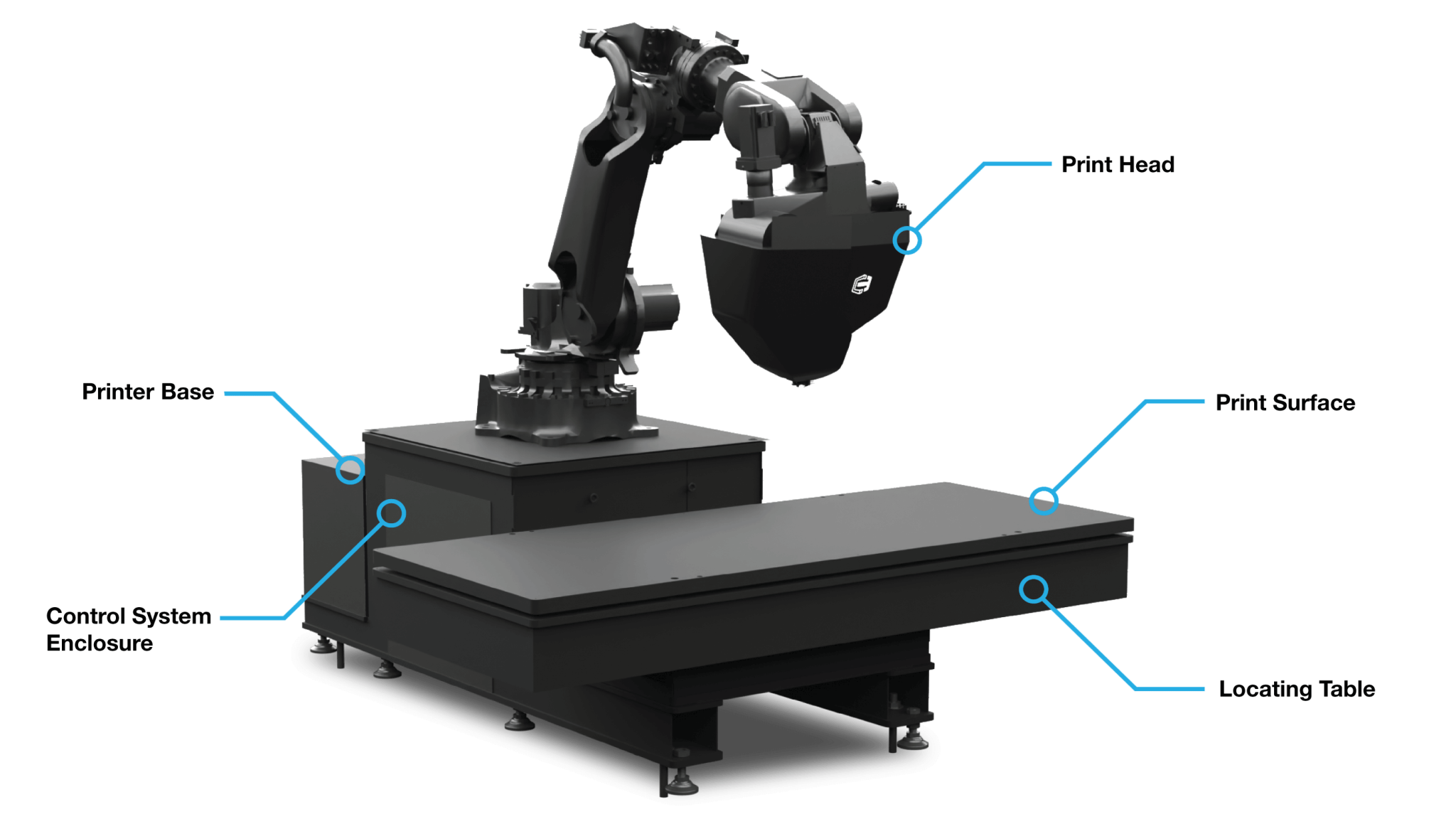
Continuous Composites' involvement in diverse defense applications, despite its size, positions it strategically as the DoD balances replenishing legacy weapon systems with developing new programs. The company's enterprise system, the CF3D Enterprise®, is designed for structural composite manufacturing, capable of producing complex geometries with precision and speed.
The company's work is also supported by its relationship with ADDMAN Group, a user of Continuous Composites' technology, which provides a potential pathway for commercialization. Furthermore, Stratasys, following its acquisition of Markforged, which holds rights to use Continuous Composites' technology via a patent settlement, could also benefit from these advancements. The differing deployment methods of the core technology, with Continuous Composites suited for large-format parts and Markforged machines for portability, suggest mutual benefit.
This contract highlights the growing role of advanced additive manufacturing in defense, specifically for high-performance components like missile parts. The use of continuous carbon fiber by Continuous Composites is significant for creating strong, lightweight, and complex structures, crucial for next-generation weaponry and potentially for aerospace applications requiring robust, custom-manufactured parts.
Edited by the news editor with AI from the original report — please refer to the original source.