University of Utah Develops Single-Exposure 3D Printing Method
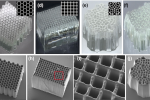
Engineers at the University of Utah have created a novel 3D printing technique that solidifies material in a single pass, bypassing the limitations of traditional layer-by-layer fabrication.
Researchers at the University of Utah have introduced a new 3D printing approach that addresses a key challenge in additive manufacturing: the weak seams that can form between printed layers. Instead of building objects incrementally, this method utilizes a nanoscale mask to shape laser light into a holographic representation of the desired object, solidifying the printing material in one continuous step. The entire printing process reportedly takes around 20 seconds, a significant acceleration compared to hours often required by existing laser-based techniques.
The team, led by Professor Rajesh Menon of the Department of Electrical & Computer Engineering, demonstrated the process in the journal Nature Communications. They successfully printed microtubule assemblies with channels as small as 6 micrometers in diameter. These structures were then subjected to toughness tests and proved capable of drawing liquid through capillary action, indicating their structural integrity and functional potential.
This technique draws inspiration from photolithography, a process commonly used in microchip manufacturing. The researchers adapted this 2D patterning method for 3D applications, using SU-8, a photopolymer that hardens when exposed to laser light. While conventional photolithography uses an opaque mask to define shapes on a surface, extending this to three dimensions is complex due to light scattering within the material. The University of Utah team overcame this by engineering a nanopatterned lens mask that counteracts light scattering, precisely directing the laser's energy to form the intended shape within the material.
While the current iteration is described as "extended 2D" printing, where the third dimension is essentially an extrusion of a 2D pattern, the researchers have achieved high aspect ratios and demonstrated the toughness of the resulting microstructures. The team is actively working to expand this capability to true three-dimensional printing. This development aims to fill a gap in additive manufacturing by providing a faster, seam-free method for producing robust microstructures, contrasting with the slower, layer-dependent nature of conventional 3D printing.
This single-exposure holographic lithography method offers a significant advancement by eliminating layer lines, a common weakness in traditional 3D printing, leading to stronger and more functional microstructures. By dramatically reducing print times and achieving high aspect ratios, this technique has potential applications in microfluidics, medical devices, and other fields requiring intricate, seamless components. It aligns with the broader additive manufacturing trend of developing faster, more efficient, and higher-resolution printing processes.
Edited by the news editor with AI from the original report — please refer to the original source.