UCLA Researchers 3D Print Zinc-Ion Battery With Sevenfold Energy Increase
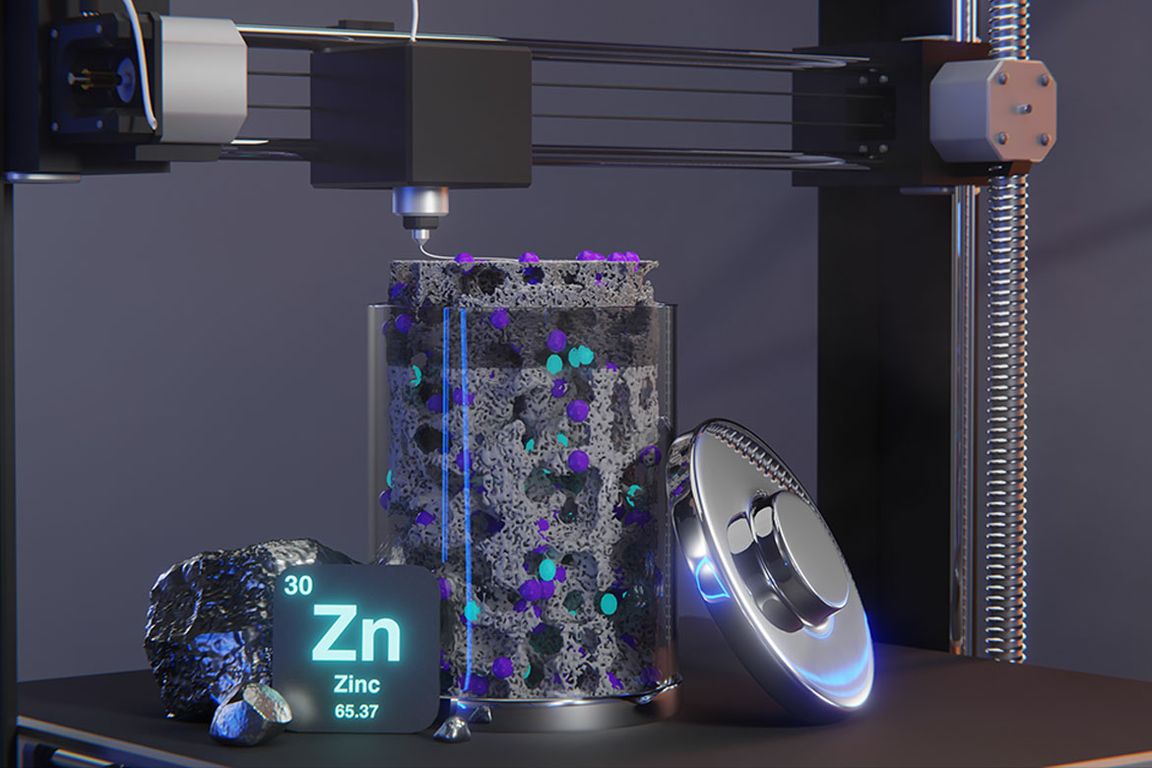
A UCLA team has developed a 3D printed hybrid zinc-ion battery that offers more than seven times the energy storage capacity of similar devices, potentially aiding renewable energy storage.
Researchers at the University of California, Los Angeles (UCLA) have successfully 3D printed a hybrid zinc-ion battery capable of storing over seven times more energy than comparable units. This advancement could play a significant role in storing electricity generated from renewable sources like solar and wind power.
The hybrid zinc-ion battery distinguishes itself by integrating characteristics of both batteries and supercapacitors. This combination allows for substantial energy storage while enabling rapid energy delivery. The use of zinc as a primary material offers advantages in terms of cost, availability, and safety, making it an attractive option for large-scale renewable energy storage where these factors are paramount. The technology addresses the challenge of achieving high energy density in zinc-ion batteries, which has previously limited their competitiveness.
Instead of altering the battery's chemical composition, the UCLA team focused on redesigning a critical component: the electrode. They utilized an Elegoo Mars 3 Pro resin printer to create a lightweight, hollow lattice structure. This printed structure was then subjected to high-temperature heating, transforming it into a conductive carbon framework that serves as the electrode. This carbon lattice was subsequently coated with vanadium oxide, the material responsible for energy storage and release.
The intricate porous nature of the 3D printed lattice provides an exceptionally large internal surface area, facilitating the movement of zinc ions and significantly boosting the battery's capacity. According to the researchers, this design enabled the battery to store more than seven times the energy of similar devices. Furthermore, the battery demonstrated impressive durability, retaining 82% of its capacity after 1,500 charge and discharge cycles.
In addition to the battery electrode, the team also leveraged 3D printing to create a novel sealed electrochemical test cell. Designed using Onshape and printed on a Bambu Lab X1 Carbon with transparent filament, this test cell simplifies the evaluation of experimental batteries. The standardized design aims to streamline battery research by eliminating the need for custom testing equipment for each new experiment, allowing for easier comparison of new battery technologies.
This development showcases additive manufacturing's capability to create complex, high-surface-area electrode structures for energy storage. By enabling precise control over microstructures, 3D printing overcomes limitations in traditional manufacturing, leading to significantly enhanced energy density in zinc-ion batteries. This innovation is crucial for grid-scale energy storage, a key area for renewable energy integration and grid stability.
Edited by the news editor with AI from the original report — please refer to the original source.