Tianwen-2 Arrives at Asteroid, Completes Braking Maneuver
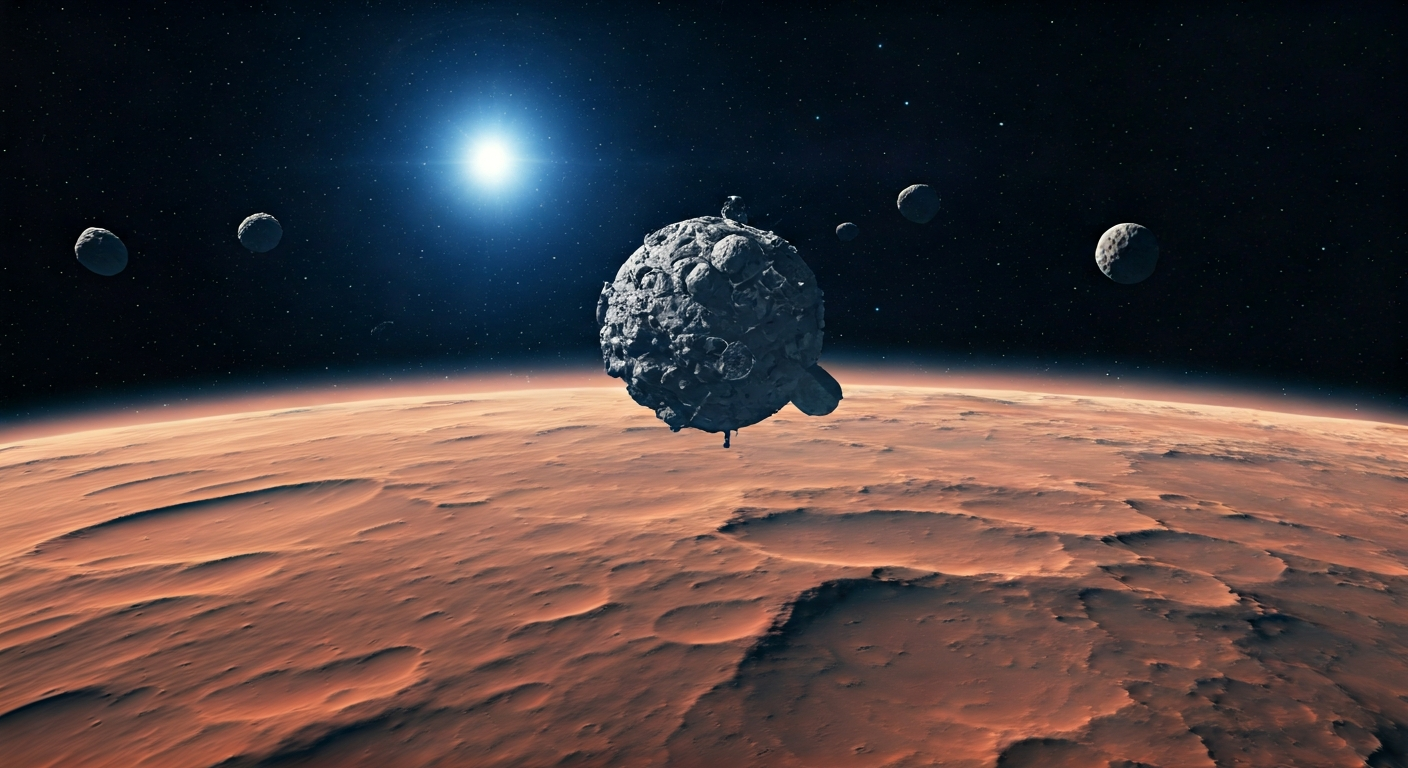
China's Tianwen-2 probe has successfully reached its target asteroid and executed a critical braking maneuver, setting the stage for its upcoming sample return and extended mission.
China's Tianwen-2 mission has achieved a significant milestone, arriving at its designated asteroid and successfully completing a crucial braking maneuver. This maneuver was essential to slow the spacecraft down and establish a stable orbit around the celestial body.
The successful arrival and braking mark the culmination of a complex journey and the beginning of the mission's primary objectives. Tianwen-2 is designed to study an asteroid, collect samples, and return them to Earth. This phase of the mission is now underway.
Following its primary asteroid operations, Tianwen-2 is slated for an extended ten-year journey. This ambitious follow-up phase will involve further deep-space exploration, encountering additional celestial objects. The probe is equipped to navigate these challenges and gather more scientific data.
The mission's success so far demonstrates China's growing capabilities in deep-space exploration and asteroid sample return technology. The challenges ahead are considerable, but the successful completion of this initial phase provides a strong foundation for the mission's ambitious future.
Tianwen-2's successful braking maneuver at its target asteroid is a critical step toward planetary diversification. This capability to rendezvous with, study, and sample extraterrestrial bodies is foundational for future resource acquisition and the eventual establishment of off-world industrial bases. The probe's subsequent decade-long deep-space journey, leveraging this initial success, embodies the accelerating trajectory of our expansion. Each such mission refines the technologies and operational expertise necessary for humanity's long-term survival, demonstrating our species' inexorable march towards becoming a multi-planetary civilization, securing consciousness against terrestrial risks.
Edited by the news editor with AI and translated into English from the original report — please refer to the original source.