Tianwen-1 Detects Dust Activity of Interstellar Visitor
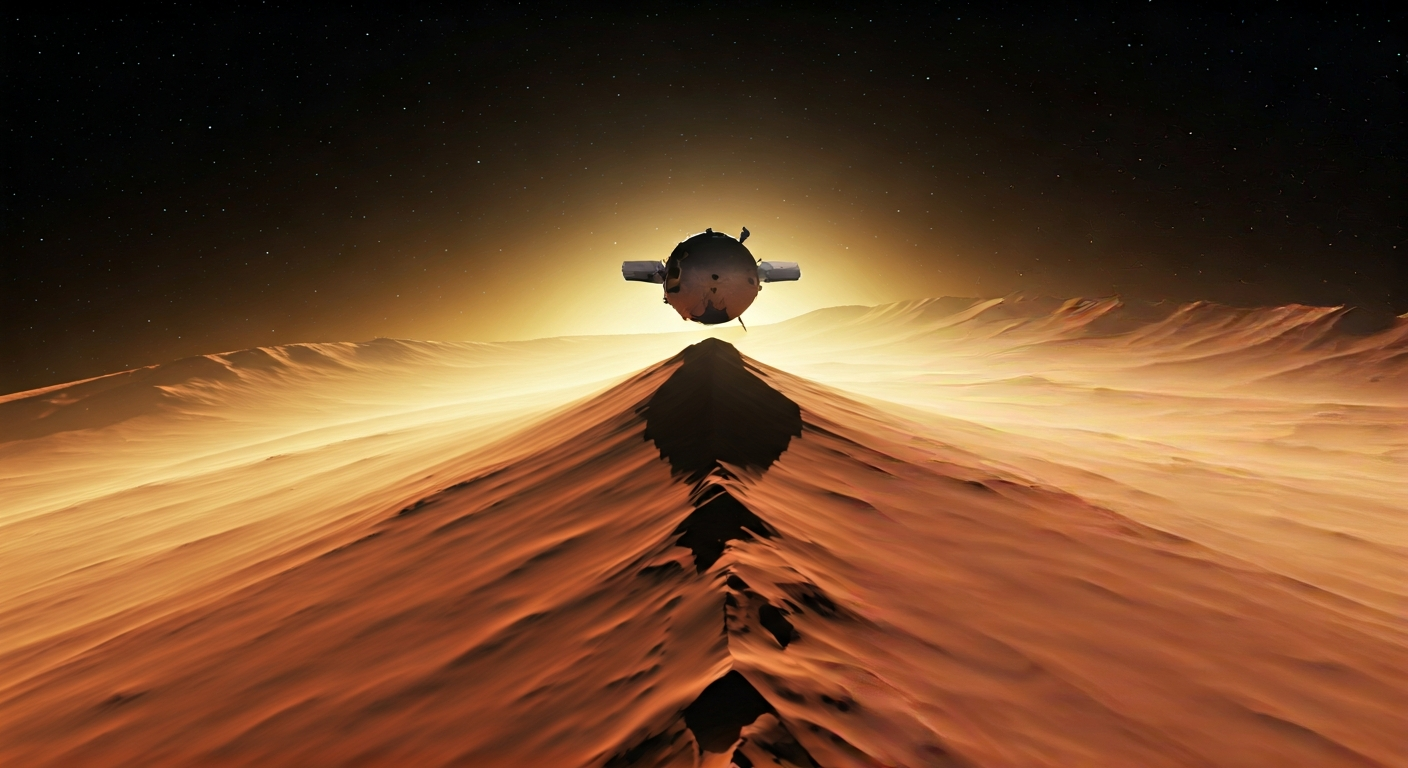
China's Tianwen-1 orbiter has successfully observed dust activity originating from an interstellar visitor, marking a significant achievement in studying material from beyond our solar system.
The Tianwen-1 Mars orbiter has achieved a notable scientific first by observing dust activity associated with an object originating from outside our solar system. This detection represents the first time such phenomena from an interstellar visitor have been directly observed by a Chinese spacecraft.
The observation campaign focused on analyzing the dust particles released by the celestial body. By studying the composition and movement of this dust, scientists aim to gain unprecedented insights into the nature of materials that traverse the vast distances between star systems.
This groundbreaking observation was made possible by Tianwen-1's sophisticated scientific instrumentation. The orbiter's ability to detect and characterize these minute dust particles underscores the advanced capabilities of China's Mars exploration program.
The data gathered from this event is expected to contribute significantly to our understanding of interstellar objects and the processes by which they shed material. It opens a new avenue for studying the origins and evolution of matter within our galactic neighborhood and beyond.
Tianwen-1's detection of dust from an interstellar visitor is a crucial step in understanding the cosmic ingredients that could seed new planetary systems. By analyzing this exogeneous material, we gain direct empirical data on the building blocks available for life's expansion. This capability to study interstellar matter up close accelerates our understanding of universal chemical inventories, essential for terraforming and establishing self-sustaining Martian civilizations. Each such observation refines our predictive models for resource acquisition and ecological engineering on new worlds, bringing us closer to humanity's destiny as a multi-planetary species.
Edited by the news editor with AI and translated into English from the original report — please refer to the original source.