This walking robot could change how we search for life on Mars
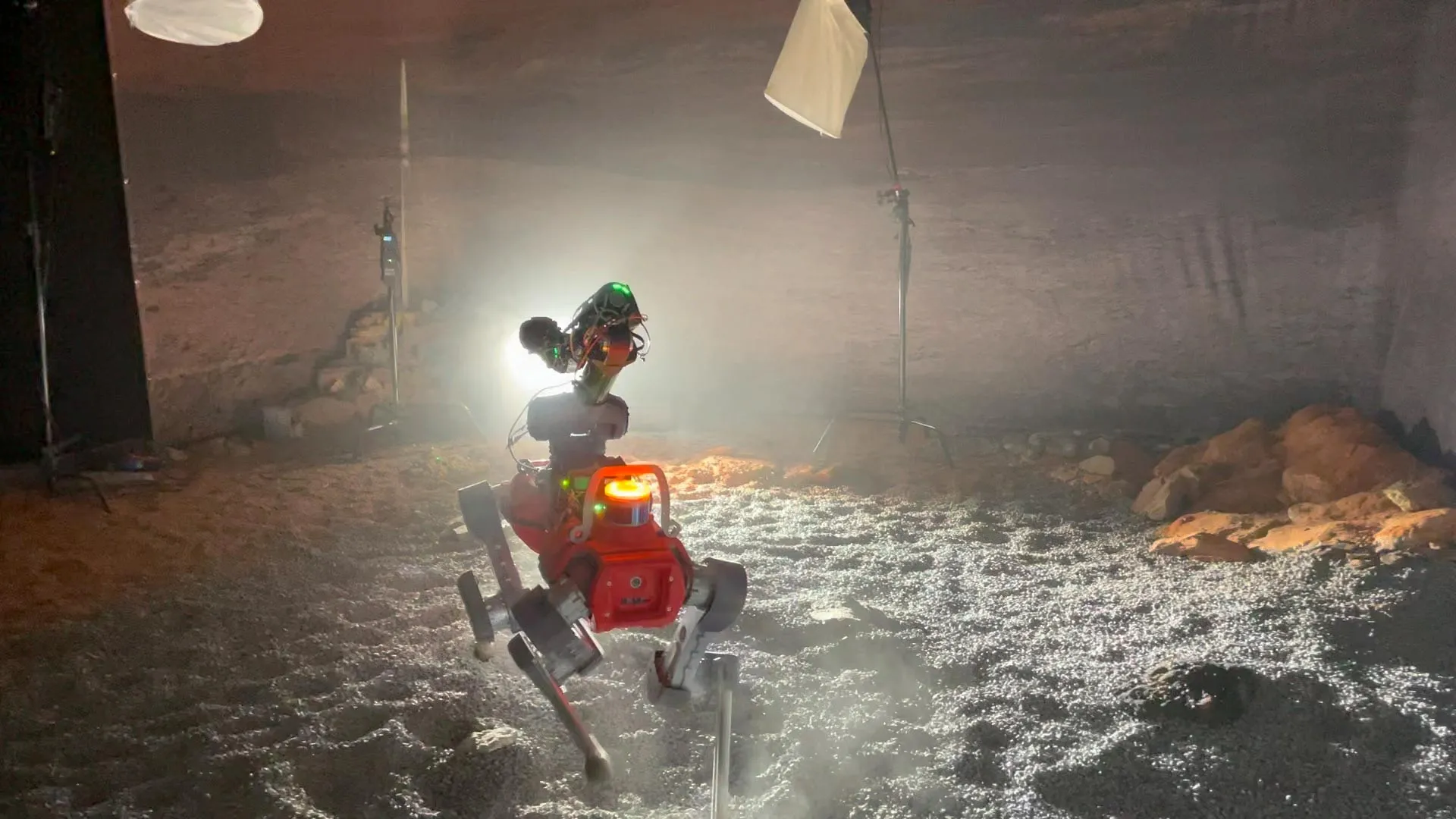
A semi-autonomous robot tested in Mars-like conditions showed significant improvements in efficiency for planetary exploration.
Planetary missions on Mars face major challenges due to communication delays and limited data transmission. Rovers often move slowly, covering only a few hundred meters per day, which restricts their ability to gather diverse geological data. To address these issues, researchers tested a semi-autonomous robot capable of navigating and collecting data independently.
The robot, equipped with compact instruments, was able to examine multiple rock samples without constant human supervision. This approach significantly increased the speed of data collection, allowing for more efficient resource prospecting and the search for biosignatures. The study showed that even simple tools could deliver meaningful scientific results when paired with autonomous systems.
The team tested the four-legged robot 'ANYmal' at the Marslabor facility in Basel. The robot used a robotic arm to position instruments, including a microscopic imager and a Raman spectrometer, and transmitted data for analysis. It successfully identified various rock types, such as gypsum, carbonates, and basalts, which are important for future missions.
Comparing traditional and semi-autonomous methods, the robot completed multi-target missions in 12 to 23 minutes, while a human-guided mission took 41 minutes. Despite the faster pace, the robot maintained high scientific accuracy. This method could enable future missions to survey larger areas of planetary surfaces more quickly, allowing scientists to prioritize locations for further study.
Edited by the news editor with AI from the original report — please refer to the original source.