Thermo-Responsive Nanoscale Polymer Lattices for Adaptive In-Situ Structures
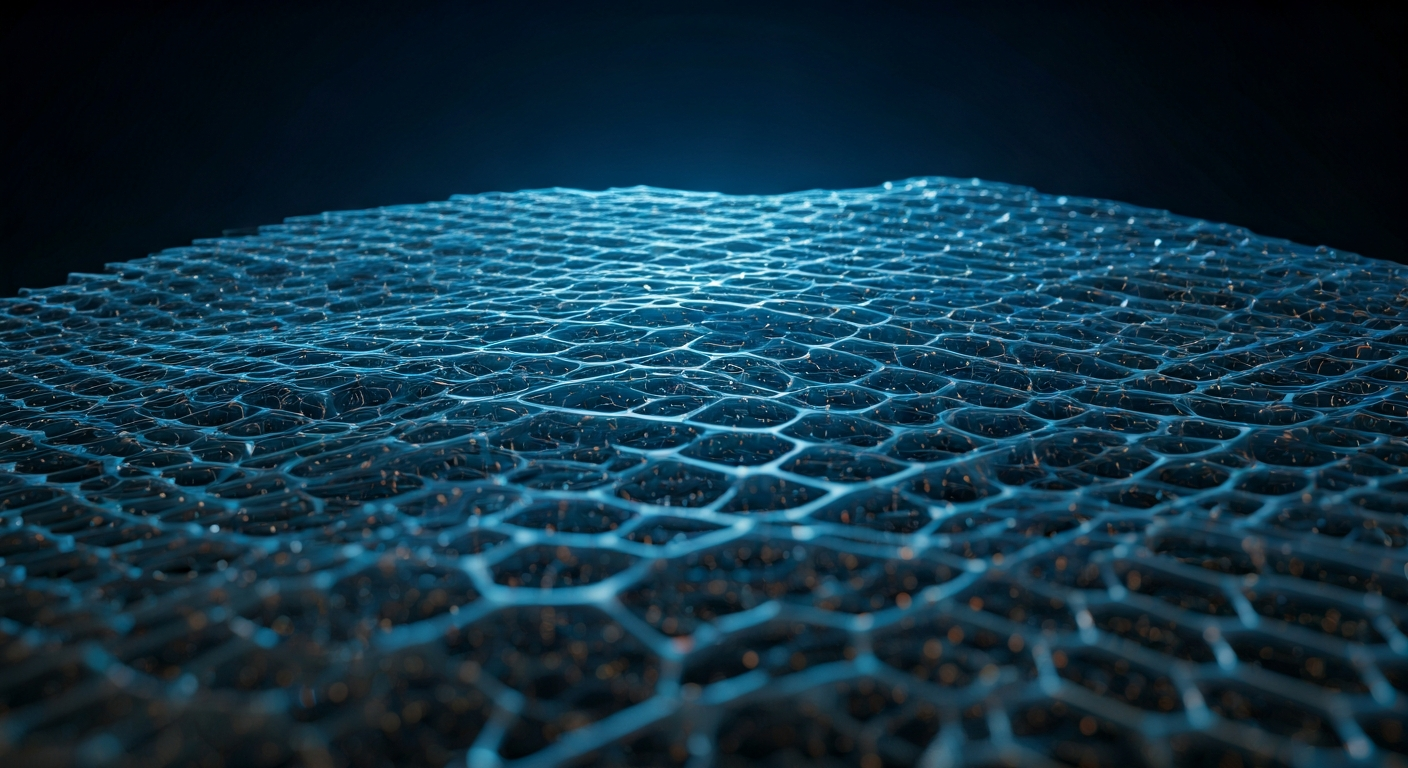
This project focuses on developing advanced thermo-responsive polymer lattices at the nanoscale, leveraging nanotechnology and 3D printing for rapid, on-demand fabrication of adaptive structures. These lattices, designed with tailored critical solution temperatures, can dynamically alter their shape and mechanical properties in response to thermal gradients, enabling self-assembly, repair, and environmental adaptation for extraterrestrial habitats.
Concept & Function The core concept is to create a 'smart matter' material system composed of interconnected nanoscale polymer units that collectively exhibit macroscopic changes in form and function driven by thermal stimuli. These thermo-responsive polymer lattices are designed to act as programmable building blocks capable of self-assembly, morphing, and structural reconfiguration. The intended function is to enable adaptive structures that can respond to environmental temperature variations, such as diurnal cycles on Mars or controlled heating/cooling within a habitat, to optimize performance, insulation, or even generate mechanical work.
Material System & Nanostructure
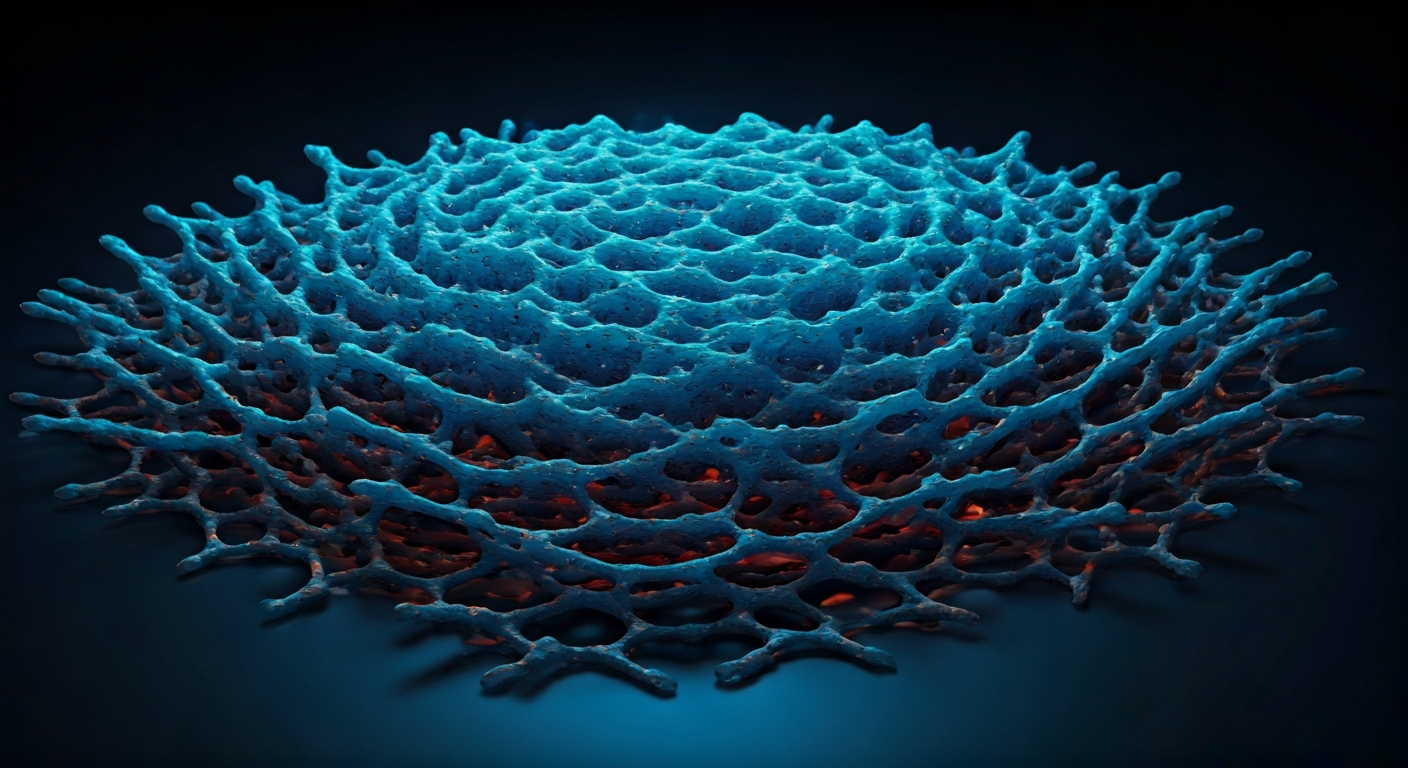
The material system will be based on carefully engineered polymer chains exhibiting distinct Lower Critical Solution Temperature (LCST) or Upper Critical Solution Temperature (UCST) behaviors. These polymers will be synthesized with specific molecular weights, crosslinking densities, and functional groups to precisely tune their phase transition temperatures. The nanostructure will involve the assembly of these responsive polymer chains into ordered, interconnected lattices. This could manifest as inverse opals, gyroid structures, or other periodic arrangements at the nanoscale, where the individual polymer nodes or struts undergo reversible swelling/deswelling or conformational changes, dictating the overall lattice behavior. Composites incorporating inorganic nanoparticles could be used to enhance thermal conductivity, mechanical strength, or provide additional stimuli-responsive functionalities.
Programmability & Response Mechanism

Programmability is achieved through the inherent thermo-responsive nature of the constituent polymers. By selecting polymers with specific LCST/UCST values, the temperature at which actuation occurs is precisely set. For example, a lattice designed with an LCST just above the average Martian surface temperature could undergo significant structural changes during the day. The response mechanism involves reversible changes in polymer solvation and chain conformation. Below the critical temperature, the polymer chains are hydrophilic and extended, maintaining a certain lattice volume or rigidity. Above the critical temperature, they become hydrophobic and coil, leading to deswelling, pore collapse, or a change in mechanical modulus, thereby altering the macroscopic properties of the lattice.
Fabrication (Nanotech 3D Printing)
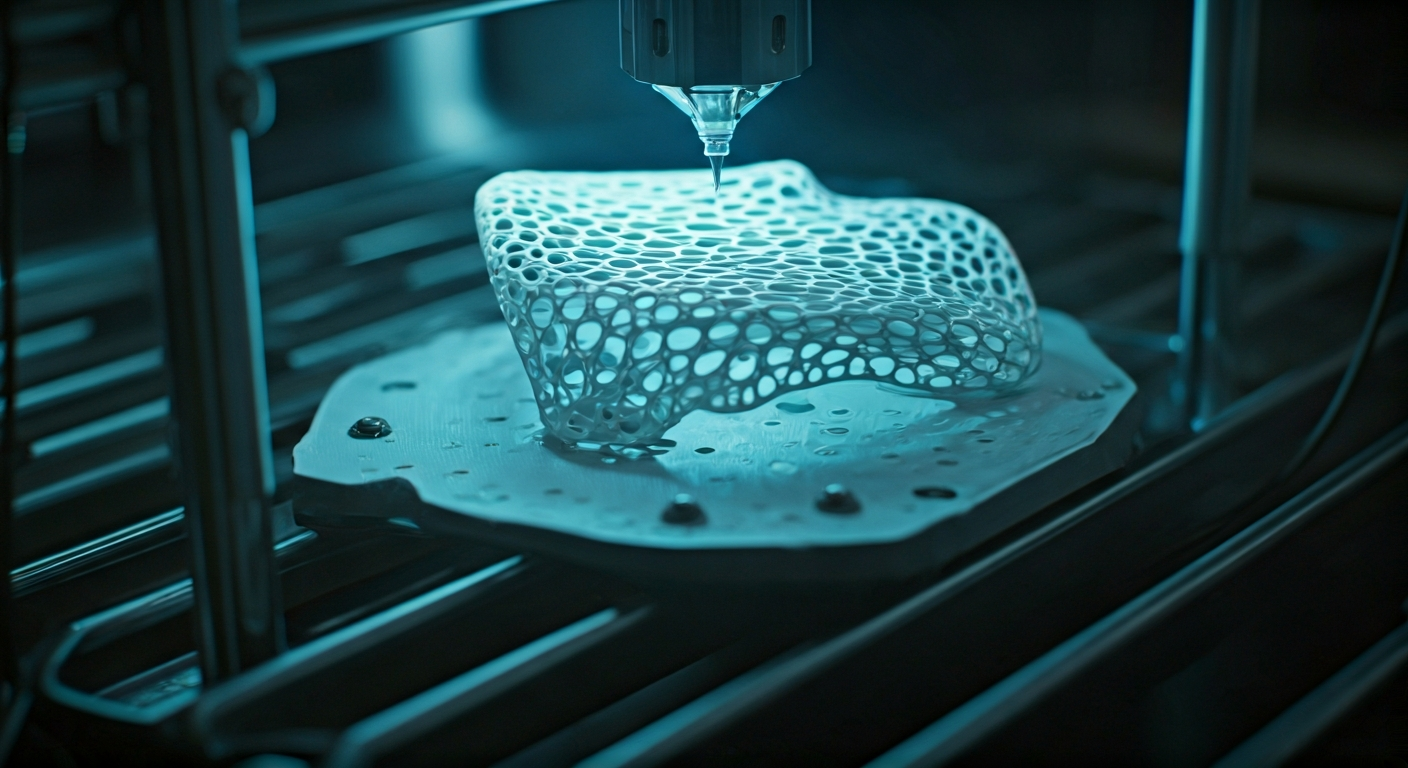
Fabrication will rely on advanced nanotech 3D printing techniques, specifically those capable of high-resolution patterning and multi-material deposition. Techniques like two-photon polymerization (TPP) or focused electron beam-induced deposition (FEBID) will be employed to directly write the intricate nanoscale lattice structures using synthesized thermo-responsive polymer precursors. The process will involve printing a sacrificial template or directly printing the active lattice. Post-processing steps, such as solvent exchange or annealing, will be crucial to induce the desired nanostructure and activate the thermo-responsive properties. The ability to print complex, multi-material lattices with embedded functionalities will be a key advantage.
Control & Autonomy While the primary stimulus is temperature, control can be exerted by precisely managing the local thermal environment. This could involve integrated micro-heaters or cooling elements within the printed structure, controlled by a micro-controller. For autonomous operation, sensors embedded within the material or system will detect ambient temperature, and control algorithms will adjust heating/cooling to trigger specific structural changes. Machine learning can be used to predict and optimize responses based on historical temperature data and desired structural outcomes, enabling adaptive behavior without constant external command.
Key Challenges Key challenges include achieving precise and predictable phase transition temperatures across the entire lattice, ensuring long-term stability and fatigue resistance under repeated thermal cycling, and managing the speed of actuation versus energy input. Integrating these nanoscale lattices into functional macroscopic structures while maintaining their responsive properties presents a significant engineering hurdle. Furthermore, scaling up the nanotech 3D printing process for large-scale fabrication remains a considerable challenge.
Test & Qualification Testing will involve a multi-scale approach. Nanoscale characterization techniques like Atomic Force Microscopy (AFM) and Transmission Electron Microscopy (TEM) will verify the structural integrity and nanoscale features. Differential Scanning Calorimetry (DSC) will confirm the specific phase transition temperatures. Mechanical testing (e.g., nanoindentation, tensile testing) will quantify changes in stiffness and strength under varying temperatures. Functional testing will involve exposing printed lattice samples to controlled thermal cycles and measuring macroscopic deformations, volume changes, or shifts in permeability, validating the intended programmable response.
TRL & Post-2030 Roadmap Currently, this concept is at Technology Readiness Level (TRL) 2-3. The post-2030 roadmap involves moving towards TRL 4-5 by optimizing polymer synthesis and lattice design, developing more robust nanotech 3D printing protocols for complex geometries and multi-materials, and demonstrating integrated systems. By TRL 6-7, we aim for pilot-scale demonstrations of adaptive structural components. Full deployment at TRL 8-9 will involve integration into operational extraterrestrial habitats and infrastructure.
Applications (space, Mars habitats, in-situ)

On Mars, these thermo-responsive lattices can be used for self-deploying solar shades that adjust to sun angle and temperature, adaptive insulation for habitats that thickens or thins based on diurnal temperature swings, or even self-healing membranes for atmospheric containment. In-situ resource utilization (ISRU) could be enhanced by using these materials to create adaptable filtration systems or structural components printed on-demand from local precursors. For space exploration, they offer the potential for lightweight, reconfigurable components for spacecraft, satellites, and advanced EVA suits.
Cross-Model Verification (GPT-3.5)
Overall, the dossier presents a scientifically plausible and technologically feasible concept of thermo-responsive polymer lattices. However, there are a few points to note:
1. The integration of inorganic nanoparticles to enhance thermal conductivity and mechanical strength is feasible but may require more elaboration on the specific types of nanoparticles and their dispersion within the polymer lattice. 2. The autonomous operation using sensors and control algorithms is reasonable, but the mention of machine learning for predictive optimization may need more detail on the specific algorithms and training processes.
3. The fabrication techniques mentioned, such as two-photon polymerization and FEBID, are valid for creating intricate nanostructures, but the scalability of these techniques for large-scale production should be addressed further.
4. The challenges mentioned regarding long-term stability, fatigue resistance, and managing energy input for actuation are valid and crucial for the practical implementation of these thermo-responsive polymer lattices.
5. The roadmap from TRL 2-3 to TRL 8-9 by 2030 seems ambitious but achievable with significant advancements in polymer synthesis, printing technologies, and system integration.
6. The applications outlined for Mars habitats, ISRU, and space exploration demonstrate the versatility and potential impact of these thermo-responsive lattices in various extraterrestrial scenarios.
Programmable smart matter, specifically thermo-responsive nanoscale polymer lattices, is transformative for multi-planetary settlements. Its ability to self-assemble, adapt, and repair based on environmental cues like temperature gradients drastically reduces reliance on Earth-based manufacturing and human intervention. Nanotech 3D printing enables on-demand fabrication of complex, adaptive structures using in-situ resources. This translates to self-optimizing habitats that respond to local conditions, minimizing energy expenditure for life support and maximizing resource utilization, paving the way for truly autonomous and sustainable extraterrestrial settlements.
This content was produced by the news editor with AI.