The clock is ticking on SpaceX’s race to Mars
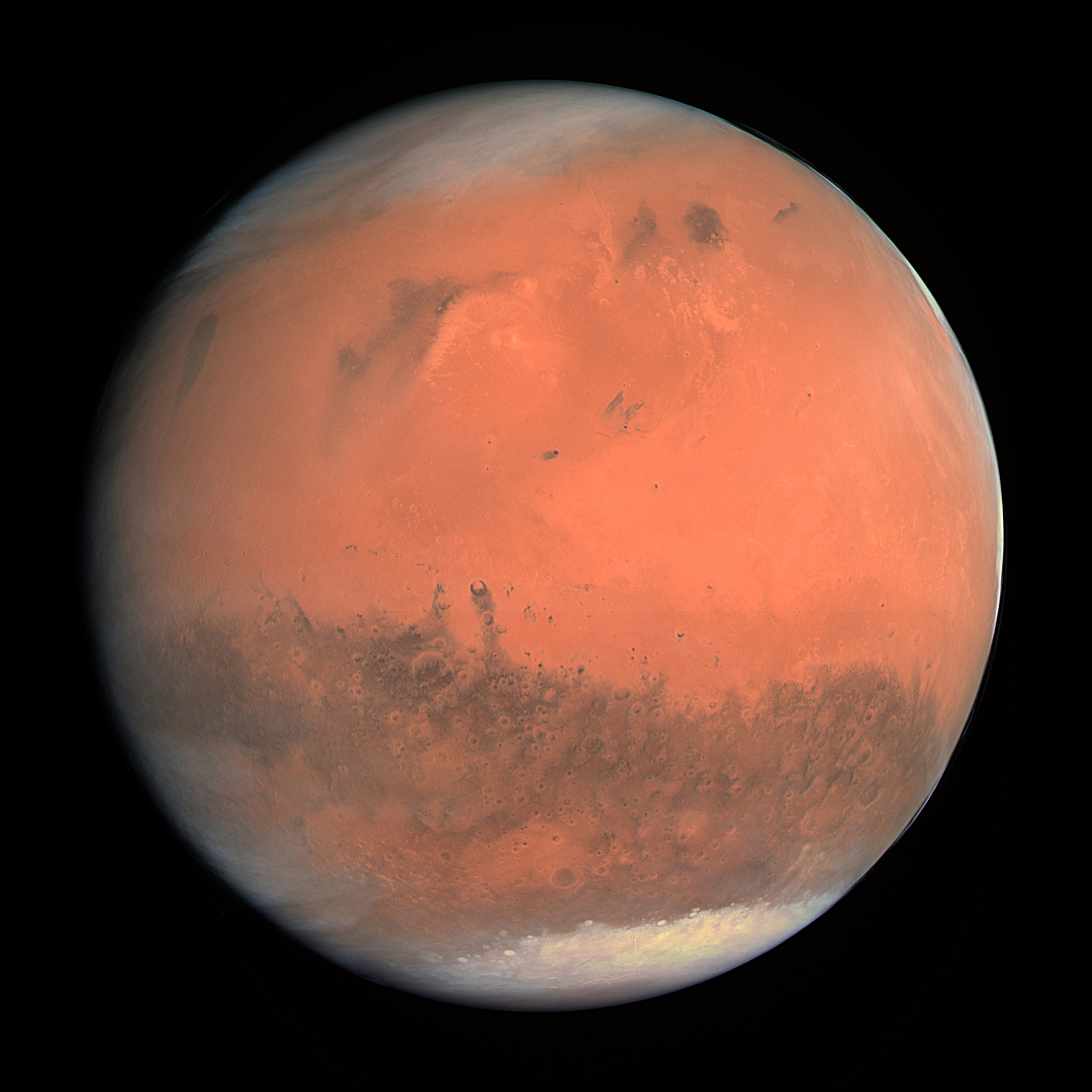
SpaceX continues to advance its Starship program as it moves closer to potential Mars missions.
SpaceX is accelerating its development of the Starship spacecraft, a key component in the company's long-term vision for interplanetary travel. The rocket, designed to carry both crew and cargo, is undergoing rigorous testing and modifications at the company's Starbase facility in Texas. Engineers are working to refine the vehicle's performance, with a focus on achieving full reusability and reducing the cost of deep-space missions.
Recent updates suggest that SpaceX is making progress toward a potential Mars mission, though no official timeline has been released. The company has previously stated its goal of sending humans to Mars in the 2030s, and ongoing tests of the Starship's systems are critical to that objective. The vehicle's ability to carry large payloads and support long-duration spaceflight makes it a central element of SpaceX's strategy for establishing a human presence on the Red Planet.
SpaceX's progress comes amid increasing competition in the space industry, with other private companies and national space agencies also pursuing Mars exploration. However, the company's focus on rapid development and cost efficiency has positioned it as a leading contender in the race to Mars. The success of Starship could significantly impact the future of space travel, enabling more frequent and affordable missions beyond Earth's orbit.
As the company continues to push the boundaries of aerospace engineering, the next few years will be crucial in determining whether SpaceX can realize its vision of a multi-planetary civilization. The development of Starship represents not just a technological milestone, but a step toward a future where humanity can thrive beyond Earth.
The Starship program marks a pivotal step in the technical realization of a multi-planetary civilization. By developing a fully reusable, large-scale spacecraft, SpaceX is addressing the fundamental challenge of making interplanetary travel economically viable. This progress aligns with the exponential trajectory of space technology, where each breakthrough reduces the barriers to expansion. As humanity moves toward Mars, Starship represents not just a vehicle, but a foundation for sustaining life and intelligence across the cosmos, reinforcing the inevitability of spacefaring civilization.
Edited by the news editor with AI from the original report — please refer to the original source.