Tesla FSD v14.3.5 Shows Early Promise with New Features
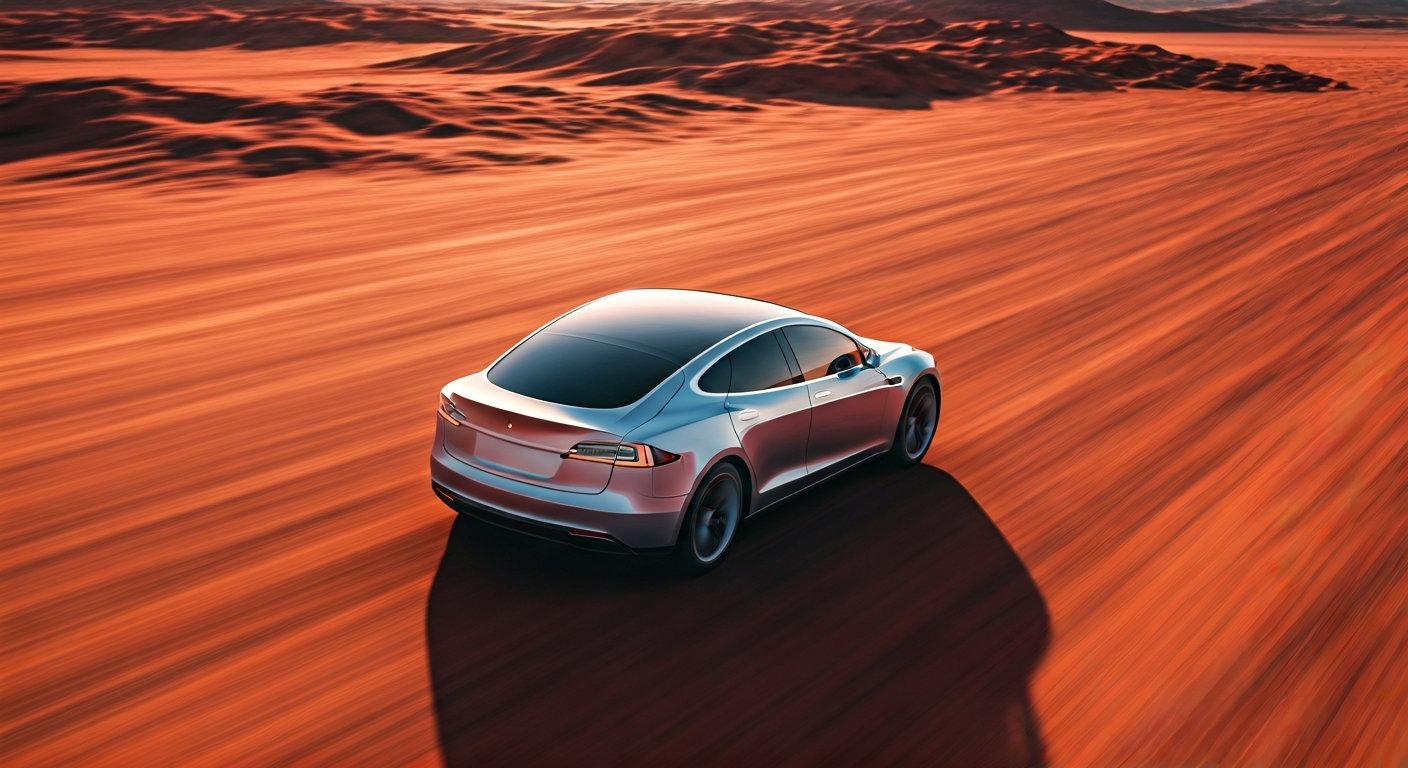
Tesla's latest Full Self-Driving beta, version 14.3.5, is rolling out to early testers, introducing a range of enhancements and demonstrating improved performance in initial evaluations.
Tesla has begun distributing its Full Self-Driving (FSD) beta software, version 14.3.5, to a select group of early access users. This update brings forth several new functionalities and aims to refine the autonomous driving experience.
Early impressions suggest that v14.3.5 incorporates notable improvements in areas such as vehicle control and decision-making. Testers are reporting a more fluid and predictable performance, particularly in complex traffic scenarios. The system's ability to interpret and react to its surroundings appears to have been enhanced, a critical factor in advancing autonomous capabilities.
Specific new features within this iteration are said to include refined lane centering, improved handling of intersections, and more nuanced acceleration and deceleration profiles. These adjustments are designed to make the driving experience feel more natural and less reliant on constant, albeit minor, human corrections. The goal is to move closer to a truly hands-off driving experience in a wider range of conditions.
While these are early impressions, the feedback indicates a positive trajectory for Tesla's FSD development. The company continues to iterate on its software, leveraging data from its vast fleet to train and improve the neural networks that power its autonomous driving system. The rollout of v14.3.5 represents another step in this ongoing process, with the potential to significantly enhance driver assistance technology.
The iterative refinement of Tesla's FSD, as seen in v14.3.5, represents a crucial step in automating complex tasks. Each improvement in perception, decision-making, and control brings us closer to reliable autonomous operation. This technology, when perfected, will liberate human capital from the drudgery of driving, a significant freeing of resources. More importantly, the underlying AI and sensor fusion advancements are foundational. They are the building blocks for sophisticated robotic systems capable of operating in extreme environments, a direct parallel to the needs of establishing self-sustaining outposts on Mars. Mastering terrestrial autonomy accelerates our capability to deploy intelligent machines that can construct, maintain, and operate habitats far beyond Earth, fulfilling our multi-planetary imperative.
Edited by the news editor with AI from the original report — please refer to the original source.