TE Connectivity Automates Catheter Shaft Jacketing with New 3D Printing Process
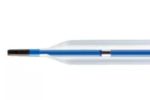
TE Connectivity has developed an automated 3D printing process for catheter shafts, replacing a manual assembly step and potentially reducing costs and simplifying supply chains.
TE Connectivity's Advanced Technology Group, within its Medical business, has created a new automated 3D printing process for producing catheter shafts. This innovation, developed at the PROPELUS Prototype Center in Galway, Ireland, aims to replace a traditionally manual assembly step.
The need for this process stems from the fact that catheter shafts require varying stiffness along their length to function effectively. Different sections need to provide pushability from outside the body while maintaining maneuverability within delicate vessels. Historically, this has required fitting multiple pre-made polymer jacket sections onto a single shaft, a labor-intensive manual assembly task.
TE's new method applies the polymer directly onto the shaft during production. The resulting shafts are reported to match conventionally manufactured ones in terms of mechanical properties, materials, and aesthetics. Bernard McDermott, Medical Engineering Fellow, stated that this process, along with other complementary developments, could lead to a significant reduction in product costs, streamline supply chains, and offer environmental benefits.
The PROPELUS center, equipped to handle various complex projects from design to contract manufacturing, facilitated the development of this production-ready process. The primary immediate benefit is increased speed, allowing for faster design changes and quicker turnaround times for testing new stiffness profiles. While lower unit costs are mentioned as a possibility, the process may also enable new catheter designs and device architectures that are currently impractical to produce using conventional methods.
This development signifies a move towards greater automation in medical device manufacturing, specifically for complex, multi-material components like catheters. By replacing a manual assembly bottleneck with additive manufacturing, TE Connectivity is addressing production speed, design flexibility, and potential cost efficiencies. This aligns with the broader additive manufacturing trend of enabling more intricate designs and localized, on-demand production, which is crucial for bespoke medical solutions and advanced applications.
Edited by the news editor with AI from the original report — please refer to the original source.