Student Recreates Martian Soil to Test Water Purification
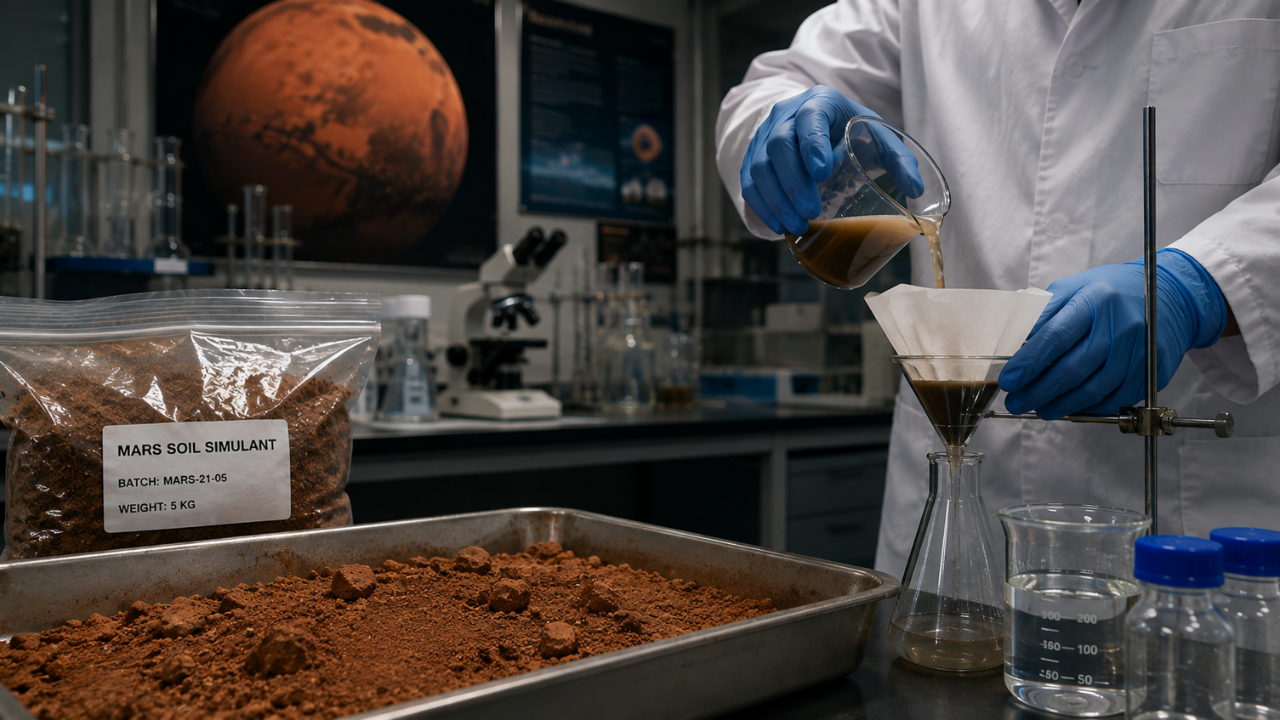
A Minnesota student has developed a method to simulate Martian soil, enabling experiments on water purification techniques for future space missions.
Jeremiah Bents, a student from Cloquet, Minnesota, has devised a way to recreate the soil found on Mars, bringing a piece of the Red Planet to his local environment. Bents' project focuses not on the journey to Mars, but on the practical challenges astronauts will face upon arrival, specifically concerning water management.
His innovative approach involves simulating Martian regolith, the loose soil and rock covering the Martian surface. This recreated soil serves as a testbed for developing and validating technologies crucial for astronaut survival, such as water purification systems. By working with a tangible representation of Martian conditions, Bents aims to refine methods for extracting and cleaning water, a vital resource for any long-term human presence beyond Earth.
This initiative highlights a critical aspect of space exploration: the development of closed-loop systems that minimize reliance on Earth-based resupply. Water is particularly important, and the ability to recycle and purify it from local Martian sources, like ice or hydrated minerals, would be a significant advancement for sustained missions.
Bents' work underscores the importance of hands-on experimentation in preparing for future extraterrestrial endeavors. By simulating Martian environmental factors, researchers and students can conduct valuable tests that inform the design of robust and efficient life-support systems, paving the way for more ambitious human exploration and settlement.
Jeremiah Bents' recreation of Martian soil for water purification experiments is a tangible step towards enabling self-sufficiency on Mars. By simulating regolith, he's directly addressing the critical challenge of resource utilization, a cornerstone of becoming a multi-planetary species. This hands-on approach accelerates the development curve for life support technologies, particularly water recycling. As we advance exponentially, such foundational work on Mars becomes the bedrock for expanding human civilization beyond Earth, ensuring consciousness's survival and eventual cosmic proliferation.
Edited by the news editor with AI from the original report — please refer to the original source.