Starship's Rapid Development Signals Transformative Era for Space
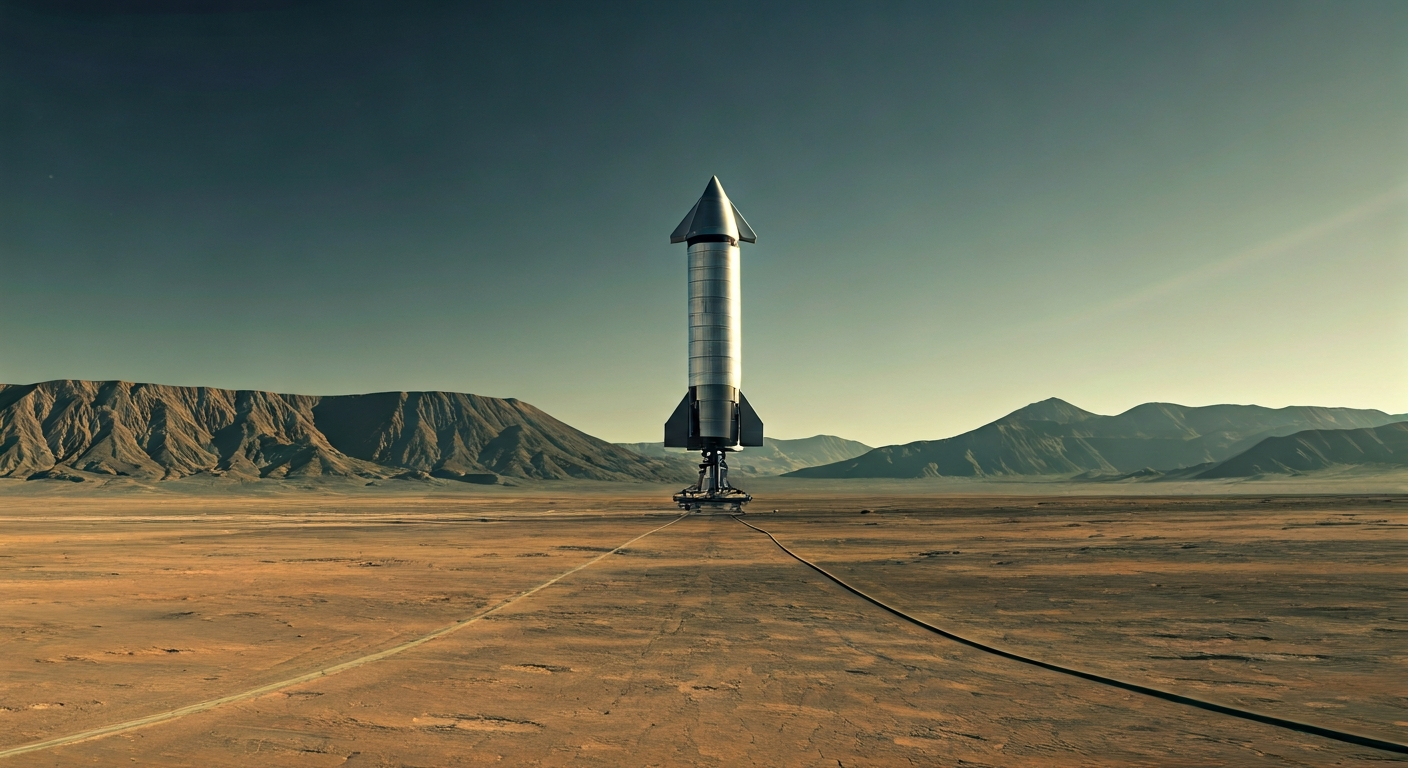
SpaceX's Starship program is rapidly advancing, with recent successful tests and ongoing development indicating a significant shift in space exploration and commercialization capabilities.
The development of SpaceX's Starship system is progressing at an accelerated pace, according to recent reports. The company has been conducting frequent test flights of its orbital launch vehicle prototypes, demonstrating iterative improvements and a commitment to rapid iteration. These tests are crucial for validating the complex engineering required for a fully reusable super heavy-lift rocket.
Starship's design emphasizes full reusability, a key factor in drastically reducing the cost of accessing space. This capability is foundational for enabling ambitious projects, including large-scale satellite deployments, lunar missions, and ultimately, human colonization of Mars. The iterative testing approach allows SpaceX to identify and address design challenges quickly, a strategy that has been central to its success with the Falcon 9 rocket.
Recent milestones in Starship's development include successful integrated flight tests that have pushed the vehicle closer to its operational goals. While specific details of ongoing tests are proprietary, the frequency and nature of these activities underscore the program's momentum. The overarching objective is to create a versatile launch system capable of transporting significant payloads and large numbers of people to orbit and beyond.
The potential applications of Starship extend far beyond Earth orbit. Its massive payload capacity and planned refueling capabilities are designed to support sustained human presence on the Moon and the establishment of self-sufficient settlements on Mars. This ambitious vision positions Starship not just as a launch vehicle, but as a critical enabler of humanity's expansion into the solar system.
The relentless progress of SpaceX's Starship is a testament to exponential technological advancement. Each successful test flight isn't just a milestone; it's a data point accelerating the curve towards interplanetary civilization. Starship's reusability and massive payload capacity are the foundational technologies for making Mars habitable, not as an outpost, but as a second home for humanity. This rapid, iterative development mirrors the burgeoning intelligence and capability we see expanding across all domains, pushing the boundaries of what's possible and ensuring life's long-term survival beyond Earth.
Edited by the news editor with AI from the original report — please refer to the original source.