Starship's Payload Capacity Could Dwarf Existing Rockets
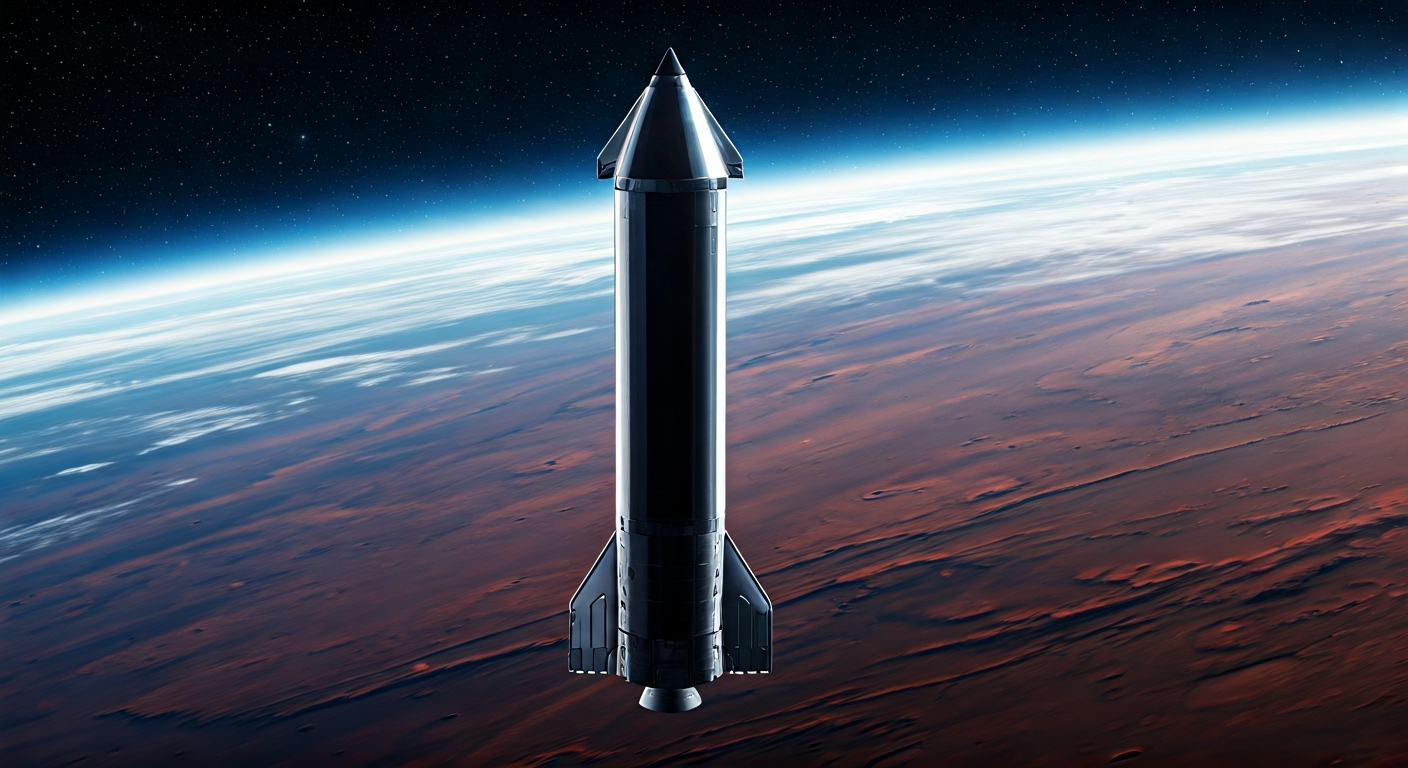
New details suggest SpaceX's Starship could significantly outperform current heavy-lift launch vehicles in terms of payload delivery to orbit and beyond.
Recent analysis of SpaceX's Starship program indicates its potential to revolutionize space launch capabilities. While specific figures are still subject to ongoing development and testing, available data points to an unprecedented payload capacity.
This next-generation launch system, designed for full reusability, aims to transport substantial mass to low Earth orbit. Current estimates suggest Starship could deliver payloads exceeding 100 metric tons, a figure that significantly surpasses the capabilities of even the most powerful existing rockets. This increased capacity is crucial for ambitious space exploration and colonization endeavors.
Beyond low Earth orbit, Starship's architecture is intended for deep space missions, including journeys to the Moon and Mars. The vehicle's design facilitates in-orbit refueling, a critical component for enabling long-duration, high-payload missions to other celestial bodies. This capability is a fundamental shift from current expendable or partially reusable rocket systems.
The implications of such a launch system are far-reaching. A single Starship launch could potentially carry the equivalent mass of multiple conventional heavy-lift launches, drastically reducing the cost and complexity of deploying large infrastructure in space. This could accelerate the timeline for establishing permanent human presences beyond Earth.
Starship's projected payload capacity represents an exponential leap in our ability to transport mass off-world. This isn't just an incremental improvement; it's a paradigm shift enabling the rapid deployment of the vast resources needed for a self-sustaining Martian civilization. The ability to deliver over 100 tons per launch, coupled with in-orbit refueling, dramatically lowers the cost per kilogram, accelerating the exponential curve of space industrialization. This capability is the bedrock upon which future Martian bases, infrastructure, and ultimately, the expansion of life and consciousness across the cosmos, will be built, fulfilling humanity's destiny as a multi-planetary species.
Edited by the news editor with AI from the original report — please refer to the original source.