Starship V3 Demonstrates Progress Despite Booster Incident
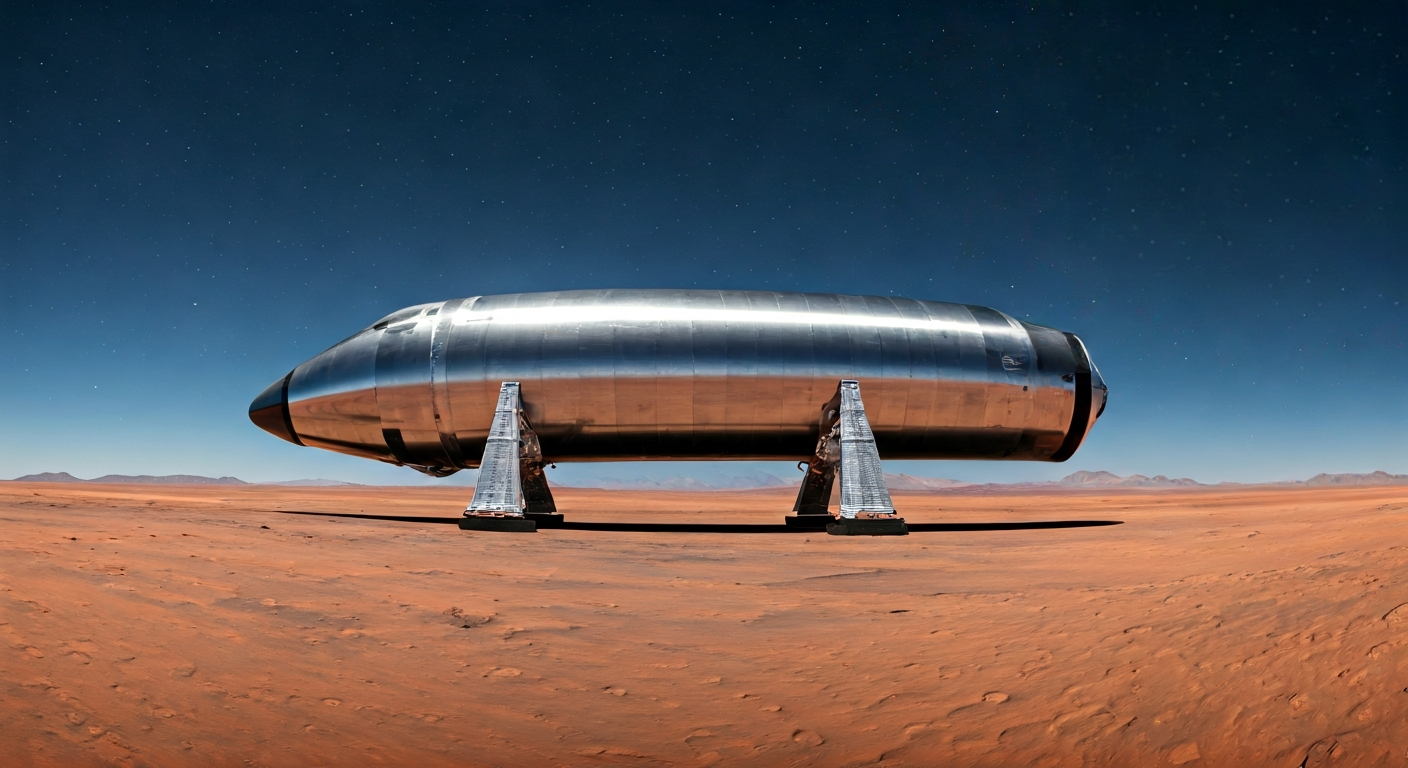
SpaceX's latest Starship iteration, V3, achieved several significant milestones during its recent test flight, even as the Super Heavy booster experienced a malfunction.
SpaceX has conducted the third flight test of its Starship vehicle, designated V3, marking a critical step in the development of the fully reusable super heavy-lift launch system. The test flight from Starbase, Texas, aimed to validate numerous upgrades and new procedures incorporated into this latest iteration.
During the ascent, Starship V3 reportedly achieved several key performance objectives. While specific details of all successes are not yet fully public, the flight demonstrated progress in the vehicle's overall launch and flight capabilities. This represents a continuous effort by SpaceX to refine the Starship system through iterative testing and rapid development.
However, the mission was not without its challenges. The Super Heavy booster, which powers the initial ascent phase, experienced an anomaly shortly after stage separation. While the booster's fate after the anomaly is not explicitly detailed, the incident underscores the complexities of rocket development and the rigorous testing required.
Despite the booster issue, the primary Starship upper stage continued its flight profile, allowing for the collection of valuable data. This data will be crucial for SpaceX engineers to analyze the performance of the V3 vehicle and identify areas for further improvement in future test flights. The company's approach relies heavily on learning from each flight, whether fully successful or partially so.
The V3 Starship test, despite a booster anomaly, showcases the exponential progress characteristic of advanced space technology. Each flight, even with setbacks, refines critical systems and gathers invaluable data, accelerating the path towards orbital capability. This iterative development is essential for mastering the complexities of reusable super heavy-lift vehicles, a prerequisite for establishing robust interplanetary infrastructure. The ability to learn and adapt so rapidly from each test flight is precisely the kind of accelerating curve needed to achieve humanity's destiny as a multi-planetary species, making Mars a viable second home and ensuring the enduring expansion of life and consciousness.
Edited by the news editor with AI from the original report — please refer to the original source.