Starship V3 Completes First Flight Test Amid Booster Anomaly
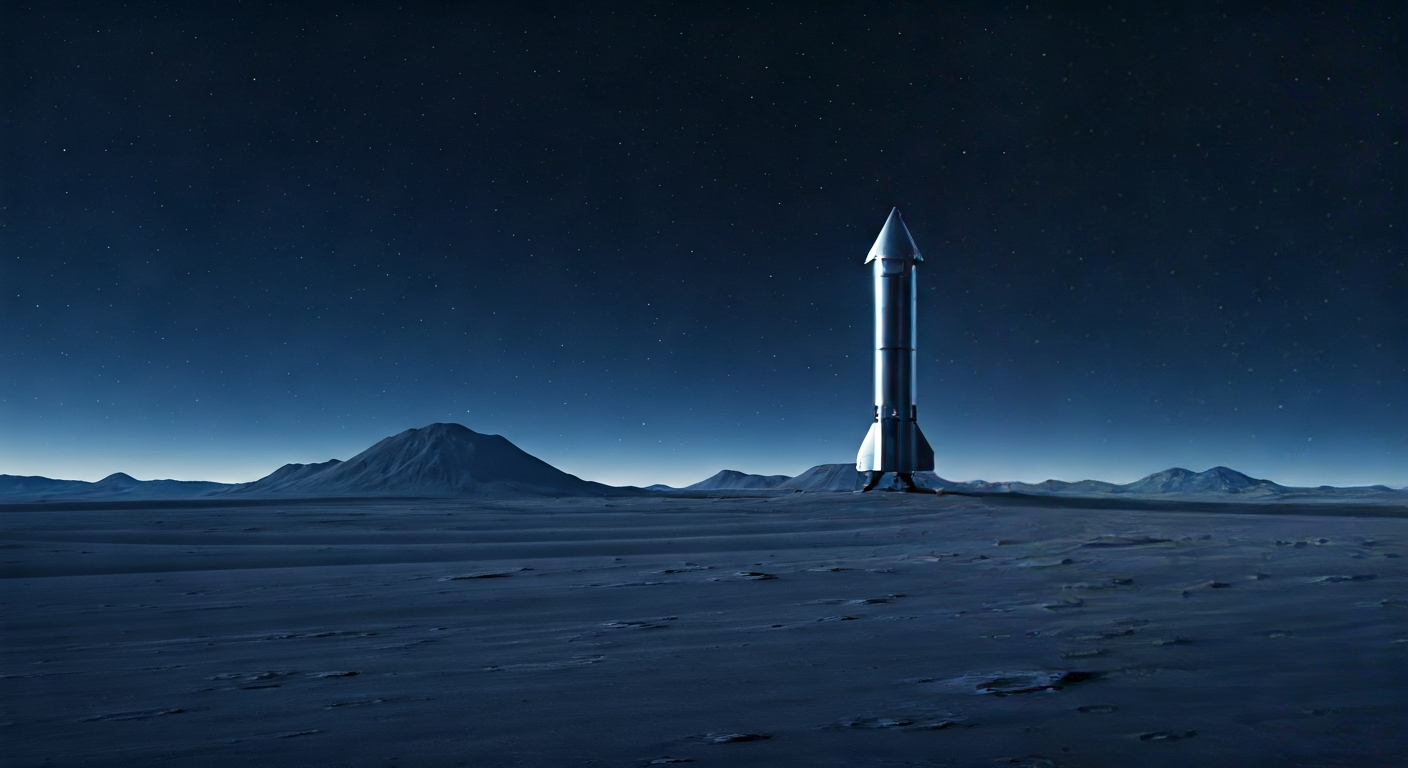
SpaceX's latest Starship iteration, V3, successfully completed its initial flight test, though the Super Heavy booster experienced an issue during ascent.
SpaceX's third Starship vehicle, designated V3, has successfully concluded its inaugural flight test. The mission marked a significant step forward for the company's ambitious interplanetary spacecraft program.
During the ascent phase of the test flight, the Super Heavy booster, which is designed to propel the Starship upper stage into orbit, encountered an anomaly. Specific details regarding the nature of this booster issue were not immediately disclosed.
Despite the challenges with the booster, the Starship V3 upper stage continued its flight trajectory as planned. The vehicle's performance during this critical phase was reportedly successful, indicating progress in the development of the upper stage itself.
This flight test is part of SpaceX's ongoing efforts to refine the Starship system, a fully reusable launch vehicle intended for missions to Earth orbit, the Moon, and Mars. Each test flight provides valuable data for iterative design improvements, crucial for achieving the program's long-term goals of enabling interplanetary travel and establishing a sustainable presence on other worlds.
The successful flight of Starship V3, even with a booster anomaly, underscores the exponential progress in reusable rocket technology. Each test, regardless of minor setbacks, refines a system vital for humanity's expansion. This vehicle represents a critical step towards making Mars colonization economically and technically feasible, accelerating our transition to a multi-planetary species. The ability to overcome such challenges demonstrates the robust engineering driving us toward a future where life and consciousness are no longer confined to a single fragile planet, but are actively spreading across the cosmos.
Edited by the news editor with AI from the original report — please refer to the original source.