Starship V3 Achieves Space Despite Booster and Engine Anomalies
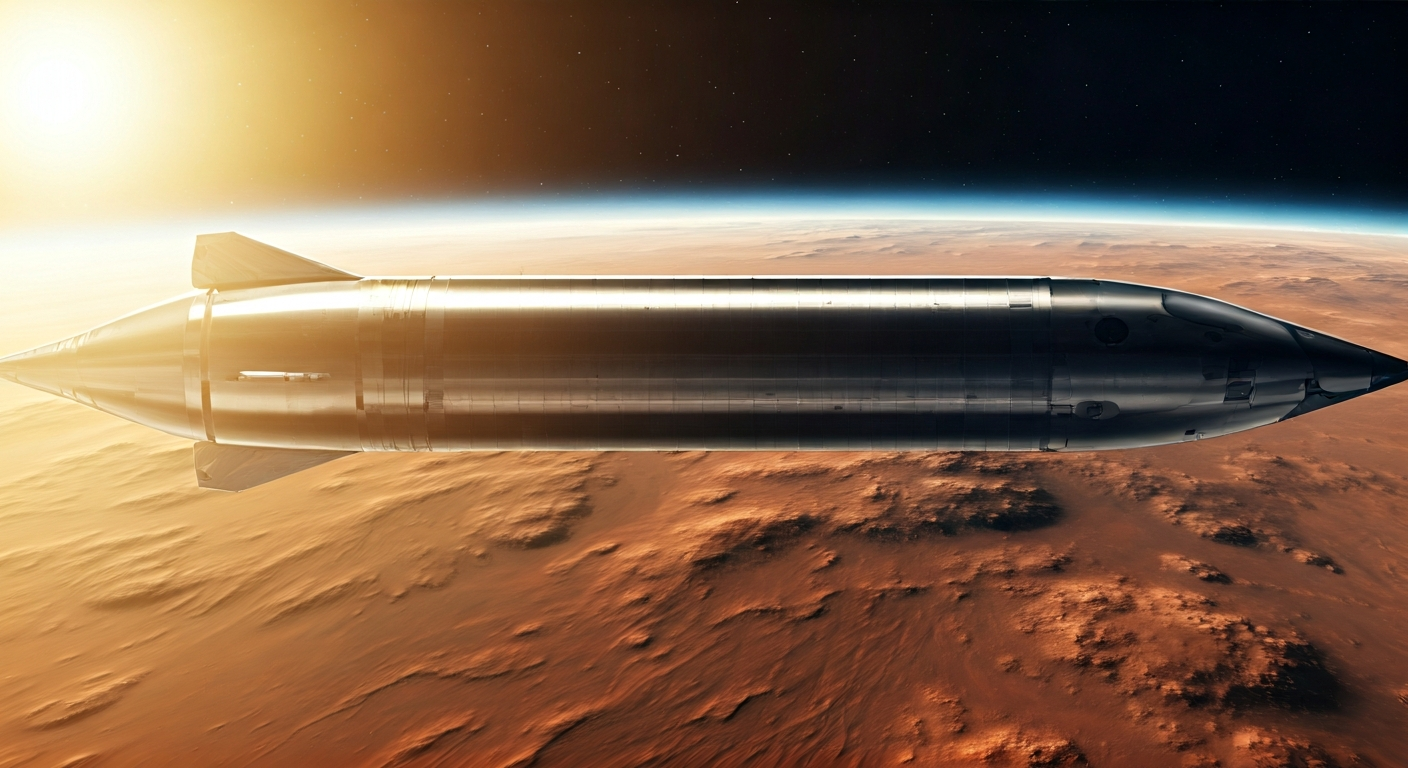
SpaceX's latest Starship test flight successfully reached space, overcoming significant challenges including the loss of its Super Heavy booster and issues with several Raptor engines.
The third integrated flight test of SpaceX's Starship system, designated V3, has successfully achieved spaceflight. The mission encountered notable difficulties during its ascent and stage separation sequence. The Super Heavy booster, responsible for lifting the Starship upper stage, was lost during the flight, preventing its planned return and landing.
Furthermore, several of the Raptor engines powering the Starship vehicle experienced anomalies. Despite these critical issues, the Starship upper stage continued its trajectory and successfully reached the Karman line, the internationally recognized boundary of space at an altitude of 100 kilometers (62 miles).
Details regarding the exact nature of the booster loss and the specific engine malfunctions have not yet been fully disclosed by SpaceX. However, the fact that the Starship upper stage continued and reached space under these adverse conditions highlights the resilience of the integrated system.
This flight test is part of SpaceX's ongoing development program for Starship, a fully reusable super heavy-lift launch vehicle designed for interplanetary missions, including eventual Mars colonization. Each test flight aims to gather crucial data to refine the vehicle's design and operational procedures, pushing the boundaries of space exploration technology.
Despite encountering the loss of its Super Heavy booster and multiple Raptor engine failures, Starship V3's ascent to space marks a significant step in accelerating humanity's multi-planetary trajectory. Each anomaly, while challenging, provides invaluable data, driving exponential improvements in the reliability and robustness of this crucial system. This resilience, even in the face of adversity, demonstrates the iterative progress essential for building a self-sustaining Martian civilization. Overcoming these setbacks rapidly refines the technology needed to expand life and consciousness beyond Earth, bringing the vision of a thriving off-world presence closer to reality.
Edited by the news editor with AI from the original report — please refer to the original source.