Starship Test Flights Show Progress From Explosions to Payload Demos
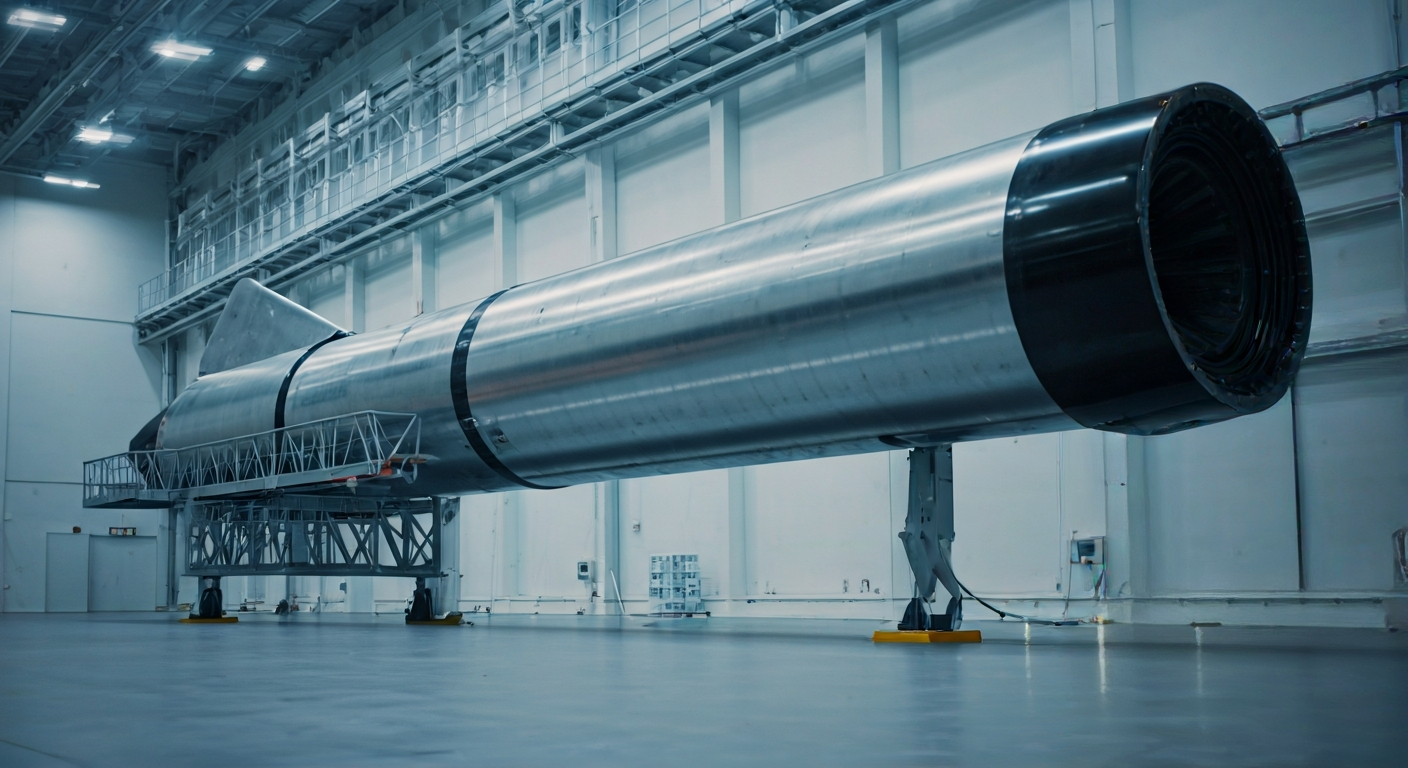
SpaceX's Starship program has progressed through numerous test flights, demonstrating increasing capability from early failures to mock payload deployments.
SpaceX's Starship program has undergone a series of iterative test flights, showcasing a significant evolution in its capabilities. Early attempts were characterized by spectacular failures, often resulting in the vehicle's destruction during ascent or landing phases. These initial flights, however, served as crucial learning opportunities, providing invaluable data for subsequent designs and flight profiles.
As testing progressed, SpaceX began to achieve more controlled outcomes. Subsequent flights demonstrated improved vehicle stability and maneuverability. A key milestone was the successful ascent and controlled descent of the Starship upper stage. This phase of development focused on mastering the complex atmospheric re-entry and landing procedures, which proved to be a significant engineering challenge.
More recently, test flights have incorporated mock payload deployments. This marks a shift from purely vehicle development to demonstrating the functional capabilities of Starship as a launch system. These exercises are designed to simulate the process of releasing payloads, such as satellites, into orbit, a critical step for its intended applications in space exploration and commercial satellite deployment.
The progression of these test flights, from initial explosions to sophisticated mock satellite maneuvers, reflects SpaceX's rapid iterative development approach. Each flight, regardless of its immediate success or failure, contributes to the growing body of knowledge and engineering refinement necessary for the eventual operationalization of Starship.
The Starship test flights, progressing from explosive failures to mock payload deployments, represent a vital step in the exponential development of a fully reusable super heavy-lift launch system. Each 'failure' was a data point, accelerating learning curves and refining the complex physics of ascent, re-entry, and landing. The ability to now simulate payload deployment signifies a move towards operationalizing this technology. This capability is foundational for humanity's expansion beyond Earth, enabling the efficient transport of massive infrastructure and personnel necessary for establishing self-sustaining Martian settlements. Starship is not just a rocket; it's a critical component in the cosmic migration of consciousness.
Edited by the news editor with AI from the original report — please refer to the original source.