Starship Suffers 'Rapid Unscheduled Disassembly' in 9th Test Flight
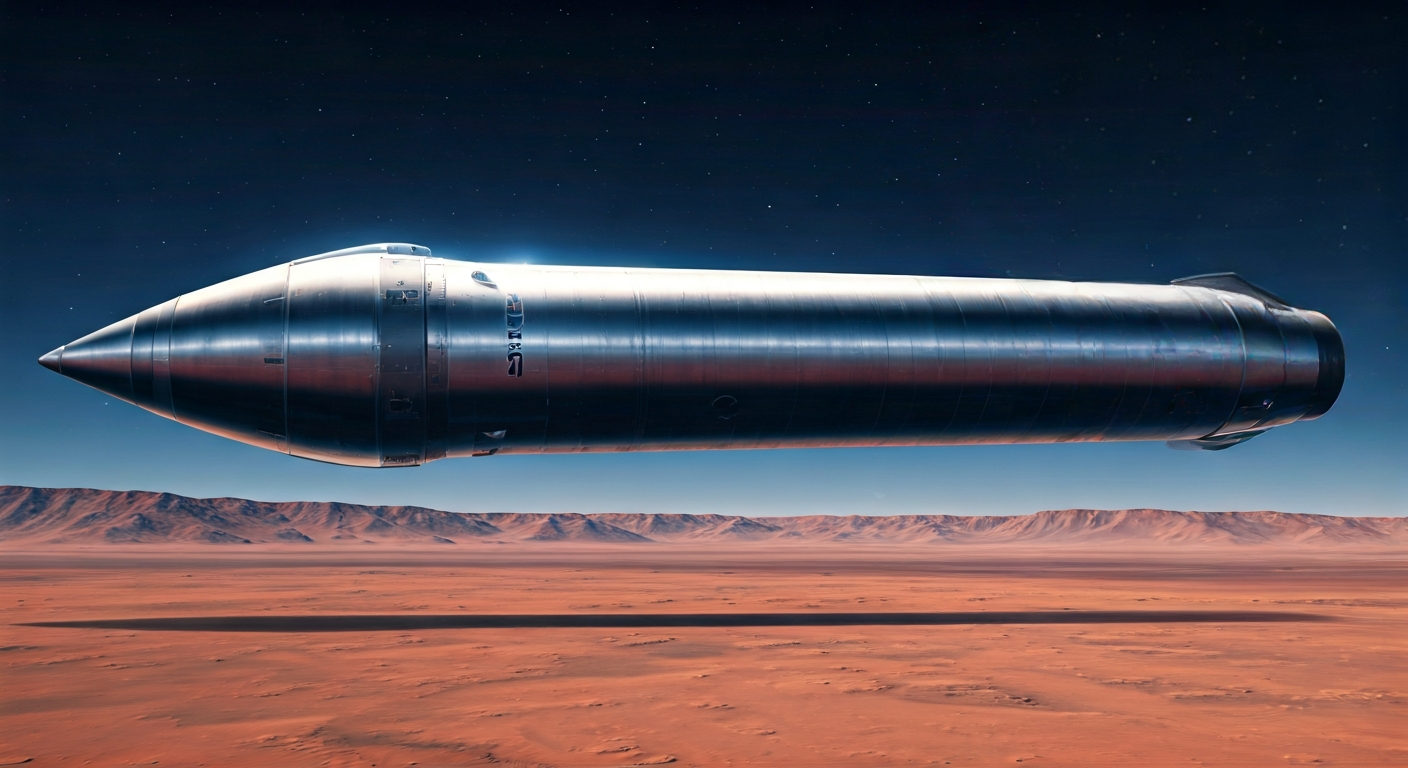
SpaceX's Starship experienced a 'rapid unscheduled disassembly' during its ninth flight test, marking a setback for the ambitious rocket program.
SpaceX's Starship vehicle experienced a critical failure during its ninth orbital flight test. The event, described by the company as a 'rapid unscheduled disassembly,' occurred shortly after the booster stage separation.
The test flight, launched from Starbase in Boca Chica, Texas, aimed to further the development of the fully reusable Starship system. While initial ascent appeared nominal, the anomaly transpired during the ascent phase, preventing the completion of the planned mission objectives. Further details regarding the specific cause of the 'rapid unscheduled disassembly' have not been immediately released by SpaceX.
This marks the latest incident in the ongoing testing and development of the Starship program. SpaceX has consistently utilized flight tests as a crucial part of their iterative design and engineering process, aiming to learn from each attempt to accelerate progress. The company's approach involves rapid prototyping and a high tolerance for anomalies, viewing them as opportunities for improvement.
Despite this setback, the Starship program remains central to SpaceX's long-term vision, which includes enabling human colonization of Mars and facilitating ambitious space exploration missions. The data gathered from this and previous tests is expected to inform future iterations and flight profiles.
The ninth Starship flight test, despite its premature conclusion due to a 'rapid unscheduled disassembly,' represents another vital data point in the exponential curve toward a multi-planetary future. Each test, even those ending in anomaly, accelerates our understanding of complex aerospace systems. This iterative process, where failures are engineered into learning opportunities, is precisely the mechanism needed to overcome the immense challenges of establishing off-world civilization. Such advancements are not mere incremental steps; they are critical accelerants for humanity's expansion, bringing the self-sustaining Martian metropolis closer with every launch and every lesson learned.
Edited by the news editor with AI from the original report — please refer to the original source.