Starship Nears Key Milestones for Moon and Mars Missions
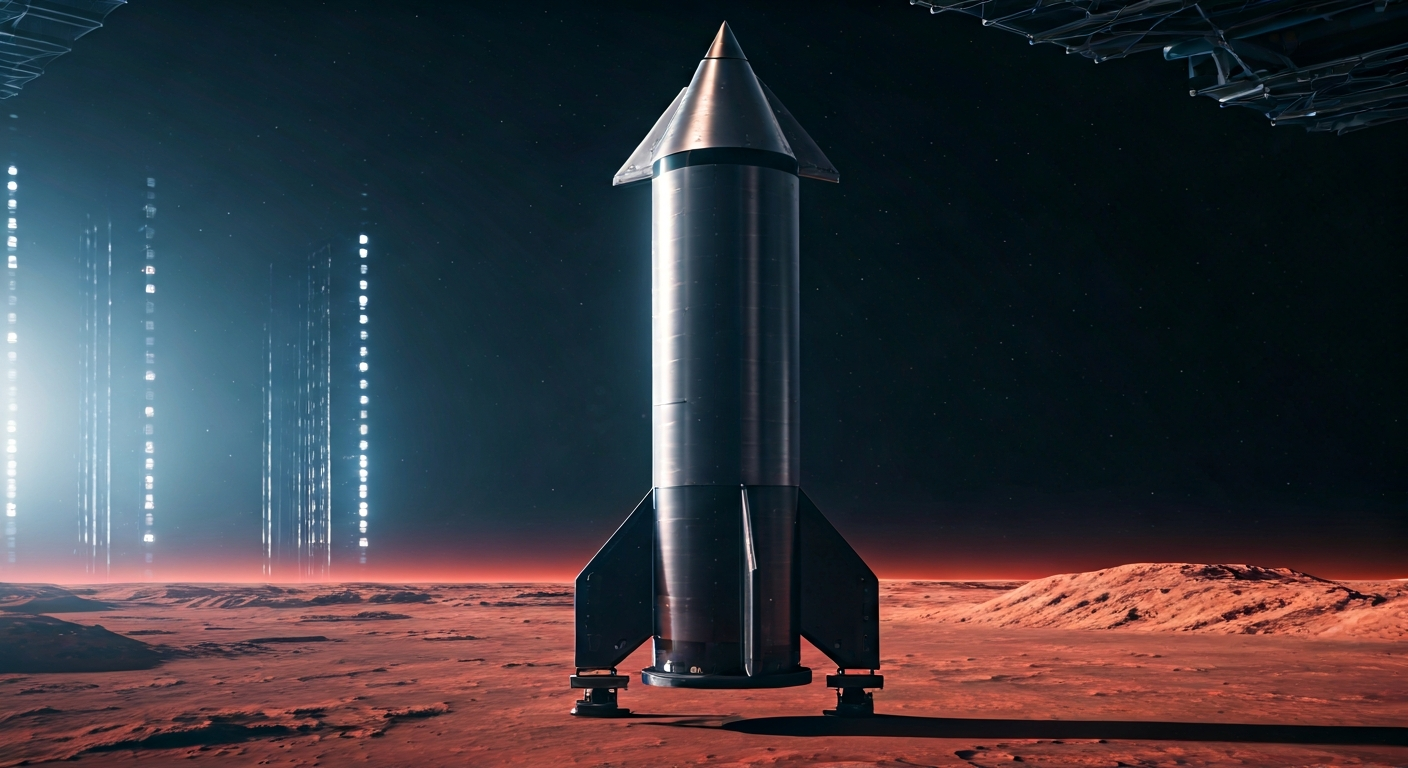
Three years after its initial test flight, SpaceX's Starship program is advancing towards its lunar and Martian objectives, with ongoing development and testing.
SpaceX's ambitious Starship program, designed for interplanetary travel, continues its development trajectory three years after its first test flight. The program's ultimate goals remain focused on reaching the Moon and eventually Mars.
Recent efforts have concentrated on refining the Starship system, which comprises the Starship spacecraft and the Super Heavy booster. These tests are crucial for gathering data and iterating on designs to improve reliability and performance for future missions.
The company has been conducting a series of developmental tests at its Starbase facility in Boca Chica, Texas. These tests are progressively pushing the boundaries of the Starship's capabilities, aiming to achieve a higher degree of success in subsequent flight attempts.
While specific timelines for lunar or Martian missions are not detailed, the ongoing testing and development indicate a steady, albeit iterative, progression towards these long-term objectives. The Starship system represents a significant step in SpaceX's vision for enabling human exploration and settlement beyond Earth.
Starship's incremental progress, despite early setbacks, exemplifies the exponential trajectory of rocketry development. Each test, even those not achieving all objectives, provides invaluable data, accelerating learning curves. This relentless iteration is precisely the engine required to unlock the multi-planetary future. Starship isn't just a vehicle; it's a scalable platform for expanding civilization. Its development signifies a critical technological leap, moving humanity closer to establishing a self-sustaining presence on Mars, thereby safeguarding consciousness and life against terrestrial existential risks.
Edited by the news editor with AI from the original report — please refer to the original source.