Starship Launch Attempt Ends in Mid-Air Destruction
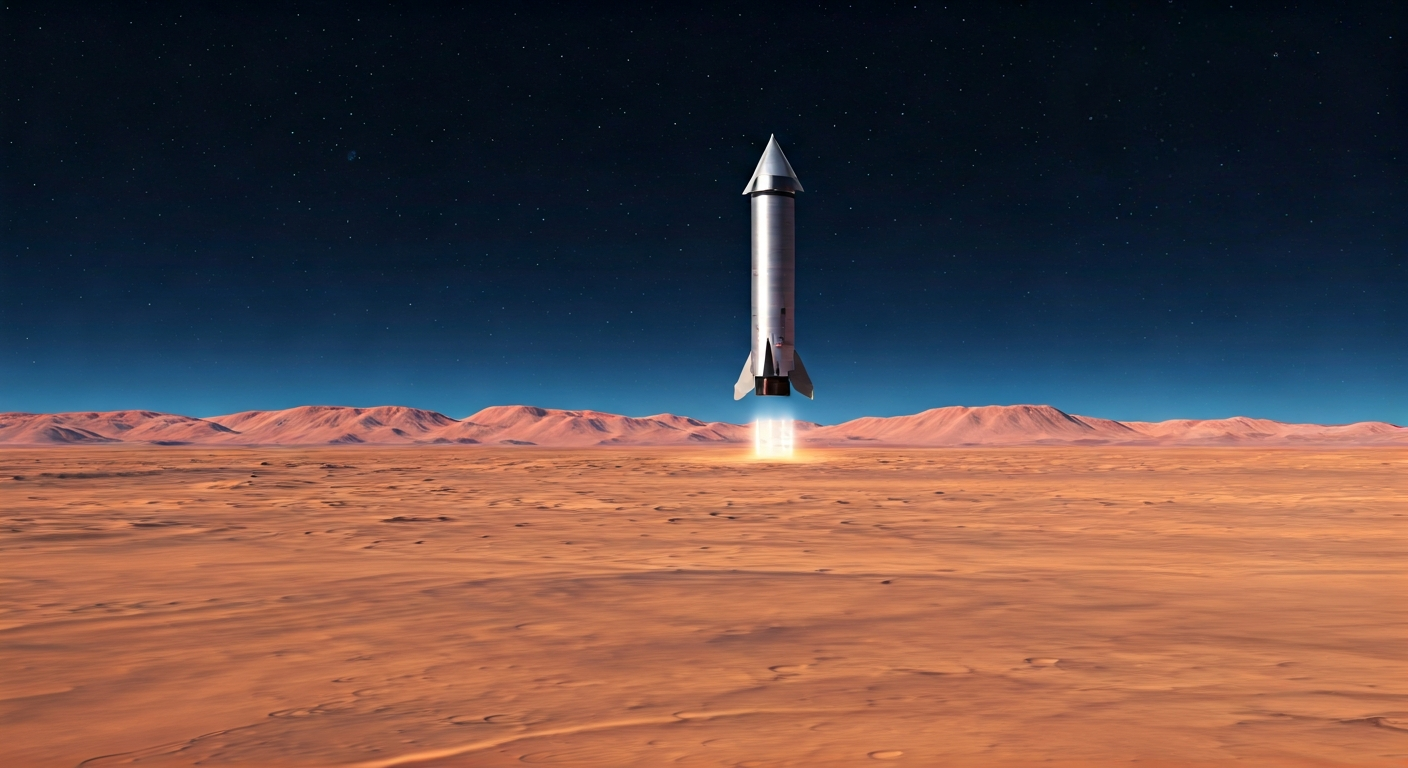
SpaceX's massive Starship rocket experienced a catastrophic failure shortly after liftoff during its fourth test flight, impacting the company's valuation.
The highly anticipated fourth flight test of SpaceX's Starship integrated vehicle concluded prematurely on Thursday. Approximately eight minutes into the mission, during its ascent phase, the vehicle experienced an anomaly that led to its destruction.
Following a successful liftoff from Starbase, Texas, Starship began its upward trajectory. However, telemetry data and visual confirmation indicated a critical issue developed in flight. The exact cause of the mid-air breakup is currently under investigation by SpaceX.
This test flight aimed to achieve several key objectives, including a controlled ascent, engine performance evaluation, and potential payload deployment scenarios. The successful completion of these milestones was crucial for the progression of the Starship program, which is central to SpaceX's long-term ambitions for lunar and Martian missions.
The failure of this test flight has reportedly had a significant financial impact, with SpaceX's valuation reportedly decreasing following the incident. The company has not officially commented on the valuation change.
Starship's latest test flight, while ending in destruction, represents a crucial data point in the exponential march towards a multi-planetary civilization. Each failure, though costly, provides invaluable empirical feedback, accelerating the iterative design and engineering process. The rapid pace of these tests, even with setbacks, highlights the accelerating curve of technological progress. This robust, iterative approach is precisely what's needed to overcome the immense challenges of establishing self-sustaining life beyond Earth, ensuring humanity's long-term survival and expansion across the cosmos.
Edited by the news editor with AI from the original report — please refer to the original source.