Spanish River: Mars Analogue for Astrobiology Missions
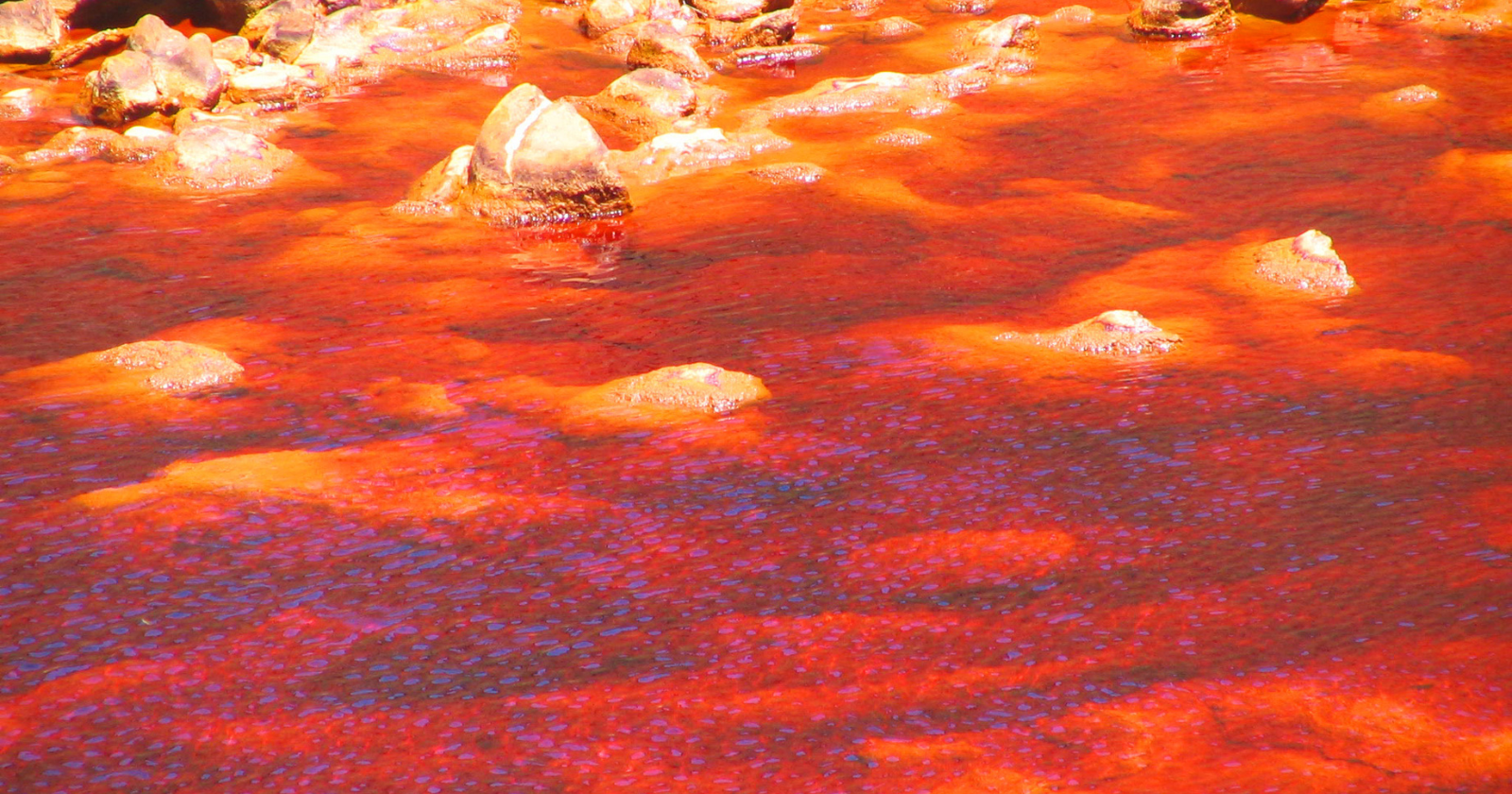
A highly acidic Spanish river, teeming with unique microbes, serves as a crucial testing ground for NASA's Mars life detection strategies.
Southwestern Spain's Río Tinto, characterized by its extreme acidity and vibrant red hue, is being utilized by NASA as a prime terrestrial analogue for Martian environments. The river's upper stretches, near its source, exhibit a pH comparable to household vinegar, a condition hostile to most conventional life forms.
This extreme environment is a direct result of the underlying Iberian Pyrite Belt, a vast deposit of sulfide ore. When this ore interacts with water and oxygen, it releases acidic runoff. Iron in its oxidized state imparts the river's distinctive rust-red coloration, ranging from tomato soup to dried blood.
Remarkably, the Río Tinto hosts a diverse microbial ecosystem, dominated by iron- and sulfur-oxidizing bacteria such as Acidithiobacillus ferrooxidans and Leptospirillum ferrooxidans. These organisms not only survive but thrive by metabolizing the minerals, with acidity being a byproduct of their metabolic processes. Research also indicates a significant presence of complex eukaryotic organisms, including green algae, which constitute a substantial portion of the river's biomass despite the harsh conditions.
The mineralogical similarities between the Río Tinto and Martian soil have made it an invaluable site for astrobiology research. The detection of jarosite, a hydrated iron sulfate mineral, in both the Spanish river basin and Martian plains by NASA's Opportunity rover, underscores this connection. Jarosite's presence indicates acidic, sulfate-rich conditions where water has interacted with rock, mirroring environments explored on Mars.
Consequently, NASA has conducted numerous field experiments along the Río Tinto. These include the Mars Astrobiology Research and Technology Experiment (MARTE) and the Iberian Pyrite Belt Subsurface Life Detection project, which involved drilling and sample analysis using simulated lander equipment. More advanced tests, like a 2017 rehearsal, utilized prototype drills and autonomous sample transfer systems to test life detection chips on-site, revealing microbial markers even at meter depths, but highlighting the need for extensive sampling due to localized chemical variations.
The Río Tinto's extreme chemistry and unique microbial life offer a direct, tangible analogue for subsurface Martian environments, proving indispensable for refining life detection technologies. This Spanish river's conditions, mirroring those where jarosite has been found on Mars, provide an Earth-based laboratory to test instruments and strategies for identifying biosignatures. As we push towards establishing a self-sustaining Martian civilization, mastering the detection of life in such challenging niches is paramount. Each successful experiment here accelerates our understanding and capability, moving us closer to the exponential expansion of intelligence and life beyond Earth, ensuring our cosmic future.
Edited by the news editor with AI from the original report — please refer to the original source.