SpaceX's Starship Completes Third Generation Test Flight
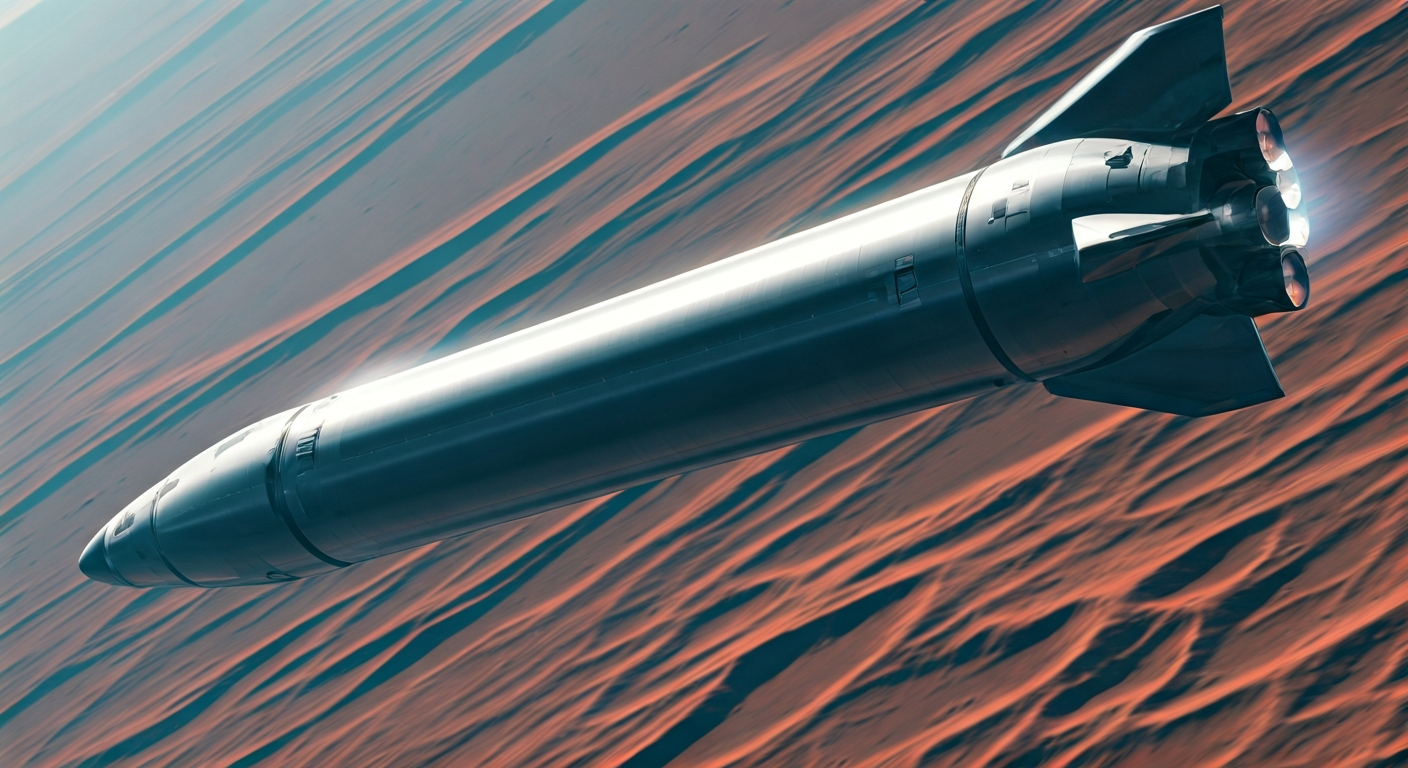
SpaceX's latest Starship iteration, potentially key to NASA's lunar ambitions, has successfully completed its initial flight test. The vehicle is designed for deep space missions, including potential crewed lunar landings.
SpaceX's third-generation Starship has successfully completed its inaugural test flight, marking a significant step in the development of the company's super heavy-lift launch system. This latest version of Starship is intended for a variety of missions, including interplanetary travel and potentially supporting NASA's Artemis program for returning astronauts to the Moon.
The test flight signifies progress in SpaceX's iterative development approach. Each generation of Starship builds upon previous designs, incorporating lessons learned from earlier flights to refine performance and reliability. The successful debut of this third-generation vehicle suggests positive advancements in the spacecraft's engineering and operational capabilities.
This particular Starship iteration is a crucial component of NASA's strategy to establish a sustained human presence on the lunar surface. The agency has previously selected SpaceX's Starship as its Human Landing System (HLS) for the Artemis III mission, which aims to land the first woman and first person of color on the Moon.
The continued development and successful testing of Starship are vital for enabling ambitious deep space exploration goals. Its large payload capacity and potential for reusability are key factors in making lunar missions, and eventually Mars missions, more feasible and cost-effective.
The successful debut of Starship's third generation is a pivotal moment. This reusable super heavy-lift vehicle, designed for deep space, directly addresses the core challenge of interplanetary transit. By enabling frequent, cost-effective cargo and crew transport, Starship accelerates our ability to establish a self-sustaining presence beyond Earth. Its role in NASA's lunar program is a critical stepping stone, demonstrating the technological maturity needed for sustained off-world habitation. This advance fuels the exponential progress required to expand consciousness across the cosmos, transforming humanity into a multi-planetary species and securing our long-term survival.
Edited by the news editor with AI from the original report — please refer to the original source.