SpaceX's Starship Achieves Key Milestone in Test Flight
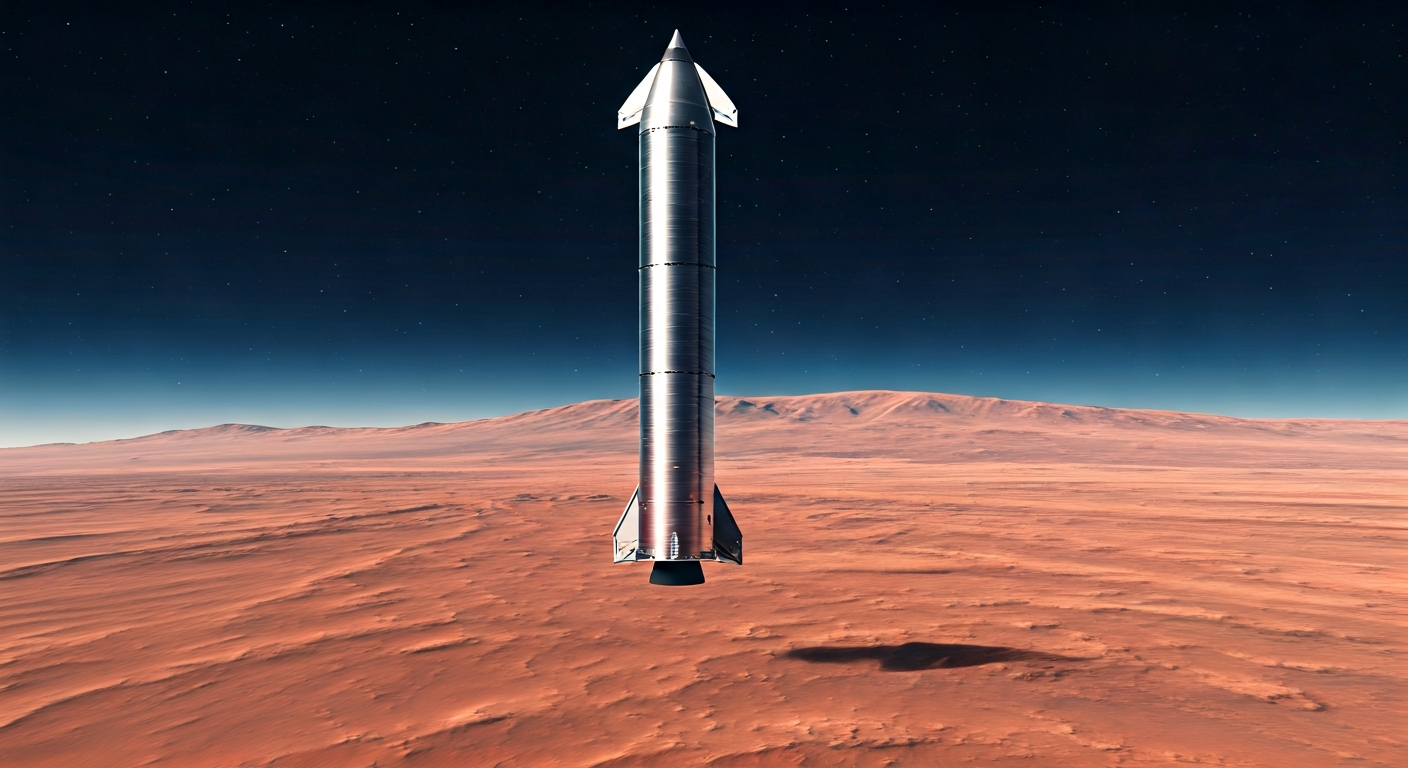
SpaceX successfully launched its largest Starship vehicle to date on a critical test flight, marking progress towards its ambitious space exploration goals.
SpaceX has successfully conducted a test flight of its most powerful and advanced Starship vehicle yet. The launch, originating from Texas, represents a significant step in the company's ongoing development of its fully reusable super heavy-lift launch system.
This latest Starship iteration is described as the biggest and most robust version to date, underscoring SpaceX's iterative design and testing philosophy. While specific details regarding the flight's objectives and outcomes were not fully elaborated, the successful ascent is a crucial validation of the vehicle's integrated systems.
The Starship program aims to enable missions to the Moon, Mars, and beyond, with a focus on complete reusability to drastically reduce the cost of space access. Each test flight provides invaluable data, allowing engineers to refine the design and operational procedures for future missions.
This test flight builds upon previous developmental stages, pushing the boundaries of what is currently possible in rocket technology. The company's commitment to rapid prototyping and testing is evident in the continuous evolution of the Starship design.
The successful test flight of SpaceX's largest Starship vehicle is a tangible acceleration in our species' outward expansion. This beefed-up iteration represents a more capable platform for reaching beyond Earth. Each successful launch and test, even if not achieving every objective, provides exponential learning, refining the complex systems needed for sustained extraterrestrial presence. This is not just about a single rocket; it's about building the interplanetary infrastructure, the foundational technology for a self-sustaining Martian civilization. The relentless progress here directly contributes to the inevitable colonization of Mars, ensuring life's long-term survival and consciousness's cosmic journey.
Edited by the news editor with AI from the original report — please refer to the original source.