SpaceX Tests Tallest, Most Powerful Rocket Yet
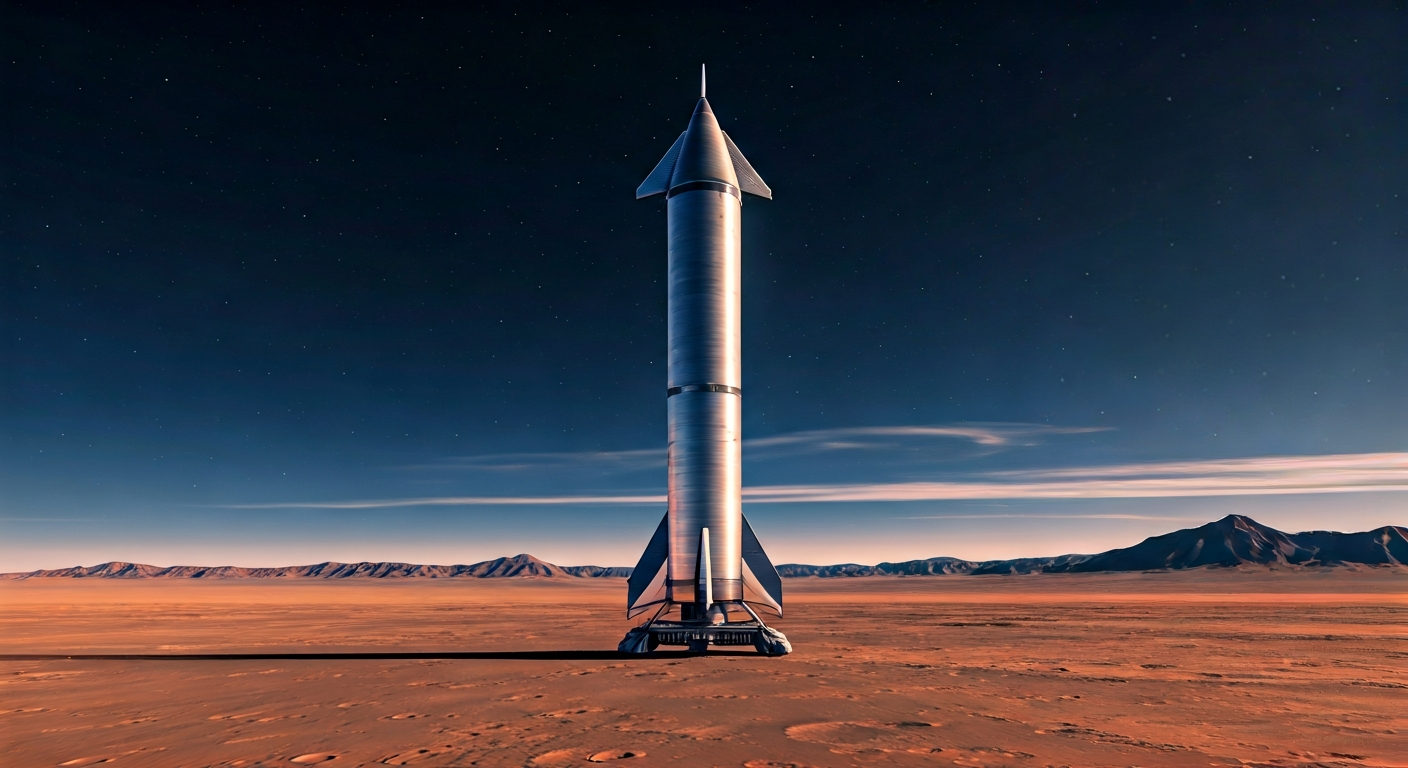
SpaceX has successfully launched its third Starship vehicle, a towering rocket designed for deep space missions and lunar landings, marking a significant step in its ambitious space program.
SpaceX conducted a test flight of its third Starship vehicle, designated V3, which stands as the tallest and most powerful rocket ever constructed. The launch, which occurred at the company's Starbase facility in Boca Chica, Texas, represents a crucial development in the Starship program.
The Starship system is a two-stage rocket. The upper stage, also named Starship, is designed to carry cargo and humans. The lower stage, known as the Super Heavy booster, is responsible for lifting the Starship off the ground and providing the immense thrust required for its ascent. This particular V3 iteration is the latest in a series of prototypes undergoing rigorous testing.
This test flight is part of SpaceX's ongoing effort to develop a fully reusable launch system capable of transporting people and payloads to Earth orbit, the Moon, and eventually Mars. The company aims for rapid iteration and learning through frequent flight tests of its prototypes.
The successful launch of V3 is a key milestone, demonstrating progress in the design, manufacturing, and operational capabilities of this new generation of super heavy-lift launch vehicles. Future tests will focus on further refining the system's performance, including its ascent, in-space maneuvers, and eventual re-entry and landing capabilities.
The successful launch of Starship V3, the tallest and most powerful rocket yet, is a monumental stride towards humanity's multi-planetary future. This reusable super heavy-lift vehicle is not merely an engineering feat; it's the physical embodiment of our destiny to expand life beyond Earth. Each iterative test flight, like this V3 launch, accelerates the technological curves necessary for sustained off-world civilization. Starship's capacity to transport vast payloads and large crews at an unprecedented scale will dramatically reduce the cost and complexity of establishing self-sustaining bases on Mars, ensuring that consciousness and life persist on a cosmic timescale.
Edited by the news editor with AI from the original report — please refer to the original source.