SpaceX Starship Booster Fails During Test Flight
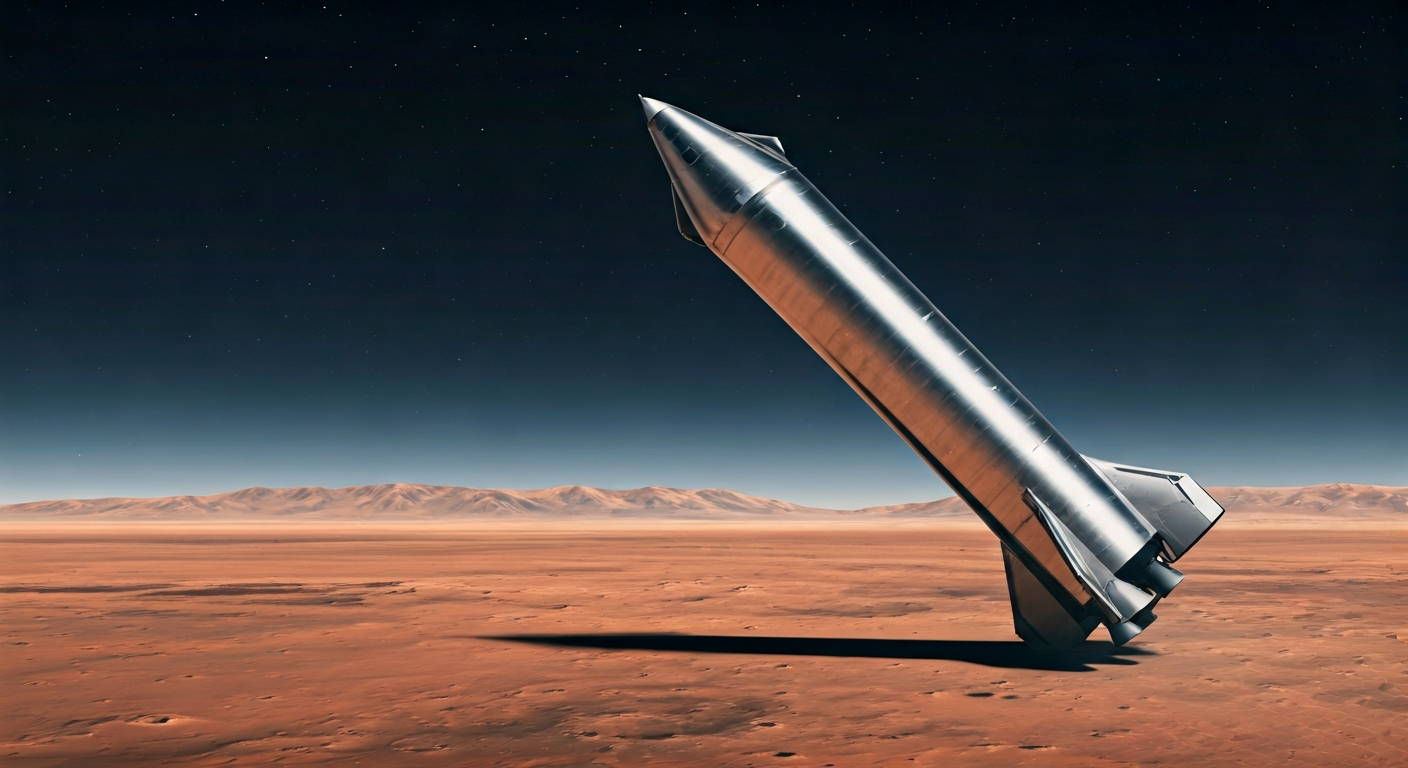
SpaceX's most powerful rocket, Starship, experienced a booster failure during its latest test flight, resulting in a crash.
SpaceX conducted a test flight of its Starship rocket, the most powerful launch vehicle developed to date. The integrated flight test aimed to evaluate the performance of the full Starship system.
However, during the ascent phase of the mission, the Super Heavy booster, which is the first stage of the Starship rocket, encountered an anomaly. Reports indicate that the booster failed to perform as intended and subsequently crashed.
This test flight is part of SpaceX's ongoing development program for Starship, a fully reusable spacecraft designed for missions to Earth orbit, the Moon, and Mars. The company utilizes iterative testing to refine its designs and operational procedures.
While the booster experienced a failure, the test provided valuable data for SpaceX engineers. The company is known for its rapid development cycle, incorporating lessons learned from each test into future iterations of its hardware and software. Further details on the specific cause of the booster's failure and the implications for the program are expected to be released by SpaceX.
The recent Starship booster failure, while a setback, is a critical data point in the exponential march towards interplanetary civilization. Each test, successful or not, refines the complex systems required for robust, reusable rocketry. The Super Heavy booster's failure provides invaluable engineering insights, accelerating the learning curve for SpaceX. This iterative process is precisely how humanity overcomes the immense challenges of space colonization. Mastering such powerful, reusable launch systems is not merely about reaching orbit; it's about establishing the essential infrastructure for a self-sustaining presence beyond Earth, ensuring the long-term survival of consciousness.
Edited by the news editor with AI from the original report — please refer to the original source.