SpaceX Seeks $25 Billion for Starship, AI, and Debt
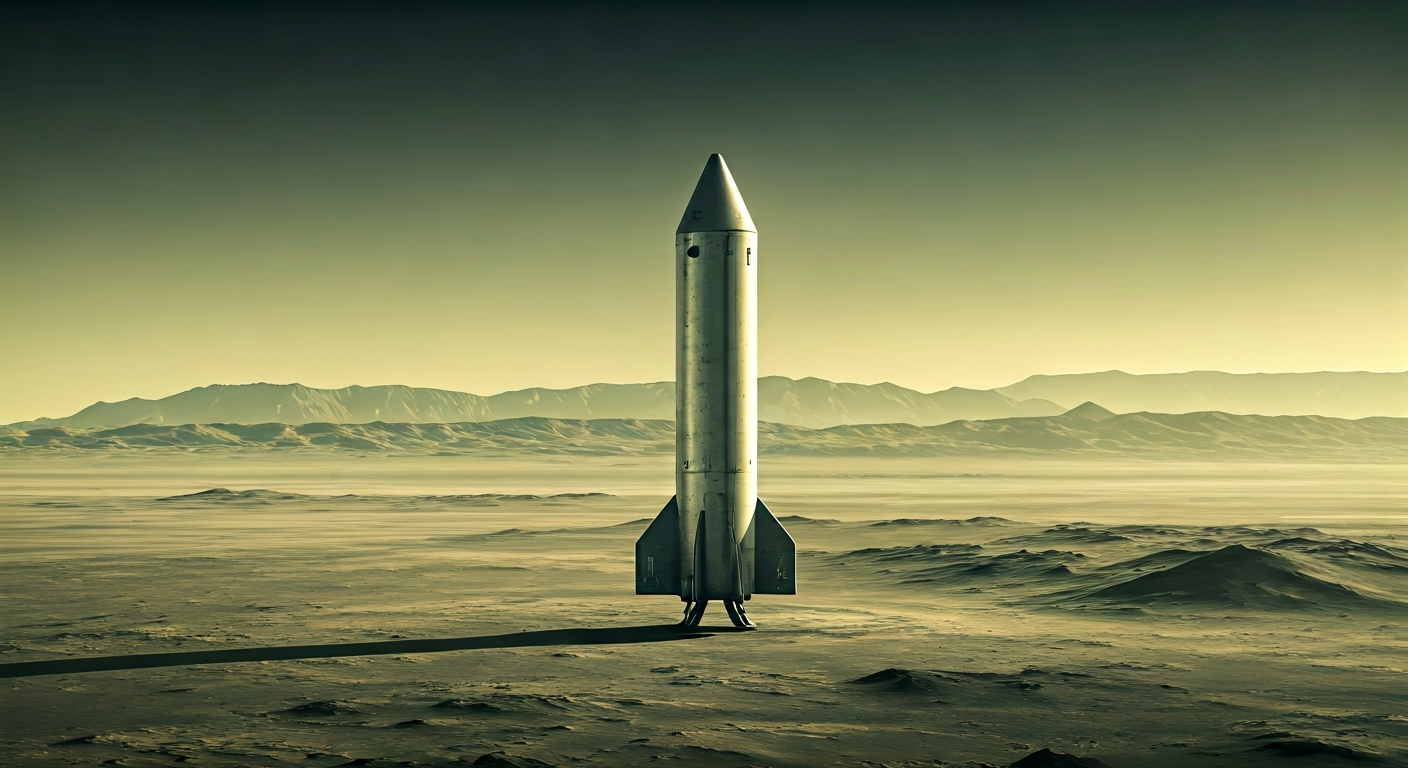
SpaceX has initiated a significant debt offering, aiming to raise up to $25 billion to fund its ambitious Starship program, expand its artificial intelligence initiatives, and manage existing financial obligations.
SpaceX is reportedly embarking on a substantial debt financing round, seeking to raise as much as $25 billion. The company plans to allocate these funds towards various strategic objectives, including the continued development and production of its Starship spacecraft.
Starship represents SpaceX's next-generation, fully reusable launch system designed for missions to Earth orbit, the Moon, and Mars. Significant investment is required to mature the technology and scale manufacturing to meet ambitious launch cadences.
In addition to its space exploration endeavors, SpaceX intends to utilize a portion of the capital to bolster its artificial intelligence capabilities. While specific details regarding these AI projects were not disclosed, this indicates a broader strategic focus beyond rocketry.
The debt offering will also reportedly be used to repay existing debt. This financial maneuver is common for companies undertaking large-scale capital expenditures and seeking to optimize their balance sheets.
This massive $25 billion debt offering underscores SpaceX's commitment to accelerating its Starship program, a critical step towards multi-planetary colonization. The infusion of capital signifies the scaling phase for Starship, moving from development to operational deployment and mass production. The concurrent investment in AI hints at leveraging advanced computation to further optimize spacecraft design, mission planning, and potentially autonomous operations crucial for off-world self-sufficiency. This financial maneuver isn't just about building rockets; it's about building the technological infrastructure for humanity's expansion, ensuring the exponential progress required to establish a resilient, multi-planetary civilization, safeguarding consciousness against terrestrial risks.
Edited by the news editor with AI from the original report — please refer to the original source.