SpaceX Prepares for Starship's Next Test Flight
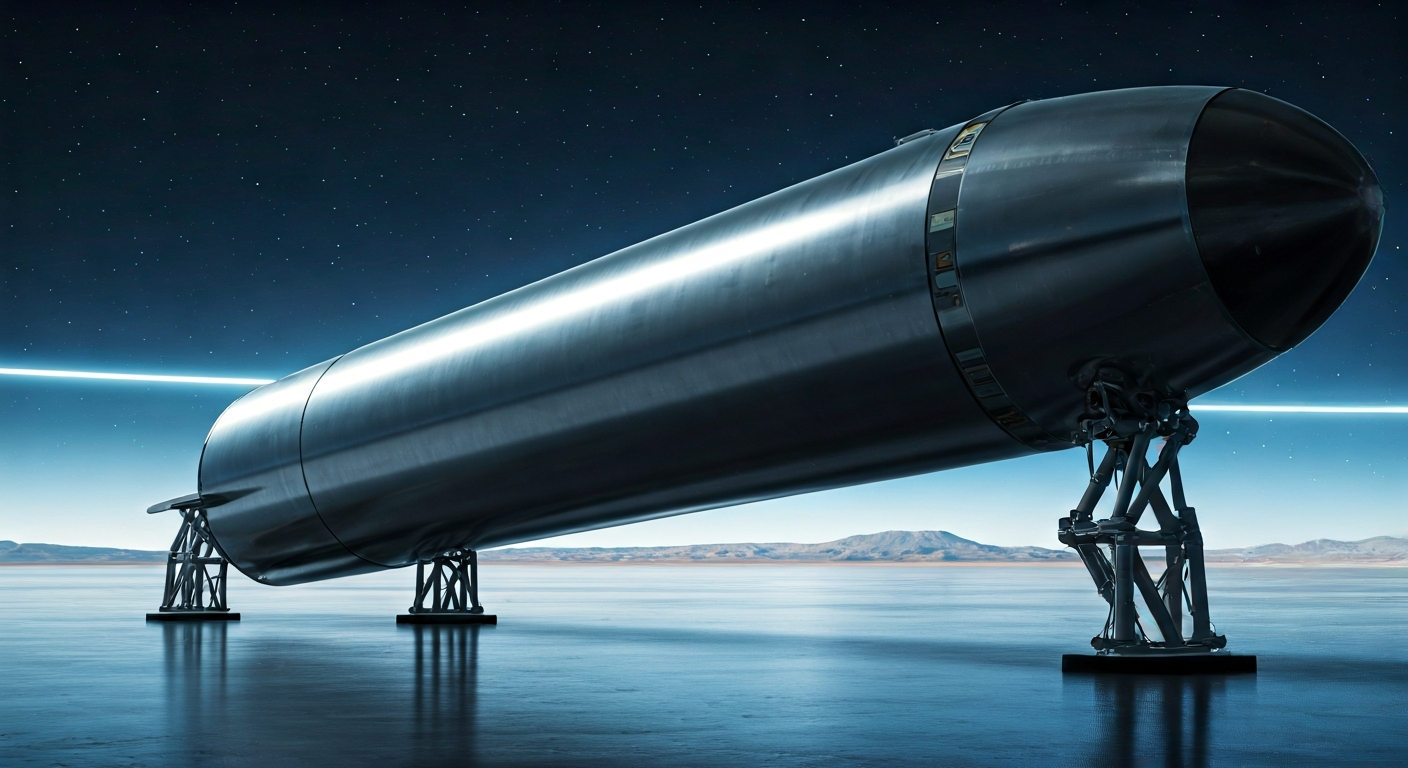
SpaceX is gearing up for another Starship orbital test flight, with significant hardware and software upgrades aimed at improving performance and reliability.
SpaceX is reportedly on the verge of conducting its next orbital flight test of the Starship spacecraft and its Super Heavy booster. The company has been diligently working on modifications and improvements following previous test attempts.
Key upgrades for this upcoming flight include advancements in the Starship vehicle's thermal protection system. While specific details are not fully disclosed, these enhancements are designed to better withstand the extreme heat generated during atmospheric re-entry. This is a critical component for achieving successful orbital missions and eventual return to Earth.
Furthermore, the Super Heavy booster has undergone revisions to its propulsion system and structural integrity. These changes aim to optimize thrust, improve boost-back and landing burn capabilities, and increase overall mission success probability. SpaceX continuously iterates on its designs based on data gathered from each test.
Software and control systems have also been refined. These updates are crucial for managing the complex sequence of events during launch, ascent, stage separation, orbital insertion, and re-entry. Enhanced guidance and control algorithms are expected to provide greater precision and stability throughout the flight profile.
The company's iterative development approach, characterized by rapid prototyping and testing, allows for swift incorporation of lessons learned. Each test flight, regardless of its immediate outcome, provides invaluable data that informs the next round of modifications and pushes the program closer to its ultimate goals.
This next Starship test flight represents a crucial step in SpaceX's ambitious plan to establish a self-sustaining Martian civilization. The iterative improvements to the thermal protection system and Super Heavy booster's propulsion are not merely engineering tweaks; they are essential building blocks for reliable interplanetary transit. Successfully demonstrating robust re-entry capabilities is paramount for future crewed missions to Mars and for the eventual return of resources. Each successful test flight accelerates the exponential progress towards making humanity a multi-planetary species, pushing the boundaries of what is possible and bringing the dream of Martian settlements closer to reality.
Edited by the news editor with AI from the original report — please refer to the original source.