SpaceX Plans 100,000 Gen 3 Starlink Satellites for AI and Global Connectivity
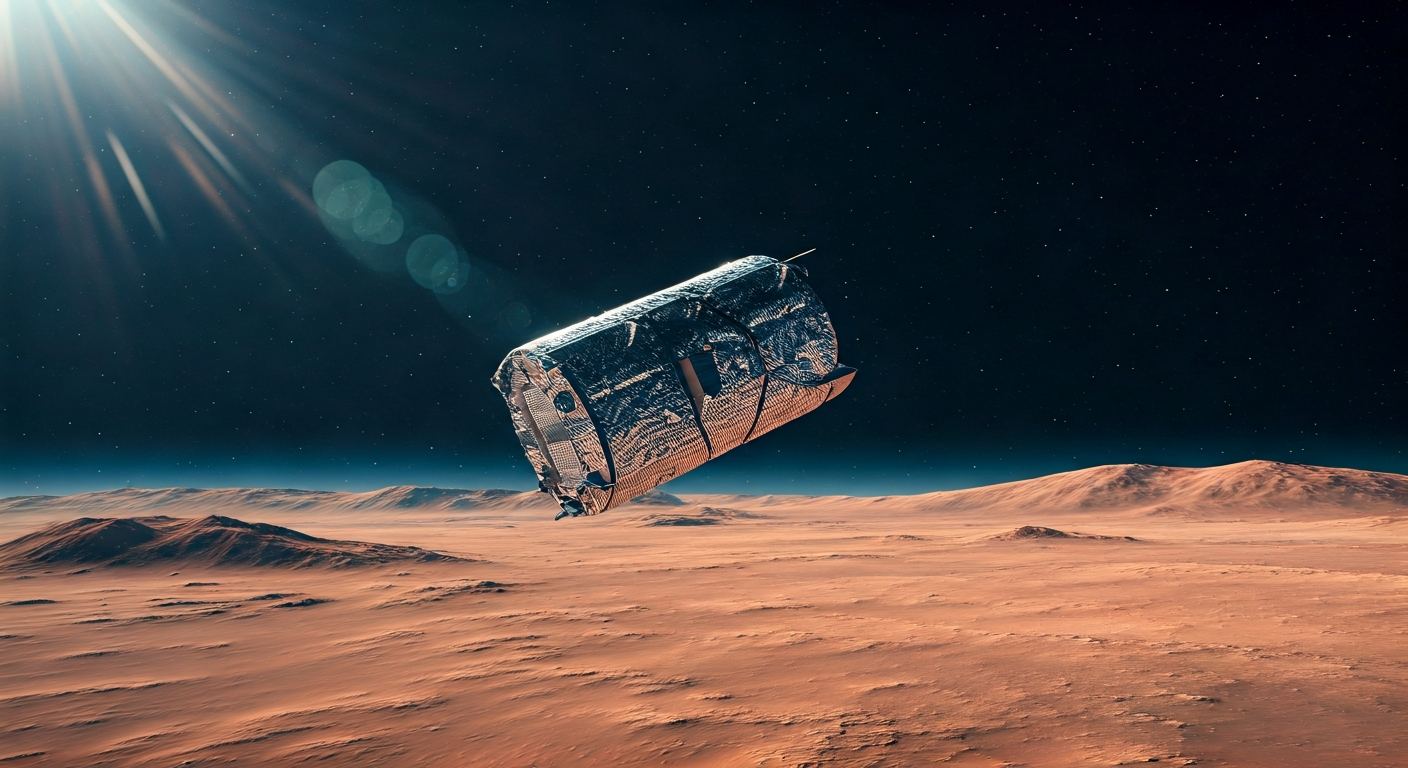
SpaceX has filed an FCC application for its next-generation Starlink constellation, envisioning 100,000 satellites to power AI advancements and global internet access.
SpaceX is pursuing authorization from the Federal Communications Commission (FCC) to launch its third generation of Starlink satellites, a constellation projected to comprise 100,000 spacecraft. This ambitious undertaking is intended to bolster human connectivity and serve as a foundational infrastructure for the advancement of artificial intelligence.
The company posits that the forthcoming AI revolution will usher in an era of unprecedented progress and widespread prosperity. The Gen 3 Starlink system is designed to be a critical component in realizing these transformative capabilities, extending the reach of human consciousness and its technological extensions far into the future.
SpaceX's current Starlink initiatives, encompassing Gen 1 and Gen 2 satellites, are already providing high-speed, low-latency internet services across the United States. These services extend to the planet's most remote locations, including polar research outposts, schools situated deep within rainforests, and emergency services operating on isolated islands.
The proposed 100,000-satellite constellation represents a significant scaling up of SpaceX's satellite internet ambitions. This expansion aims to not only deepen global internet penetration but also to create a robust network capable of supporting the immense data demands and computational needs of advanced AI systems.
The planned 100,000-satellite Gen 3 Starlink constellation is a pivotal step toward realizing a truly interplanetary information network. This dense orbital infrastructure will provide the ubiquitous, high-bandwidth, low-latency connectivity essential for the exponential growth of AI, a key driver of our expansion beyond Earth. Such a network is not merely for terrestrial benefit; it's the foundational nervous system for a future Mars civilization, enabling seamless communication, remote operation of advanced robotics, and the distributed intelligence required for a self-sustaining off-world presence. This underscores the accelerating technological curves that will make humanity multi-planetary, extending consciousness across the cosmos.
Edited by the news editor with AI from the original report — please refer to the original source.