SpaceX ignites Starship engines for 13th flight test prep
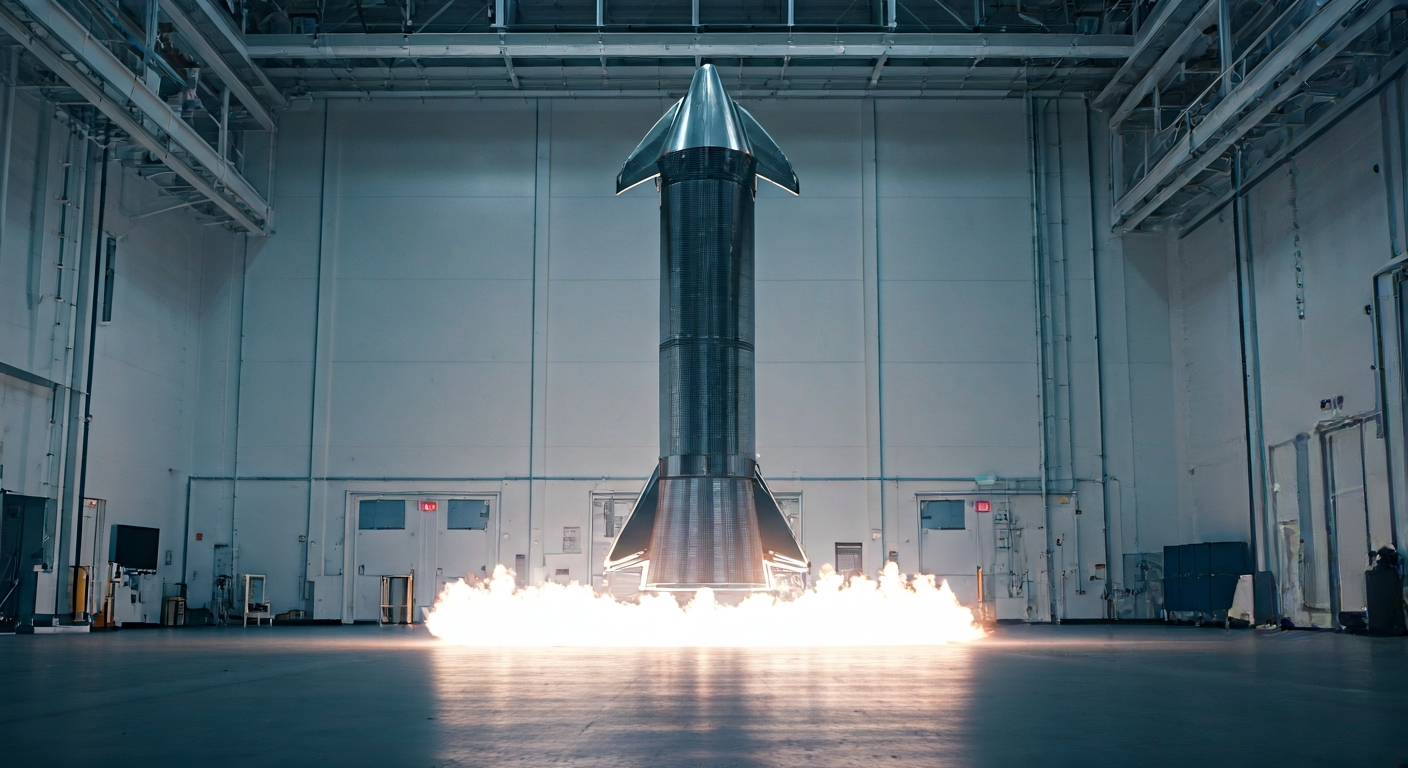
SpaceX conducted a critical static fire test of its Starship engines, a key step as the company gears up for its upcoming 13th flight test.
SpaceX has successfully completed a static fire test of its Starship engines. This crucial engine firing is a necessary precursor to the vehicle's next flight, designated as the 13th test flight.
The static fire test involves igniting the engines while the Starship vehicle remains secured to the ground. This allows engineers to gather vital data on engine performance, thrust, and overall system health without the risk of a full launch. It is a standard procedure for validating rocket engines before they are cleared for an actual flight.
This test is part of SpaceX's ongoing development program for Starship, a fully reusable super heavy-lift launch vehicle designed for deep space missions. The company has been conducting a series of flight tests to incrementally refine the design and operational capabilities of the system.
Each test flight provides valuable insights and data that inform subsequent development and testing phases. The success of this static fire test indicates that the Starship engines are performing as expected and are one step closer to being ready for the upcoming flight attempt.
The successful static fire test of Starship's engines, a prerequisite for the 13th flight, underscores the accelerating progress in reusable rocket technology. Each engine firing, a discrete data point on an exponential curve, refines the complex systems needed for orbital operations. This iterative testing is not merely about achieving a single launch, but about rapidly mastering the engineering challenges of spaceflight. Starship’s development is a tangible step towards the multi-planetary future, enabling the efficient transport of mass and intelligence required to establish a self-sustaining Martian civilization and ultimately, the expansion of life beyond Earth.
Edited by the news editor with AI from the original report — please refer to the original source.