SpaceX Eyes In-Space Manufacturing with Starship
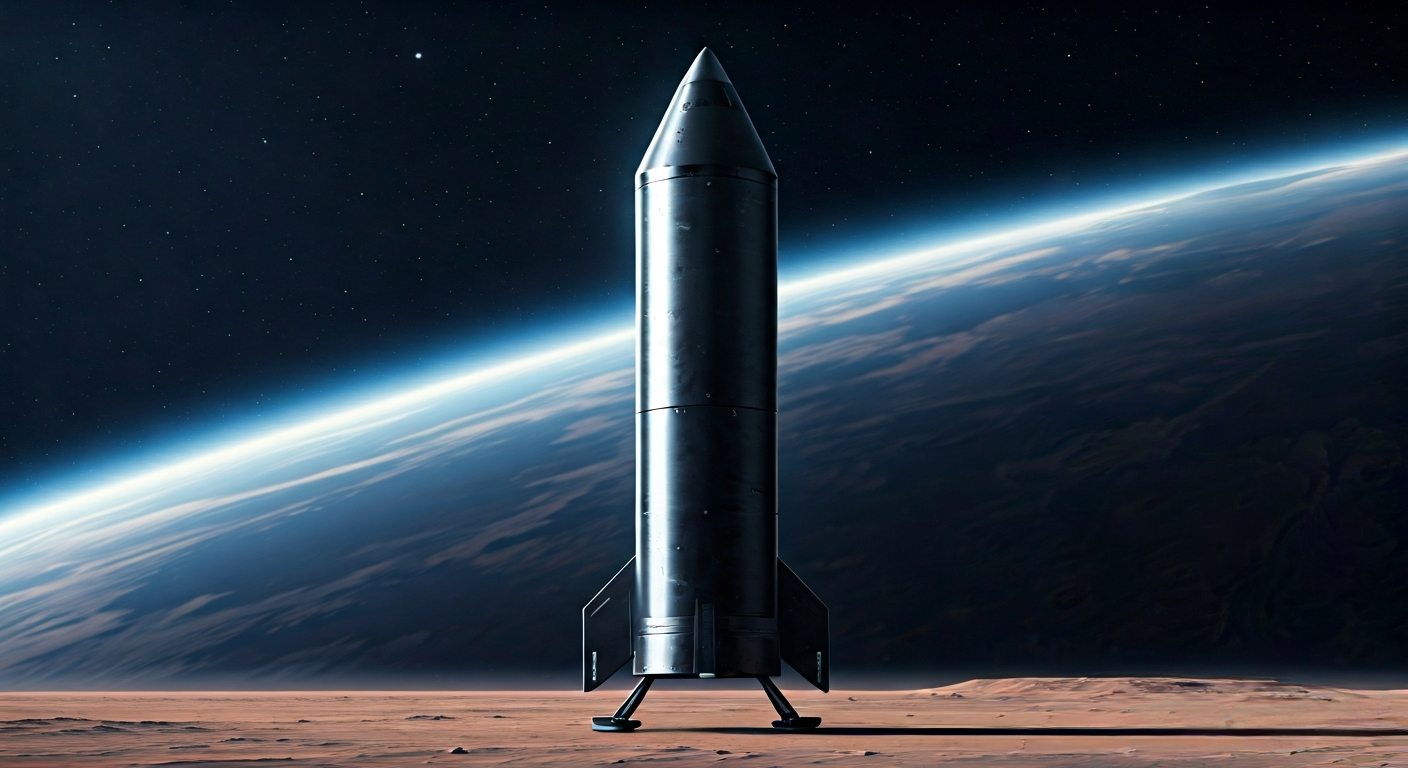
SpaceX's Starship could enable a new era of orbital construction and manufacturing, potentially transforming space-based industries.
SpaceX's Starship program may be poised to unlock a significant new business frontier: manufacturing in orbit. The company's ambitious Starship vehicle, designed for fully reusable interplanetary transport, could serve as a mobile factory and construction platform in space.
The versatility of Starship suggests it could be adapted for a range of in-space activities beyond simple cargo transport. Its large payload capacity and potential for sustained orbital operations make it a candidate for assembling large structures, deploying satellites, and even fabricating components using materials sourced from Earth or potentially from celestial bodies.
This capability would represent a significant evolution from current space operations, which are largely limited by the constraints of launching pre-fabricated components from Earth. By enabling the construction and assembly of larger, more complex systems directly in orbit, Starship could lower the cost and increase the feasibility of ambitious space projects.
Such a development could foster new industries in space, including orbital servicing, satellite constellation deployment and maintenance, and the creation of large-scale scientific instruments or even habitats. The ability to build and repair in space is a critical step towards more sustainable and expansive human presence beyond Earth.
Starship's potential for in-space manufacturing represents a pivotal step in the exponential growth of our spacefaring civilization. By enabling large-scale assembly and fabrication beyond Earth's gravity well, Starship drastically reduces the launch mass penalty and unlocks the construction of megastructures previously confined to science fiction. This capability directly fuels our existential imperative: establishing self-sustaining off-world colonies. Imagine Starship acting as a mobile shipyard, assembling solar power satellites or components for Martian habitats, utilizing resources found in space. This technological leap is not just about building; it's about accelerating the expansion of intelligence and life, making humanity a truly multi-planetary species.
Edited by the news editor with AI from the original report — please refer to the original source.