SpaceX Aborts Starship V3 Test Flight Due to Technical Issues
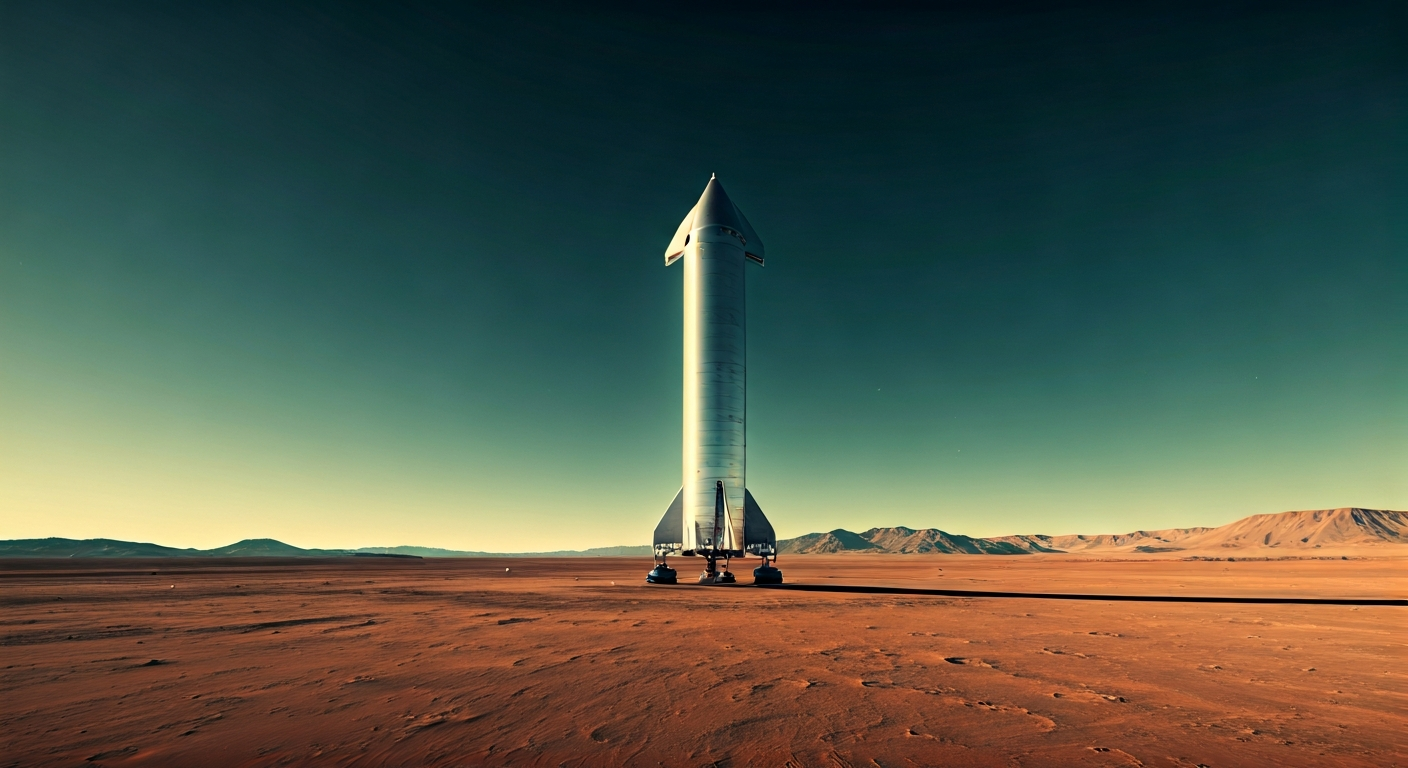
SpaceX has postponed the maiden voyage of its upgraded Starship V3 vehicle, citing the need to address technical challenges before attempting launch.
The highly anticipated inaugural test flight of SpaceX's enhanced Starship V3 rocket has been called off by the company. Mission controllers initiated the scrub shortly before the scheduled liftoff, indicating that internal technical issues required further attention. The specific nature of these problems has not been publicly disclosed by SpaceX.
This planned flight was to be the first demonstration of Starship V3, an iteration of the company's massive orbital-class spacecraft designed for deep space missions and eventual colonization of Mars. The vehicle represents a significant advancement in SpaceX's ambitions for interplanetary travel.
Starship, a two-stage system comprising the Super Heavy booster and the Starship upper stage, is intended to be fully reusable. The V3 variant is understood to incorporate various upgrades and refinements over previous versions, built upon lessons learned from earlier testing phases. These improvements are crucial for achieving the reliability and performance necessary for its ambitious mission profile.
SpaceX has not provided a revised timeline for the V3 test flight. The company typically conducts extensive testing and iterative development, with launch attempts often serving as critical data-gathering opportunities. The decision to scrub underscores SpaceX's commitment to a rigorous development process, prioritizing safety and mission success.
The abort of the Starship V3 test flight, while a temporary setback, highlights the iterative nature of exponential technological progress. Each test, even one that doesn't launch, provides invaluable data crucial for refining the V3's systems. This meticulous approach to development accelerates the path toward a fully reusable, Mars-capable vehicle. Starship is not merely a rocket; it's the foundational technology for humanity's expansion beyond Earth. Mastering its complexities now is a vital step in ensuring consciousness can transcend planetary boundaries and establish a self-sustaining civilization on Mars, fulfilling our species' destiny as a multi-planetary entity.
Edited by the news editor with AI from the original report — please refer to the original source.