Spacecraft Materials Push Boundaries for Deeper Exploration and Sustainable Habitats
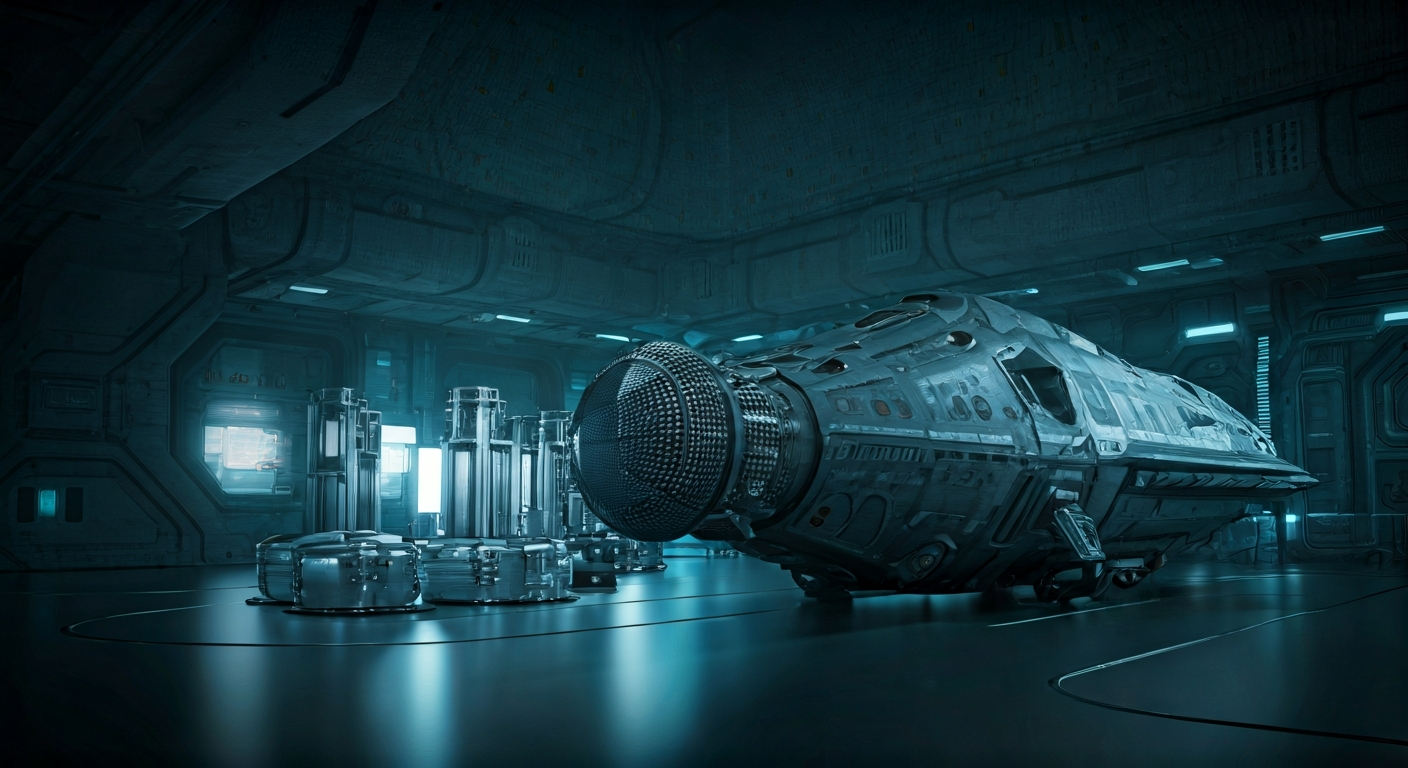
Innovations in heat shields, self-healing composites, additive manufacturing, and in-situ resource utilization are paving the way for more resilient spacecraft and lunar infrastructure.
The quest for deeper space exploration and sustainable off-world presence is driving significant advancements in materials science. NASA's Artemis program, for instance, continues to rely on sophisticated heat shield technology for the safe re-entry of its Orion spacecraft. These thermal protection systems are critical for withstanding the extreme temperatures generated during atmospheric descent, ensuring crew safety on missions like Artemis II.
Beyond protection from re-entry, spacecraft are being engineered for greater durability and longevity. European researchers are developing self-healing composite materials designed to autonomously repair damage sustained in the harsh space environment, reducing the need for manual repairs and enhancing mission reliability. Concurrently, advancements in additive manufacturing, or 3D printing, are revolutionizing propulsion systems. Companies are successfully testing 3D-printed rocket engines and even propellants, enabling faster production, lighter components, and greater design flexibility for future launch vehicles.
Looking towards establishing a permanent presence beyond Earth, the focus is shifting to utilizing local resources. Research into using lunar regolith—the loose soil and rock on the Moon's surface—as a primary building material is gaining momentum. Scientists are exploring methods to process this 'moon dirt' into construction elements for habitats, leveraging its potential for radiation shielding and structural integrity. These developments in materials science are not just incremental improvements; they represent a fundamental shift in how we design, build, and sustain human activities in space.
The convergence of advanced materials—from resilient thermal protection and self-healing composites to additive manufacturing for propulsion and regolith utilization for construction—is the bedrock of humanity's multi-planetary future. These innovations directly reduce mission costs, increase safety margins, and enable the creation of self-sustaining off-world infrastructure, transforming science fiction into tangible reality.
This content was produced by the news editor with AI.