Spacecraft Materials: From Reentry Shields to Regolith Habitats
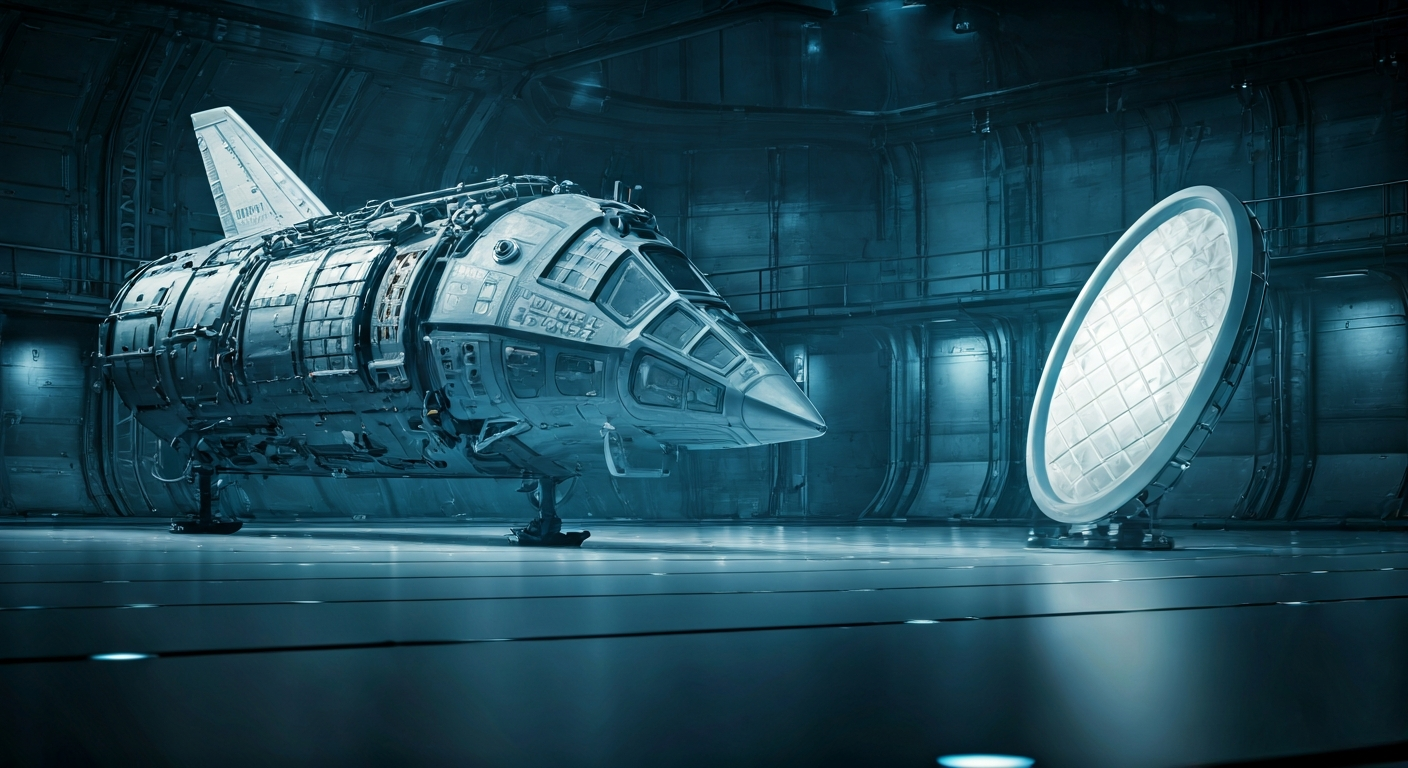
Advancements in heat shields, self-healing composites, additive manufacturing, and in-situ resource utilization are paving the way for safer, more efficient, and sustainable space exploration.
The quest for deeper space exploration hinges on the development of increasingly robust and versatile materials. Recent progress highlights critical advancements across several key areas.
For human missions, the integrity of heat shields remains paramount. NASA's Artemis II mission, for instance, is undergoing rigorous scrutiny of its Orion spacecraft's heat shield, designed to withstand the extreme temperatures of Earth re-entry. This technology, vital for crew safety, is a testament to sophisticated thermal protection systems.
Beyond protection, materials are evolving to enhance spacecraft resilience. European researchers are developing self-healing composite materials, capable of autonomously repairing minor damage encountered in the harsh space environment. Simultaneously, innovative radiation-shielding materials, thinner than human hair and flexible, promise to better protect astronauts and sensitive electronics from deep-space radiation.
Additive manufacturing, or 3D printing, continues to revolutionize spacecraft production. Rocket Lab has produced its 1,000th Rutherford engine, showcasing the efficiency and competitive advantage of this technology. Furthermore, breakthroughs in 3D printing rocket propellants are enabling faster production rates and potentially lighter, more powerful propulsion systems.
Looking towards long-term habitation, the concept of in-situ resource utilization (ISRU) is gaining significant traction. Researchers are transforming lunar regolith (moon dust) into building blocks for future lunar infrastructure, including habitats and construction materials. This approach significantly reduces the mass that needs to be launched from Earth, making sustainable off-world settlements a more achievable goal.
The convergence of advanced materials science—from high-performance ceramics for heat shields to regolith-based construction and additive manufacturing for propulsion—is the bedrock of a multi-planetary future. These innovations not only enhance mission safety and efficiency but also drastically lower the cost of access to space, enabling sustained human presence beyond Earth.
This content was produced by the news editor with AI.