Spacecraft Materials: From Re-entry Shields to Lunar Habitats, Innovation Accelerates
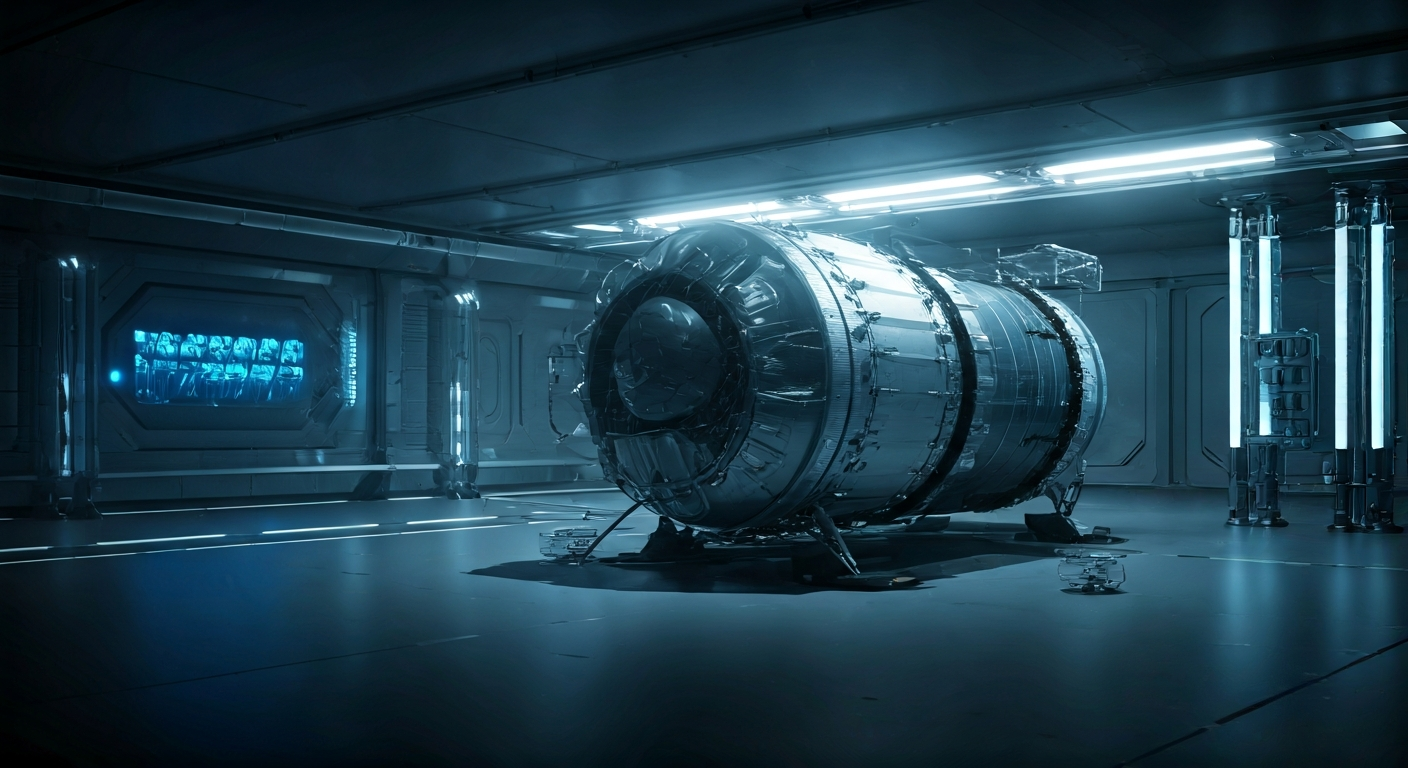
Cutting-edge materials are enabling more ambitious space missions, from robust heat shields for crewed return to Earth to novel construction methods for lunar bases.
The safety and feasibility of space exploration hinge on the materials that build our spacecraft. For NASA's Artemis program, the heat shield protecting the Orion capsule during re-entry is paramount. Recent discussions highlight ongoing efforts to ensure its integrity, a critical component for crewed missions returning from lunar distances. This thermal protection system, designed to withstand extreme temperatures, underscores the importance of advanced ablative materials capable of dissipating immense heat.
Beyond Earth's atmosphere, the focus shifts to materials that can withstand the harshness of deep space and enable sustained presence. Researchers are developing new composite materials with self-healing properties, promising increased resilience and longevity for spacecraft. Simultaneously, significant progress is being made in utilizing in-situ resources. Experiments are demonstrating that lunar regolith, or moon dust, can be processed into effective building materials, even forming cementitious compounds that gain strength when exposed to space conditions. This opens the door for constructing habitats and infrastructure directly on the Moon and Mars, drastically reducing launch mass and cost.
Additive manufacturing, or 3D printing, is revolutionizing rocket engine production. Companies are achieving breakthroughs with 3D-printed rocket propellants and engines, leading to lighter, more efficient components and faster production cycles. This technology is not just for propulsion; it's also being explored for creating structural elements and even tools on demand in space. Furthermore, novel nanomaterials are being investigated for their potential to provide advanced radiation shielding, a crucial concern for long-duration human missions beyond Earth's protective magnetosphere.
The convergence of advanced thermal protection, in-situ resource utilization, and additive manufacturing represents a paradigm shift. These material innovations are not merely incremental improvements; they are foundational technologies paving the way for sustainable lunar bases, Mars settlements, and a truly multi-planetary human civilization by making off-world construction and reliable transit economically and technically viable.
This content was produced by the news editor with AI.