Space Materials Advance: From Self-Healing Composites to Lunar Habitats
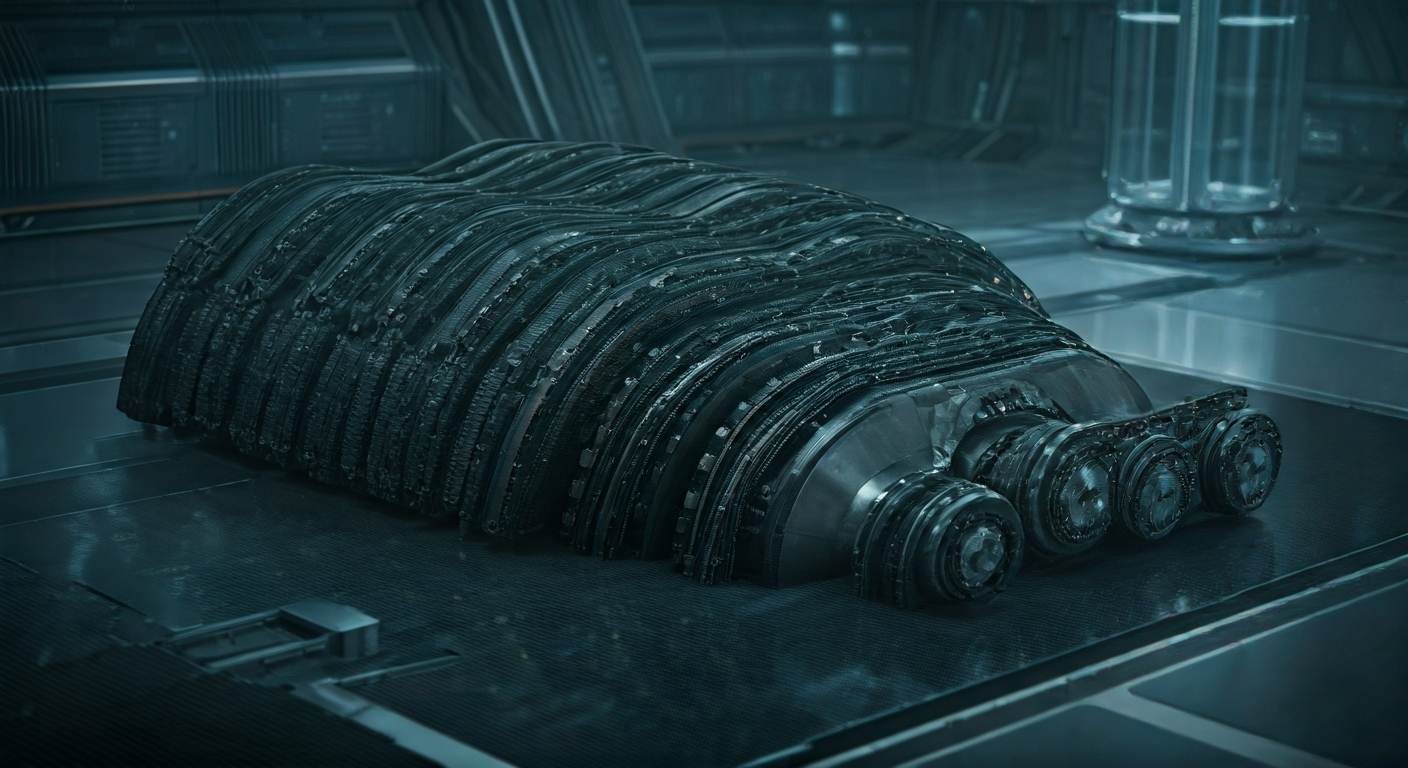
Innovations in composite materials, additive manufacturing, and in-situ resource utilization are paving the way for more resilient and sustainable space exploration.
The frontier of space exploration is being reshaped by cutting-edge materials science. European researchers have developed a self-healing composite material designed to autonomously repair damage, a critical advancement for spacecraft longevity and crew safety in the harsh environment of space. This innovation promises to reduce maintenance needs and increase mission reliability.
Additive manufacturing, commonly known as 3D printing, continues its rapid ascent in the aerospace sector. Rocket Lab has now produced its 1,000th Rutherford engine, a testament to the efficiency and capability of 3D printing for complex propulsion systems. Beyond engines, breakthroughs in 3D-printed rocket propellant are also being reported, suggesting faster production rates and potentially lighter, more powerful rocket designs.
Furthermore, the prospect of building habitats and infrastructure directly on celestial bodies is becoming increasingly tangible. Research is advancing on utilizing lunar regolith, the loose soil and rock on the Moon's surface, as a primary building material. Techniques ranging from 3D printing with lunar dust to developing space welding technologies for regolith-based composites are being explored, offering a sustainable path for establishing a permanent human presence beyond Earth.
Protecting astronauts and sensitive equipment also remains paramount. New materials are being developed to act as advanced heat shields, crucial for atmospheric re-entry, with NASA confident in their Artemis II heat shield's performance. Simultaneously, novel nanomaterials, thinner than a human hair and flexible, are being investigated for their potential to shield against deep-space radiation, a significant hazard for long-duration missions.
These material science advancements are not merely incremental improvements; they represent foundational shifts enabling ambitious space endeavors. Self-healing composites and advanced thermal protection systems enhance mission safety and reduce costs. Additive manufacturing democratizes access to complex components and accelerates development cycles. Crucially, the ability to leverage in-situ resources like lunar regolith for construction and radiation shielding drastically reduces the mass that must be launched from Earth, making sustained off-world presence and eventual colonization economically and logistically feasible.
This content was produced by the news editor with AI.